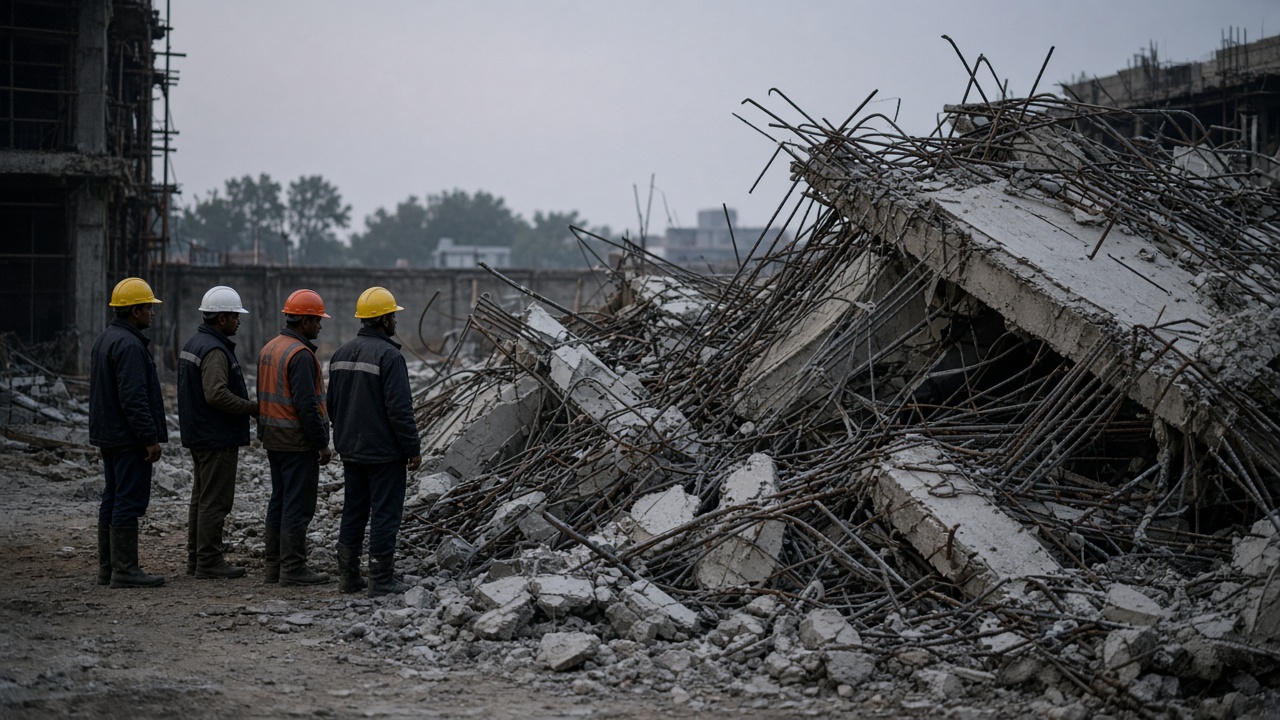
The death toll from the collapse of an under-construction building in Ambala City’s Dhulkote area rose to six on Monday after emergency teams pulled two additional bodies from the debris, Haryana police and local officials said.
The victims identified in the latest recovery were Malkit Singh of Dangdehri village in Punjab and Ramji Das of Sadopur village in Ambala, Ambala superintendent of police Ajit Singh Shekhawat told reporters. The rescue operation concluded around 5 a.m., he said, with a first-information report registered and a criminal investigation under way.
Workers trapped on an active site
The structure failed while labourers were on site, a pattern that has repeatedly drawn scrutiny in fast-growing northern cities where informal hiring and thin oversight can overlap. Of the six people killed, two were from Ambala, two from Punjab, and two migrant workers from Uttar Pradesh, officials said. Three workers remained hospitalized on Monday while others had been discharged after treatment.
Transport and labour minister Anil Vij visited Civil Hospital to meet survivors and directed the director general of police to constitute a special investigation team to examine how the building was permitted to rise and whether municipal officials ignored stop-work authority. Vij said strict action would follow against anyone found responsible, including interests he described as tied to unauthorized construction and “land mafia” pressure on local enforcement.
Municipal visits without enforcement
Vij told reporters that three Ambala City Municipal Corporation officials had visited the construction site but failed to halt work, a claim that, if substantiated, could shift liability from contractors alone to public servants charged with safety checks. The minister said influential actors had obstructed action even after he sent written directions to authorities, and he pledged that guilty parties would not be shielded.
Building collapses in India often trigger short-lived outrage followed by uneven prosecutions; the SIT order signals the state government wants a documented chain of approvals, soil and design records, and subcontractor payments before courts assign blame. Families of the dead will be watching whether compensation and charges move on parallel tracks or stall in administrative delay.
What the SIT is expected to examine
Police did not release a full list of statutes invoked, but labour-law specialists said inquiries typically cover structural engineering sign-offs, occupancy certificates, and whether the site exceeded approved height or load. The team will also likely interview survivors about safety briefings, harness use, and whether warnings preceded the failure.
For Ambala residents, the immediate concern is whether other half-finished towers in Dhulkote face similar risks. Until the SIT reports, the city is left with six confirmed deaths, a cleared rubble pile, and renewed questions about who allowed concrete to climb without enforceable guardrails.