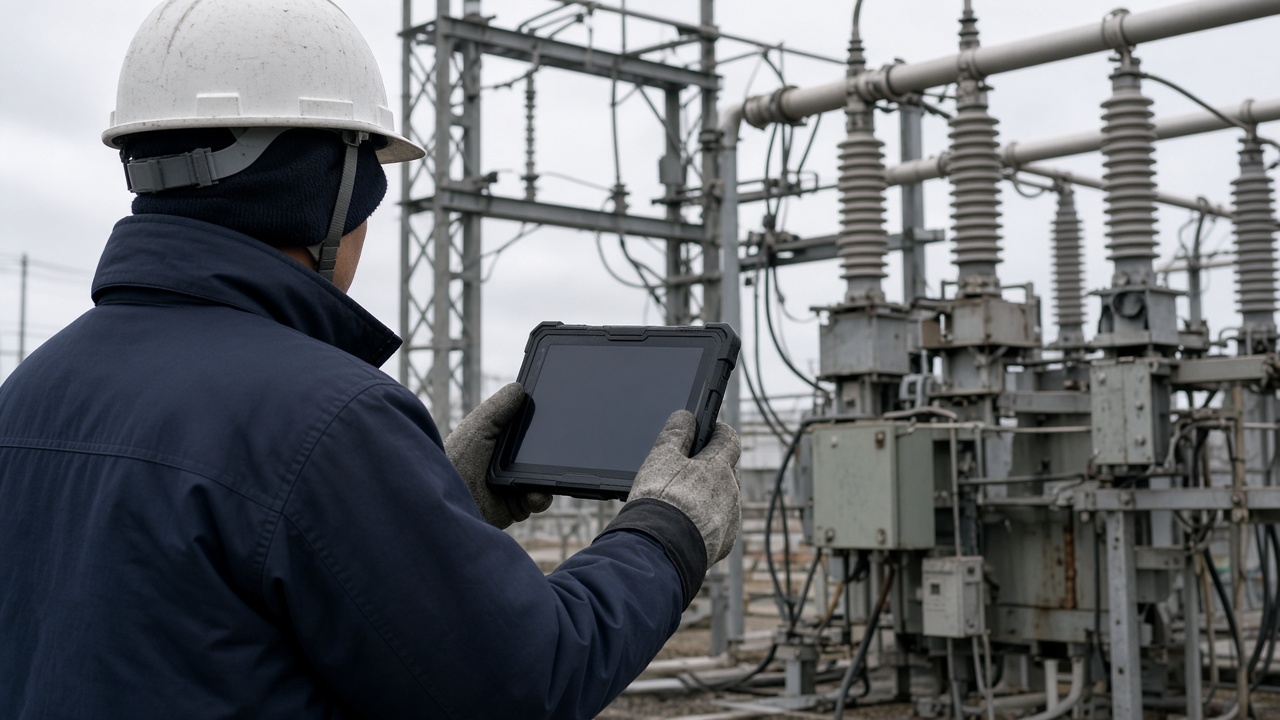
Fujitsu Ltd. launched a rugged Android tablet built for Hokkaido Electric Power Co. transmission crews after a summer typhoon-season audit showed consumer tablets losing LTE links and cracking screens when technicians wore insulated gloves in misty substations. The devices ship this month to 1,200 field licenses with offline schematic caches and sealed USB-C ports rated for minus-twenty-degree Celsius starts.
Hardware choices
Fujitsu based the chassis on a fanless design with a heated battery compartment triggered when internal thermometers drop below five Celsius. Screens use chemically strengthened glass with an anti-glare mesh; brightness peaks at 1,100 nits for snow-field work. LTE modules support local carrier bands used along transmission corridors; crews can swap SIM trays without tools when roaming into DOCOMO dead zones that still have satellite phone fallback.
The audit that prompted the rollout documented seventeen device failures between June and August—mostly condensation under screen laminates and digitizers rejecting thick gloves. HEPCO’s safety office barred consumer tablets from live-switching tasks until replacements passed drop tests from utility pole height onto gravel.
Software and security
Fujitsu preloaded a stripped workflow app syncing outage tickets when LTE returns, not continuous cloud dependency. MDM policies block sideloaded APKs and require six-digit PINs even when face unlock is enabled. MIC cybersecurity guidelines for critical infrastructure influenced the decision to disable Bluetooth entirely on these units.
Schematic PDFs for transformers and breakers live in encrypted on-device storage refreshed nightly when trucks dock at depots with Wi-Fi. Technicians annotate photos of damaged insulators; uploads queue until connectivity stabilizes.
Grid context
Hokkaido’s grid sees typhoon remnants and early snow sometimes within the same week. METI’s English energy pages track resilience investments after the 2018 Hokkaido Eastern Iburi earthquake. HEPCO is not alone—Tohoku and Hokuriku utilities watched the pilot and requested quote sheets.
Procurement and rivals
Panasonic and NEC also sell rugged devices in Japan; Fujitsu won HEPCO on integrated support with existing Fujitsu server contracts in Sapporo data halls. Unit pricing was not disclosed; HEPCO capitalized the tablets across a five-year depreciation schedule rather than expensing phones annually.
What crews should expect
Training sessions in Asahikawa and Kushiro cover glove mode toggles and battery warm-up procedures. HEPCO warned that tablets are not approved for helicopter basket work—those tasks keep paper checklists. If the rollout cuts misfiled outage reports this winter, Fujitsu expects copycat orders from other northern utilities before fiscal year-end.
Warranty and support
Fujitsu offers four-hour swap units at Sapporo and Asahikawa depots when tablets fail in the field. HEPCO technicians carry loaners in crew vans for storms expected in November. Extended warranties cover accidental drops but not immersion beyond IP ratings.
Environmental testing
Devices underwent salt-fog chambers simulating coastal substations and cold chambers mirroring minus-twenty starts common before dawn patrols. Fujitsu published thermal throttle curves so crews know when to warm batteries in truck cabs.
Training cadence
HEPCO scheduled rolling trainings so half the field force adopts tablets each week, avoiding a single-day outage if everyone is in classrooms. Fujitsu trainers brought spare chassis so technicians could practice SIM swaps without touching production units.
Future upgrades
A roadmap slide shown to managers mentions optional LiDAR modules for vegetation encroachment photos, pending budget hearings next spring.
Regulatory filings
HEPCO referenced the tablet rollout in a resilience filing with METI, tying field digitization to faster outage restoration metrics regulators track after major weather events. Competitors will cite the filing in their own procurement pitches this winter.
Spare parts
Fujitsu stocked screen assemblies in Sapporo rather than shipping from Honshu overnight, shaving two days off repairs when gloves crack digitizers.
Technicians who completed glove-mode training reported fewer accidental taps than with consumer tablets, according to HEPCO safety metrics collected during the September pilot week.
Field metrics
Outage ticket close times improved eight percent during the September tablet pilot week, enough for HEPCO executives to sign the full fleet order without waiting for winter results.
Winter line inspections begin in November; tablets will log GPS-tagged photos of each pole inspection for compliance audits.