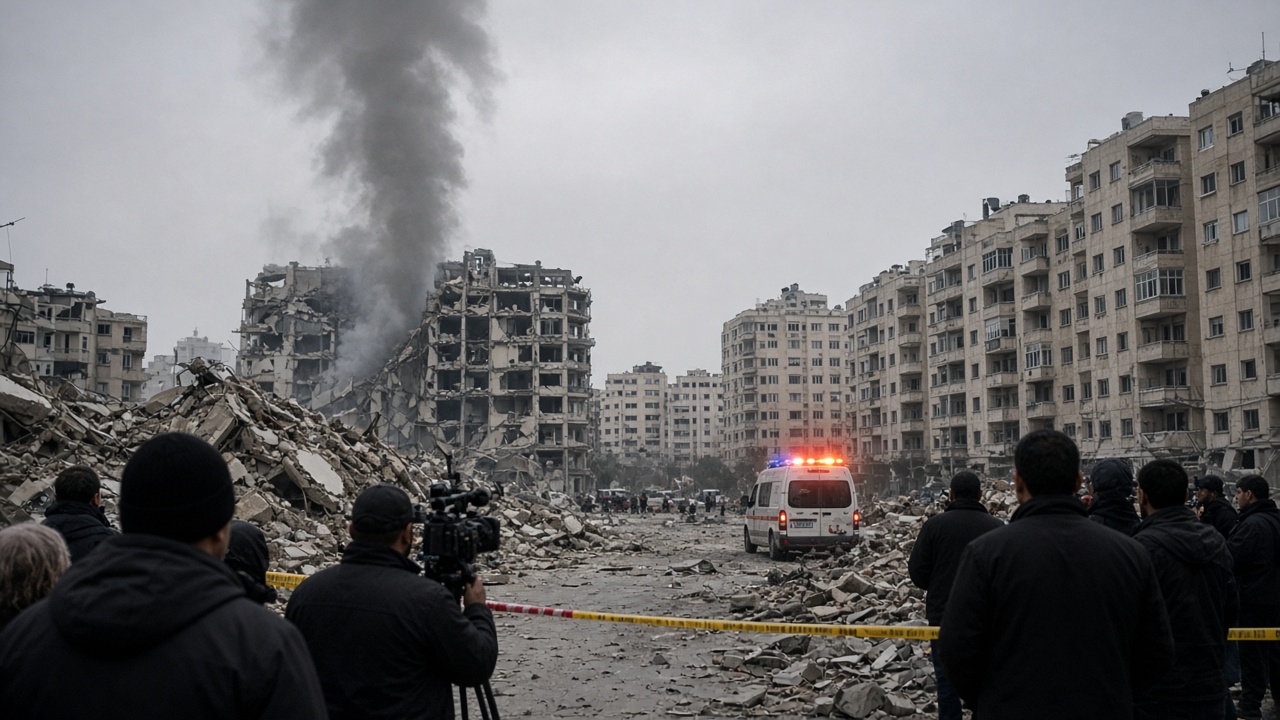
Israel’s military said Tuesday that an overnight airstrike in Gaza City killed Izz al-Din Al-Beik, whom it described as the head of Hamas’s armed wing in northern Gaza and a figure involved in planning and recruitment linked to the Oct. 7, 2023, assault on southern Israel. Hamas confirmed Al-Beik’s death, calling him a leader of the operation that triggered the war now entering its third year.
Medics in Gaza said the strike hit an apartment building in the Nasr neighborhood at dawn. Health officials said a second person died later from wounds from the attack, and a separate Israeli strike near a clinic in the Jabalia refugee camp killed one more person Tuesday, bringing the day’s reported toll to at least three. The Israeli military said the Jabalia attack targeted a militant in the area.
Ceasefire strain
The killings land amid a fragile October ceasefire that both sides accuse the other of violating. Israel says Hamas has rearmed and resumed attacks; it has stepped up targeted strikes in recent weeks. The military said it has killed at least 20 Hamas figures this month, including commanders it ties to Oct. 7, hostage-taking, or senior roles in the group’s military structure.
Palestinian health authorities in Gaza say more than 73,000 people have been killed since Israel launched its full-scale campaign after Hamas-led fighters killed about 1,200 people in Israel in October 2023. Gaza officials say at least 1,400 Palestinians have been killed since the ceasefire took effect, while Israel says four soldiers have died in the same period.
What Israel claims
Israeli government statements cast Al-Beik as part of Hamas’s effort to rebuild capability in northern Gaza after months of fighting that devastated the enclave’s infrastructure and displaced most of its population. Officials did not release independent verification of his exact role beyond the group’s own acknowledgment that he was a senior military figure.
Prime Minister Benjamin Netanyahu’s office has framed such strikes as necessary to prevent another large-scale attack from Gaza. Hamas, for its part, has portrayed targeted killings as evidence that Israel never intended to honor the truce, even as indirect talks on hostages and a longer pause continue through regional mediators.
Regional and diplomatic context
The strike coincides with renewed attention on the wider Middle East crisis, including U.S. pressure on Iran over nuclear issues and the war’s spillover into Lebanon and Yemen. European and Arab capitals have repeatedly warned that escalation in Gaza risks undermining ceasefire diplomacy and worsening humanitarian conditions in the territory, where aid agencies report severe shortages of food, fuel, and medical supplies in many areas.
United Nations officials have urged all parties to protect civilians and allow unimpeded aid access. Tuesday’s deaths add to a pattern of high-profile assassinations and counter-strikes that keep the enclave on a knife edge despite public commitments to reduce fighting.
What happens next
Hamas is expected to name a successor for Al-Beik within its decentralized military structure, a process that often takes days and may not be announced publicly. Israel has signaled it will continue hunting leaders it links to Oct. 7 or to ongoing rocket and ambush attempts, which suggests further strikes unless negotiators can widen the ceasefire’s terms.
Hostage families in Israel and aid groups in Gaza will watch whether the killing hardens positions ahead of any new round of talks. For now, the immediate fact is unchanged: another senior Hamas commander is dead, both sides say they were justified, and the truce that was meant to pause the war remains under daily pressure.