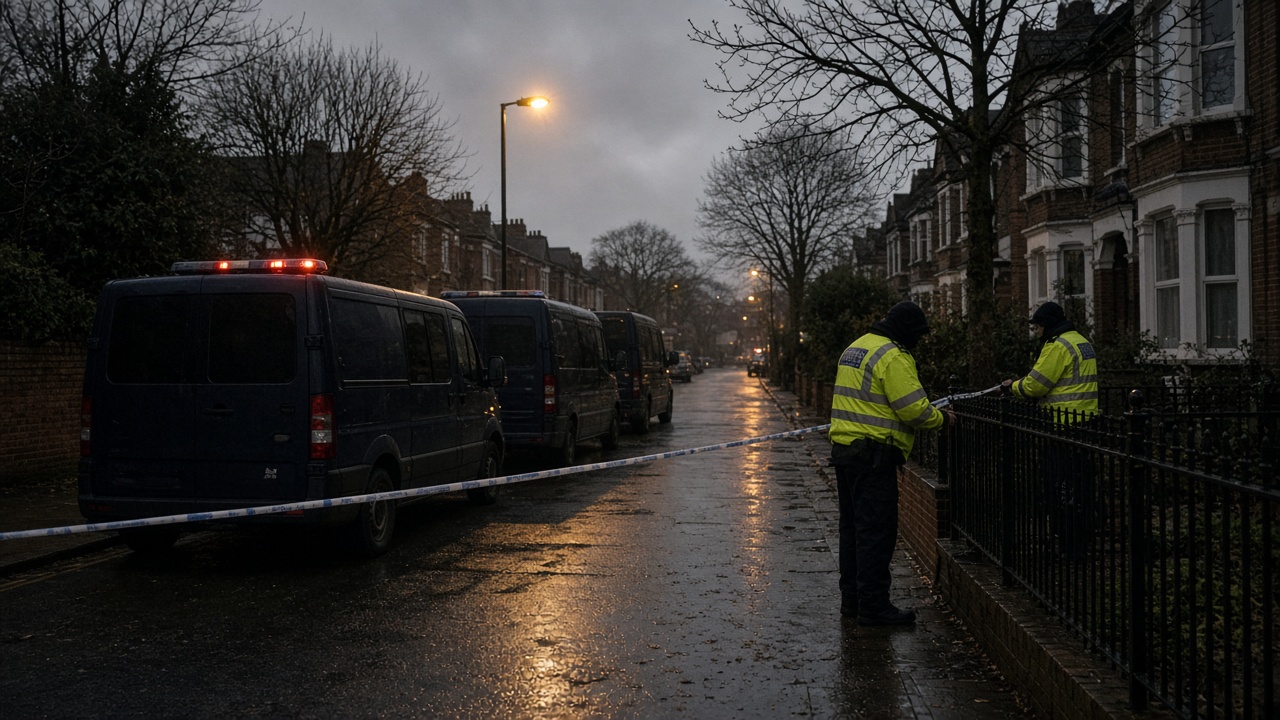
Seventeen people were arrested in dawn raids across London and four surrounding counties on Tuesday as the Metropolitan Police, HM Revenue and Customs and the Financial Conduct Authority targeted a suspected organised-crime network, the force said. An officer was stabbed in the leg while executing a warrant in Cockfosters, Barnet; the Met described the injuries as not life-changing.
Scale of the operation
More than 800 officers hit 24 properties in the early hours in London, Essex, Hertfordshire, Cambridgeshire and Suffolk, according to the Met’s published account. Searches continued through the morning, and the force warned residents to expect a visible police presence for several days.
The BBC reported that the FCA had “disrupted” seven businesses and was “actively pursuing” another 30 as part of the same investigation. A Met spokesperson said the arrests marked “a significant point” in a probe into leaders or senior figures allegedly tied to serious organised crime and related financial offending.
Who was detained
Police said 15 men aged 26 to 65 and two women aged 31 and 41 were arrested. Suspected offences listed by the Met include participating in the activities of an organised crime group, money laundering, cheating the public revenue, false accounting and conspiracy to commit grievous bodily harm.
A 56-year-old man was also arrested on suspicion of GBH in connection with the stabbing of the officer in Cockfosters, the force said. The injured officer was treated at the scene and taken to hospital; colleagues and paramedics attended before he was transported for further care, according to the Standard.
How the inquiry built
Tuesday’s arrests followed months of work by specialist Met detectives alongside HMRC and the FCA, the Met statement said. Tax and markets regulators have increasingly joined major fraud and laundering probes where corporate shells and front companies obscure the movement of proceeds.
The Telegraph reported that HMRC and FCA personnel supported searches on the ground. That tri-agency footprint signals investigators expect to trace cash through both personal accounts and regulated entities—a combination that can stretch timelines but also raises the stakes for defendants if prosecutors secure documentary trails.
Community impact in Barnet
Cockfosters sits on the northern edge of the capital, where suburban streets abut greenbelt. A stabbing during a warrant execution will sharpen local scrutiny of tactics and risk assessments, even when forces classify injuries as non-life-changing.
Commanders will face routine questions about whether alternative arrest strategies were available once intelligence pointed to violence risk. For now, the Met has not released body-worn footage or named the injured officer, a standard restraint in ongoing investigations.
Charges and court timeline
None of the 17 arrestees had been charged by the time the Met published its midday update. British investigators often hold suspects for interview under the Police and Criminal Evidence Act while assembling evidence for Crown Prosecution Service review.
Money-laundering and revenue offences can carry lengthy sentences when tied to organised-crime statutes, but prosecutors must show knowledge and benefit beyond mere association. The FCA’s parallel interest suggests some targets may have held roles at authorised firms or used regulated channels.
What investigators want next
Detectives will be chasing phones, ledgers and messaging apps seized in the raids, while financial analysts trace flows across borders. The Met said lines of inquiry remained open and did not rule out further arrests.
For Londoners, the case is a reminder that organised-crime investigations still land with sudden force in residential neighbourhoods—not only in the City’s trading floors. For regulators, a successful prosecution would add to a run of joint operations that treat white-collar enablers as part of the same network as street-level enforcers.