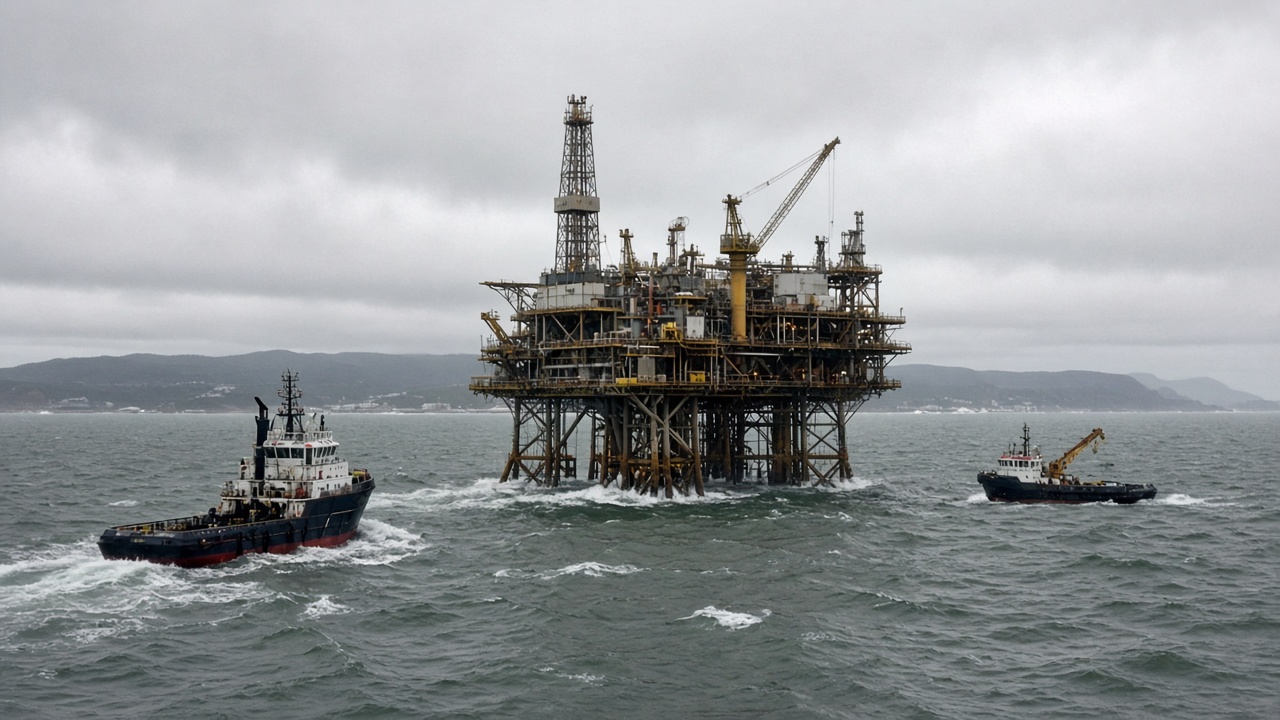
President Javier Milei has threatened to launch international legal action against the British government unless oil exploration off the Falkland Islands stops within two weeks, sharpening a dispute that has simmered since Argentine forces invaded the South Atlantic territory in 1982.
In a social-media statement reported by the BBC, Milei targeted the Sea Lion development, a joint venture between Britain’s Rockhopper Exploration and Israel’s Navitas Petroleum that aims to begin production within about two years. He called the project “illegal plundering” of resources Argentina claims as its own, using the country’s name for the islands, Las Malvinas.
What Milei is demanding
Milei said he had instructed Argentina’s foreign ministry and legal teams to prepare international arbitration if the UK does not halt work on Sea Lion. He warned that if “illegitimate exploitation” continues beyond the fortnight deadline, Buenos Aires would take the matter to the International Tribunal for the Law of the Sea.
The oilfield sits roughly 130 miles (209 kilometers) from the Falklands and holds an estimated 1.7 billion barrels of recoverable oil, according to project materials cited by the BBC. Rockhopper and Navitas have previously said their licences were issued by the Falkland Islands government, a point London has long treated as a matter for the islands’ elected authorities rather than for negotiation with Argentina.
How London is responding
UK Defence Secretary Wes Streeting told broadcasters that Argentina “lacks the ability” to retake the islands by force, a reminder that British military assets still underpin sovereignty claims even as diplomats manage day-to-day tensions. Downing Street has not yet detailed a legal response to Milei’s arbitration threat, but officials historically argue that self-determination for Falkland Islanders—not Argentine territorial claims—guides policy.
For businesses with interests in the South Atlantic, the flare-up adds political risk atop already complex offshore logistics. Insurance, shipping routes and contractor schedules for Sea Lion could face scrutiny if Buenos Aires pursues multilateral forums, even though prior Argentine challenges have not stopped licensed operators from advancing engineering work.
Why the timing matters
Milei’s ultimatum comes as global energy markets remain volatile after months of Middle East conflict, making any new Atlantic production politically salient in both capitals. In Buenos Aires, asserting resource sovereignty plays to nationalist audiences; in London, allowing a perceived concession could embolden other territorial challenges.
The two-week clock now sets a public deadline. If drilling preparations continue, diplomats will be measuring whether Milei’s legal threats materialize in filings—or whether the statement is chiefly pressure tactics ahead of broader UK–Argentina economic talks. Either way, the Falklands are back on the front pages, with oil—not infantry—defining this round of the dispute.