Dengue case counts in Singapore ticked up again after three weeks of declines, with 74 infections recorded in the epidemiological week ending 19 September and 2,424 cases reported year to date, according to National Environment Agency statistics cited in local health reporting.
Eleven active cluster areas remained on NEA’s map as of mid-September, but only one carried the highest red alert — roughly the Ho Ching Road, Yuan Ching Road and Tah Ching Road vicinity in the Lakeside area, where more than 70 cases have been linked since the cluster formed.
Symptoms MOH wants flagged early
Ministry of Health messaging continues to stress sudden fever, headache, pain behind the eyes, joint pain and rash. Most infections are manageable with rest and hydration, but severe dengue can follow the fever phase with persistent vomiting, abdominal pain or bleeding.
Residents are urged to seek medical review early rather than waiting out symptoms with paracetamol alone, especially for older adults and people with chronic conditions. Clinics can order confirmatory tests and advise on hydration and monitoring windows.
Peak season chores
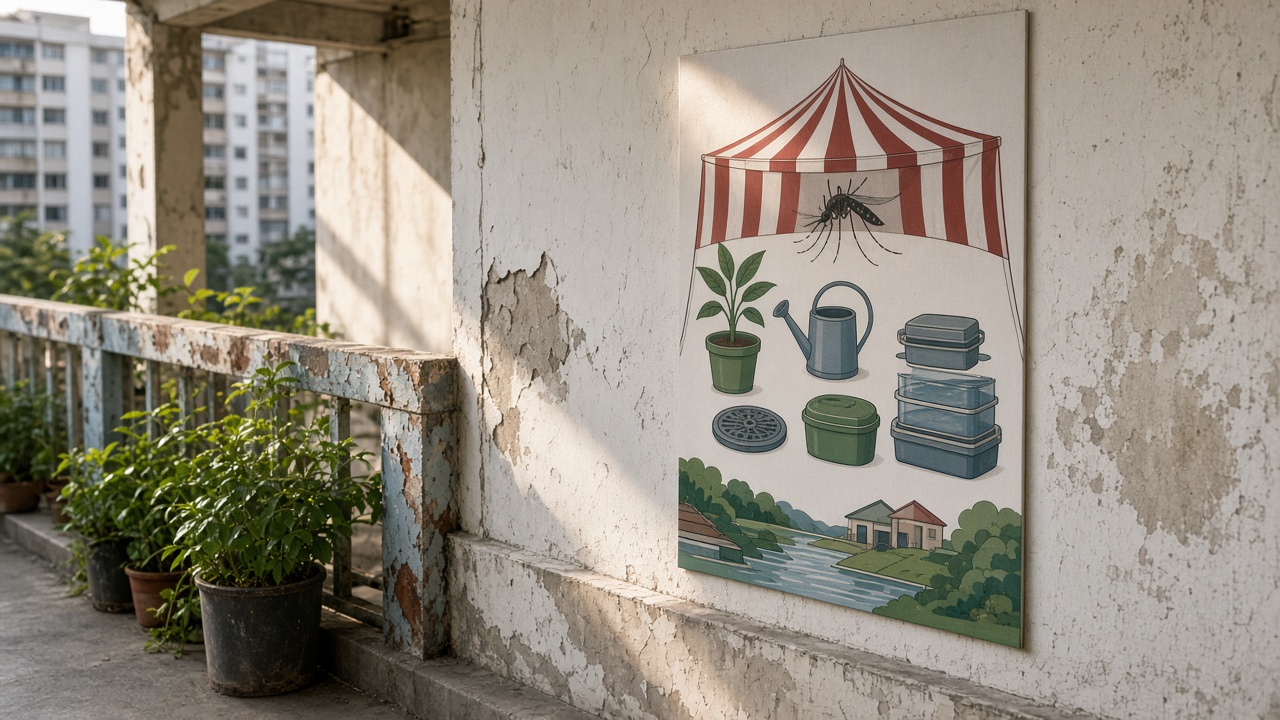
NEA reminds households that May through October is the traditional peak season: warmer weather speeds mosquito development and virus replication. The agency’s inspectors still rely on residents to overturn buckets, clear roof gutters and change water in vases every two days.
No Zika or chikungunya clusters were reported alongside the dengue uptick in the latest public summaries, but the same Aedes mosquito spreads dengue and Zika, so breeding-site work protects against multiple threats.
What changed from last month
Red-zone counts fell from three high-risk areas earlier in September to one, suggesting targeted fogging and source reduction may be containing some outbreaks even as the national weekly total rebounded. Lakeside remains the place to watch for new symptom onsets this week.
For parents, schools continue dengue education and permit long sleeves when outbreaks sit near campuses. For employers, absenteeism plans still beat scrambling when three staff in one team fall ill the same week.
Clinic capacity
Polyclinics and GP chains add triage nurses during peak dengue weeks to separate influenza-like illness from possible dengue. MOH’s messaging asks patients not to take ibuprofen unless a doctor approves, because of bleeding risk in dengue.
Workplace leave policies still treat fever as a single bucket; HR teams should not demand a dengue-negative letter before granting medical leave when doctors have already advised home rest.
Travel and NS
NSmen reporting sick during in-camp training with fever triggers the same public-health protocols as civilians. SAF medical centres coordinate with MOH on testing when clusters appear near camps.