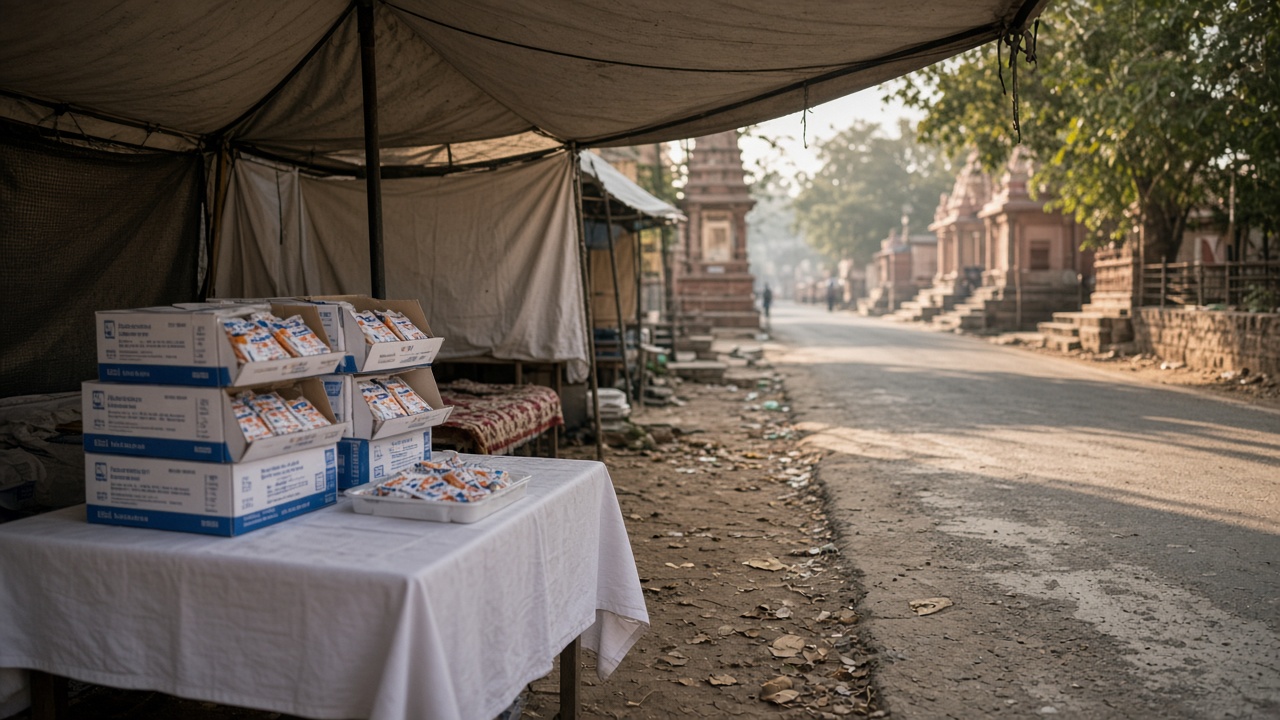
Odisha’s health department opened rapid cholera screening lanes at Puri pilgrim transit hubs on Monday after post-festival wastewater sampling showed elevated vibrio counts near boarding points used by returning devotees.
The move follows a fortnight of dense foot traffic through Puri’s temple district without major outbreaks, but surveillance teams flagged three asymptomatic carriers linked to shared community kitchens in adjacent khordha district. Sameer Khan’s desk confirmed that no deaths have been attributed to the cluster.
Screening protocol
Teams are using stool antigen tests with results in 15 minutes, paired with oral rehydration kits for anyone showing acute watery diarrhoea. Pilgrims with positive screens are referred to a 20-bed isolation ward at a district hospital equipped with IV fluids; families travelling together are asked to pause journeys for observation rather than continue on overnight buses.
Health secretary briefings cited WHO guidance on reactive screening when environmental samples cross action thresholds, even if clinical cases remain low. The state is not declaring an epidemic; it is tightening gates where crowding resumes after Ganesh immersion events upstream.
Water and sanitation steps
Municipal workers flushed street-side taps along the marine drive corridor and replaced storage tanks at two traveller shelters where biofilm tests failed. Tanker water deliveries now require chlorination certificates logged on a QR-coded ledger inspectors can audit nightly.
Restaurant associations were told to halt unpasteurized street buttermilk sales until October 5, a culturally sensitive restriction mitigated by subsidized packaged ORS at railway stalls.
Advice for travellers
Devotees passing through Puri should carry personal drinking water, avoid ice of unknown provenance, and seek care early if symptoms appear—cholera remains treatable when rehydration starts quickly. The screening lanes add minutes to boarding times; officials asked operators to stagger departures accordingly.
Neighbouring states were notified through the Integrated Disease Surveillance Programme network so that receiving districts can continue monitoring without panic screening at every border.
Coordination with railways
East Coast Railway added medical booths at Puri station platforms, stocking ORS sachets and hand sanitiser for overnight trains to Howrah and Chennai. Ticket checkers were briefed to flag passengers vomiting en route, a low-tech backup to hub screening.
NGOs running community kitchens along the coast volunteered to log water-source tests daily through a state app, extending surveillance beyond temple cores into beachside stalls.
Hotel associations near the temple corridor agreed to stock bottled water at cost for the screening period, reducing reliance on street vendors whose ice sourcing is hard to trace. Health educators aired short Odia radio spots on hand washing before prasad distribution.