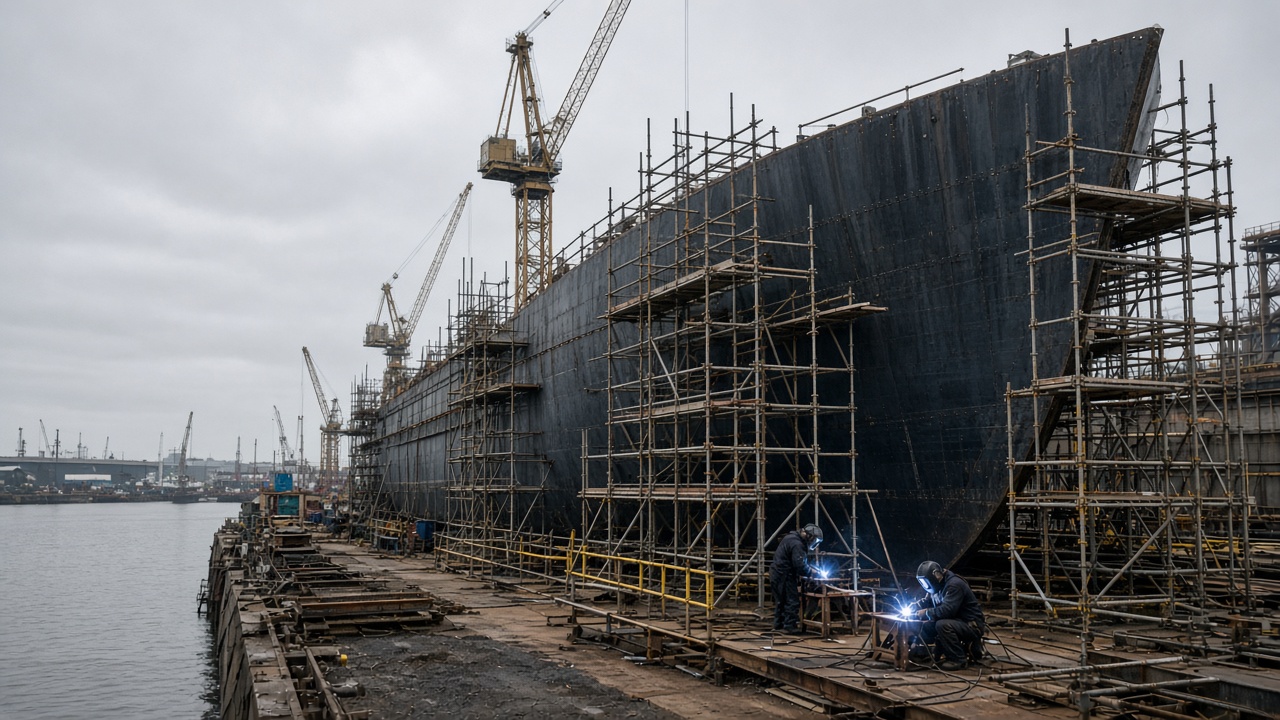
Shop stewards at BAE Systems yards on the Clyde and in Portsmouth spent Monday translating John Healey’s £6 billion naval contract announcement into shift rosters, asking civil servants for named hull programmes and steel-cutting dates rather than another slide about industrial revival.
The chancellor unveiled the package during Labour’s Liverpool conference, pairing it with a £300 million Rolls-Royce investment across four English cities and Scotland. Defence sources said the naval money is likely to flow through Type-frigate and support-ship lines, but published schedules remain vague.
Scotland’s political lens
SNP MPs welcomed any Clyde work while noting the pledge does not replace lost frigate exports delayed in the 2010s. Glasgow MSPs want guarantees that modular blocks awarded to Govan will not be repackaged as English-only spending in Treasury books. Healey’s team insists the contracts are UK-wide, but Barnett consequentials still matter for Holyrood’s budget arithmetic.
Portsmouth unions focus on submarine support corridors and dockyard apprenticeships. Both sites remember election-year announcements that evaporated when fiscal headroom shrank. With OBR headroom estimated between £10 billion and £15 billion, workers are wary of promises that depend on a single autumn statement.
Westminster timing
Healey repeated that he will meet fiscal rules and ruled out rises to income tax, employee national insurance, VAT and corporation tax. That leaves defence as one of the few growth stories he can tell without immediate tax headlines — even as welfare reform rumours spook Labour backbenchers.
Opposition MPs asked why shipyard money landed before published impact assessments on Iran-related energy shocks. Ministers counter that sovereign shipbuilding is strategic regardless of gilt yields.
What happens next
Contract tables are expected before the 28 October budget. Until ink is on purchase orders, the yards will count bodies on the shop floor, not headlines in Liverpool. Politicians get the photo; welders get the overtime — or they do not.
Apprenticeships and skills
Yard managers said apprenticeship intake for 2027 depends on contract visibility this quarter. Without signed work, training centres cannot commit classroom slots for welders and pipefitters. Colleges on the Clyde partner with BAE for block release; gaps in orders ripple to FE funding within a year.
Defence committee members asked whether the £6 billion includes exportable frigate options for allied navies or only Royal Navy hulls. Ministers promised a written statement but gave no date, frustrating MPs who remember previous programme slips on Type 26 exports.
Environmental scrutiny
Green groups asked how expanded naval construction squares with carbon budgets. The MoD’s own climate strategy counts operational emissions more heavily than yard construction, but local air-quality monitors near Portsmouth already flag particulates on double-shift weeks. Environmental permits may become a bottleneck if orders accelerate without upgraded filtration.
Supply chain steel
British Steel and Tata’s UK plants watch defence orders for slab allocation. A surge in naval plate demand can crowd out commercial construction if furnaces run near capacity. Trade unions want domestic content rules written into contracts, not voluntary pledges on slide decks.
Looking ahead
Teams on all sides said they would publish more detail when schedules firm up, and that stakeholders should expect incremental updates rather than a single document that answers every outstanding question.
Markets, voters and patients will treat silence as a signal, so the pressure to clarify timelines before the budget or the next fixture remains high.
Until then, the practical advice for readers is to watch primary sources—regulator notices, FA team sheets, issuer terms and trust board papers—rather than relying on second-hand summaries alone.
Officials reiterated that figures could be revised as more data arrives, and that anyone making financial or travel decisions should confirm numbers against the latest published tables before acting.
Officials reiterated that figures could be revised as more data arrives, and that anyone making financial or travel decisions should confirm numbers against the latest published tables before acting.
Officials reiterated that figures could be revised as more data arrives, and that anyone making financial or travel decisions should confirm numbers against the latest published tables before acting.