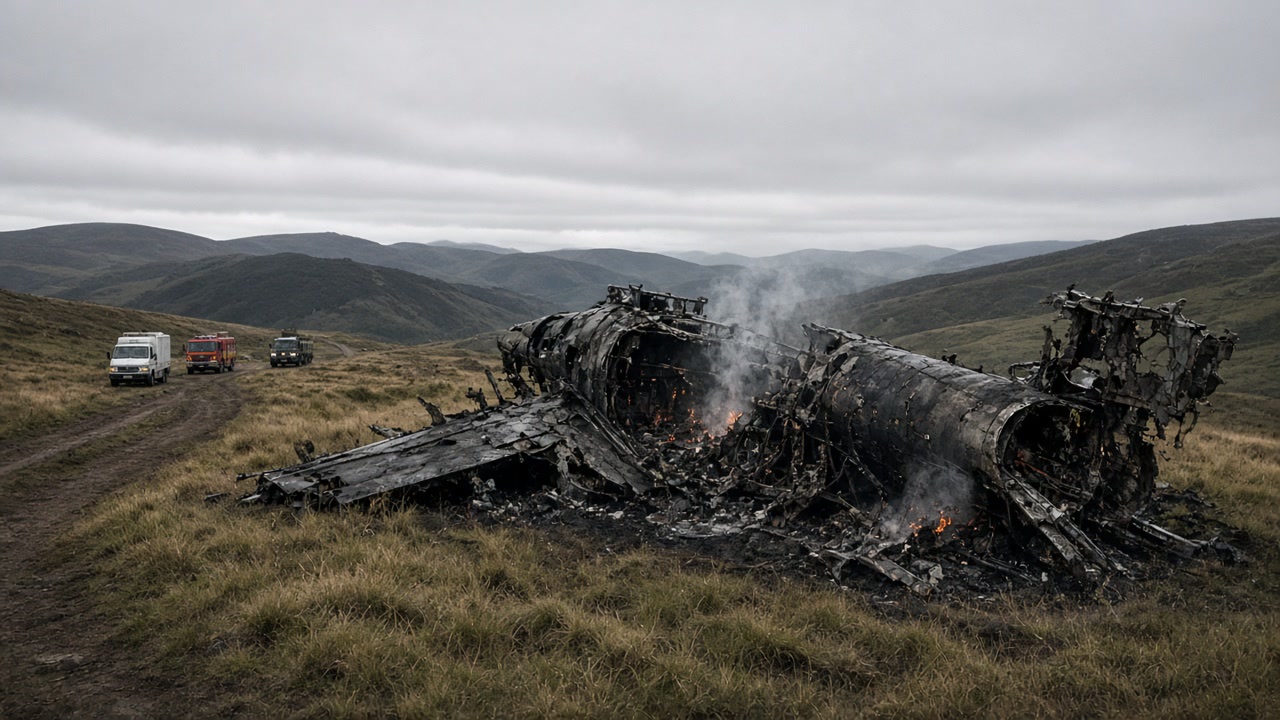
A Russian Tu-95 strategic bomber crashed during a training flight in the Amur region of Russia’s Far East on Monday, killing six crew members and leaving one survivor in hospital, the defence ministry said. The aircraft came down in an uninhabited area near the Chinese border, according to state media citing military officials.
What Moscow has confirmed
The ministry said the Tu-95 was flying without ammunition when it crashed. TASS reported that an aerospace-forces commission was sent to the site to establish the circumstances. Interfax quoted the military as saying forensic and flight-safety teams would examine wreckage and recover data recorders if they can be found.
State television and social channels circulated unverified footage showing smoke rising from a burning airframe in open country. InfoHandle has not independently verified those clips, but multiple outlets described the same broad location east of Blagoveshchensk.
Regional emergency officials have not published a passenger manifest beyond the crew count, and there was no immediate notice of civilian injuries on the ground. Russian long-range aviation units often train in the Far East when European bases are fully tasked, which keeps local rescue services on familiar alert routines even for unarmed sorties.
The aircraft in Russia’s nuclear posture
The Tu-95, a turboprop bomber designed in the Soviet era, remains part of Russia’s long-range aviation fleet and is routinely used in patrols and exercises that NATO tracks near European and Pacific approaches. The type can carry nuclear-capable cruise missiles, though Moscow stressed this flight was unarmed.
Monday’s loss adds to a string of non-combat aviation accidents inside Russia since the full-scale invasion of Ukraine, including regional airliner crashes in the Far East. Analysts caution that training tempo, sanctions on spare parts, and stretched maintenance cycles can compound risk even when jets are not flying combat sorties.
Neighbours watch the border zone
Amur Oblast borders Heilongjiang province in northeastern China. Neither Beijing nor Tokyo issued immediate statements on the crash, but the location sits within an area where Russian long-range aviation sometimes transits during Pacific exercises. Any prolonged closure of nearby air corridors would be visible quickly in civil NOTAM traffic, though the ministry has not announced one.
What happens next
Russian investigators typically publish a preliminary finding within days when flight recorders are recovered. Without a public timeline, allied militaries will rely on open-source tracking and diplomatic channels to see whether the crash triggers stand-down orders for other Tu-95 units. For now, the confirmed toll is six dead, one injured, and an inquiry just beginning on the ground in the Far East.