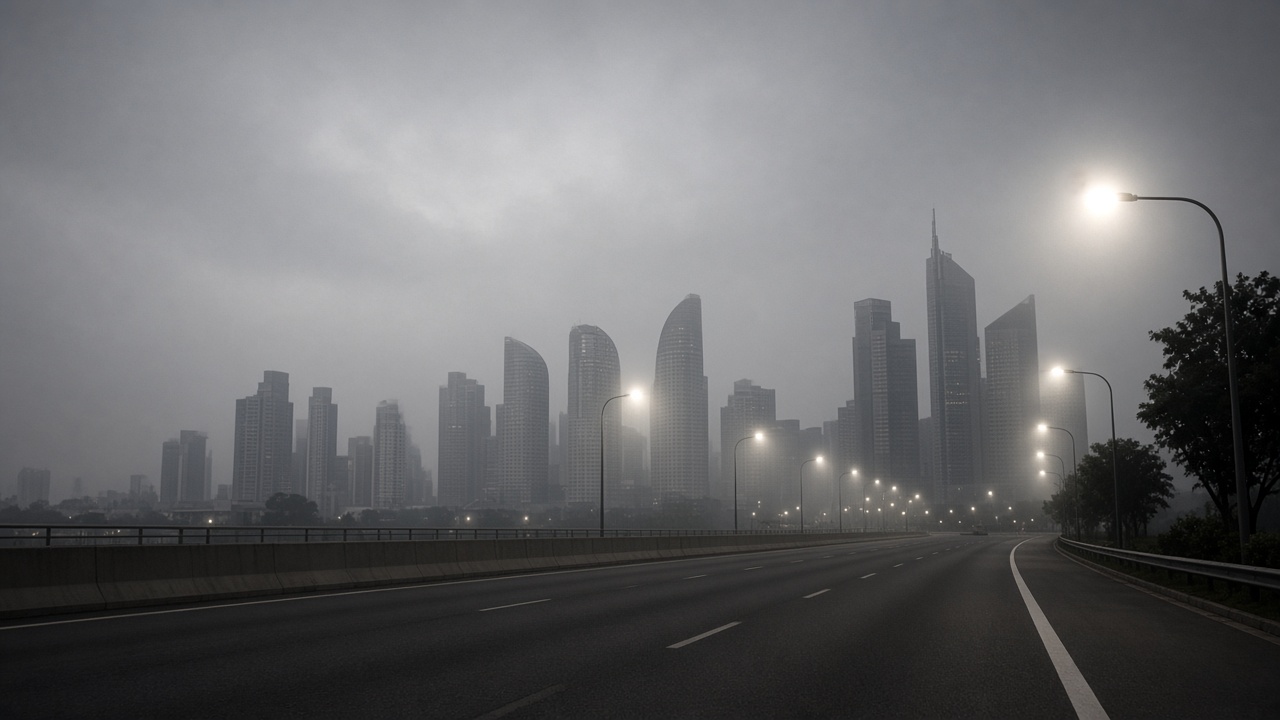
Singapore woke on Tuesday to haze readings back in the unhealthy range, with 24-hour Pollutant Standards Index levels above 120 in four of five monitoring regions and fine particulate matter elevated across the island.
Tuesday morning readings
At 6 a.m. local time, the National Environment Agency’s 24-hour PSI stood at 98 in the north, 128 in the south, 125 in the east, 135 in the west and 151 in the central region, the Straits Times reported. PM2.5 concentrations, which agencies use for short-term activity guidance, were in the elevated band everywhere: 64 in the north and south, 92 in the east, 123 in the west and 133 in the central region.
Photographs from central Singapore before dawn showed a grey curtain over streetlights, consistent with weeks of intermittent smoke that returned to unhealthy levels on Sept. 4 for the first time since October 2023. Central readings peaked at 154 on Sept. 15 during the current episode.
What NEA is forecasting
In its evening advisory on Monday, NEA said air quality for the following 24 hours was expected to sit in the high moderate to mid-unhealthy range. Showers were forecast for Tuesday, but the agency cautioned that winds from the east or southeast could still carry smoke haze over the island, keeping risk elevated even with rain.
When PSI crosses into unhealthy territory, NEA advises healthy residents to reduce prolonged or strenuous outdoor exercise. Elderly people, children, pregnant women and those with chronic heart or lung conditions should minimise or avoid such activities altogether. Schools and employers typically watch PM2.5 bands for physical-education and outdoor work decisions.
Household and transport impacts
Retailers reported steady demand for N95 masks and air purifiers through September as the haze spell stretched past three weeks. Ride-hailing drivers and delivery riders said midday shifts felt harder as humidity combined with particulate load, even where PSI readings looked only moderately elevated in the north.
Unlike short thunderstorm bursts that wash out dust locally, transboundary haze depends on wind direction and fire activity in the region. Until NEA downgrades its forecast band, clinics expect continued upticks in respiratory visits, particularly among asthmatic children.
Construction sites and open-air food centres have kept misting fans running where managers can source them, while condominium managements circulated reminders to close windows when PM2.5 enters the elevated band. Residents were urged to check the agency’s haze microsite for hourly updates rather than rely on single-point readings from phone sensors.