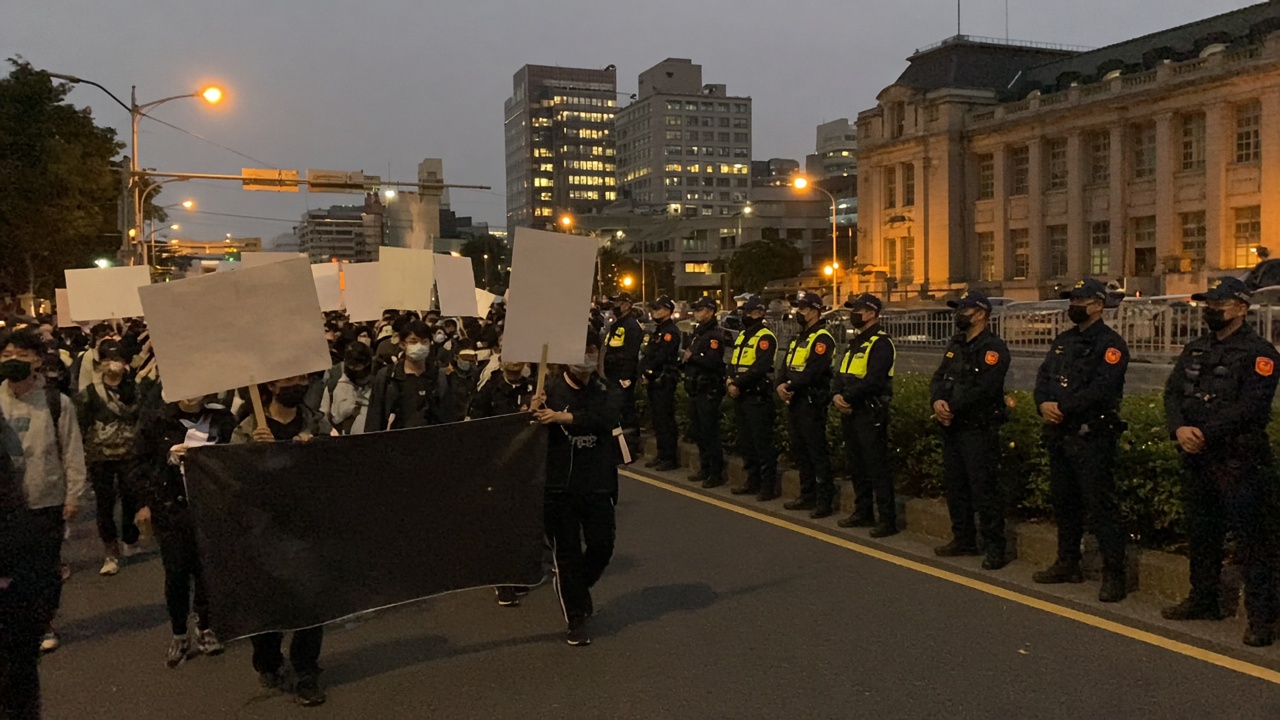
More than 40 civic groups led by the Taiwan Citizen Front and the Taiwan Economic Democracy Union will rally outside the Legislative Yuan on Tuesday evening, hours after the sixth session of the 11th Legislature opened with a budget fight already on the agenda.
Five demands on the street
Organizers titled the event "No slacking off as the legislative session opens, citizens sound the alert after work." They plan to gather at the Qunxian Building at 6:30 p.m. before marching through central Taipei streets that police have partially closed for the route.
The groups list five demands: pass the fiscal 2026 supplementary budget without further delay; fund domestic drone programs in this year's add-on package; deliver promised increases to social welfare allowances; stop blocking appointments that have left several oversight bodies short of quorum; and restore normal operations at agencies including the Control Yuan, the National Human Rights Commission, the National Communications Commission, the Personal Data Protection Commission, and the Public Television review panel.
Convener Lai Chung-chiang, an attorney with the Economic Democracy Union, said opposition lawmakers from the Kuomintang and Taiwan People's Party have repeatedly stalled central government budget reviews and boycotted confirmation votes for Constitutional Court justices and election commissioners. The march, he said, is meant to show that delays on defense and welfare spending carry a calendar cost, not just a political one.
Why organizers cite an October deadline
Activists argue that if the supplementary budget is not approved by the end of October, the executive branch will struggle to execute defense procurement and welfare top-ups before year-end legal deadlines. Lai pointed to drone funding that was cut from a special defense appropriation in May and later reintroduced through the supplementary bill, saying procurement and bidding need months after passage.
Taipei police approved the assembly from 8 a.m. to 10 p.m. and announced traffic controls on sections of Jinan Road, Qingdao East Road, and Linsen South Road from mid-afternoon until the event clears.
Inside the chamber
Premier Cho Jung-tai delivered four requests to lawmakers as the session opened: review the fiscal 2026 general budget, the supplementary budget, future spending under the asymmetric warfare procurement statute, and priority bills on demographics, small-business upgrades, and sports policy. President William Lai has separately urged passage of a 60 billion New Taiwan dollar defense add-on tied to drone industry development.
Opposition leaders say the legislature will examine budgets but will not act as a rubber stamp for the executive. The Kuomintang caucus is also advancing its own priority bills, including a draft on distributing 20,000 New Taiwan dollar cash payments to households, which the administration says must meet constitutional borrowing limits.
Tuesday's calendar includes a vote on Control Yuan member confirmations, one of the appointments that has been entangled in the broader standoff over institutional power.
What the evening could change
Street protests rarely flip votes on their own in Taipei, but they can sharpen timelines. Organizers said they would single out eight Kuomintang legislators who are running for local executive posts, calling supplementary budget passage a "make-up exam" for those campaigns.
For voters watching from home, the immediate question is whether party whips can agree on committee schedules for the supplementary bill before the October window organizers describe. For security planners, the parallel track is whether drone and asymmetric warfare lines in the add-on budget move to bidding in time to spend them this fiscal year.