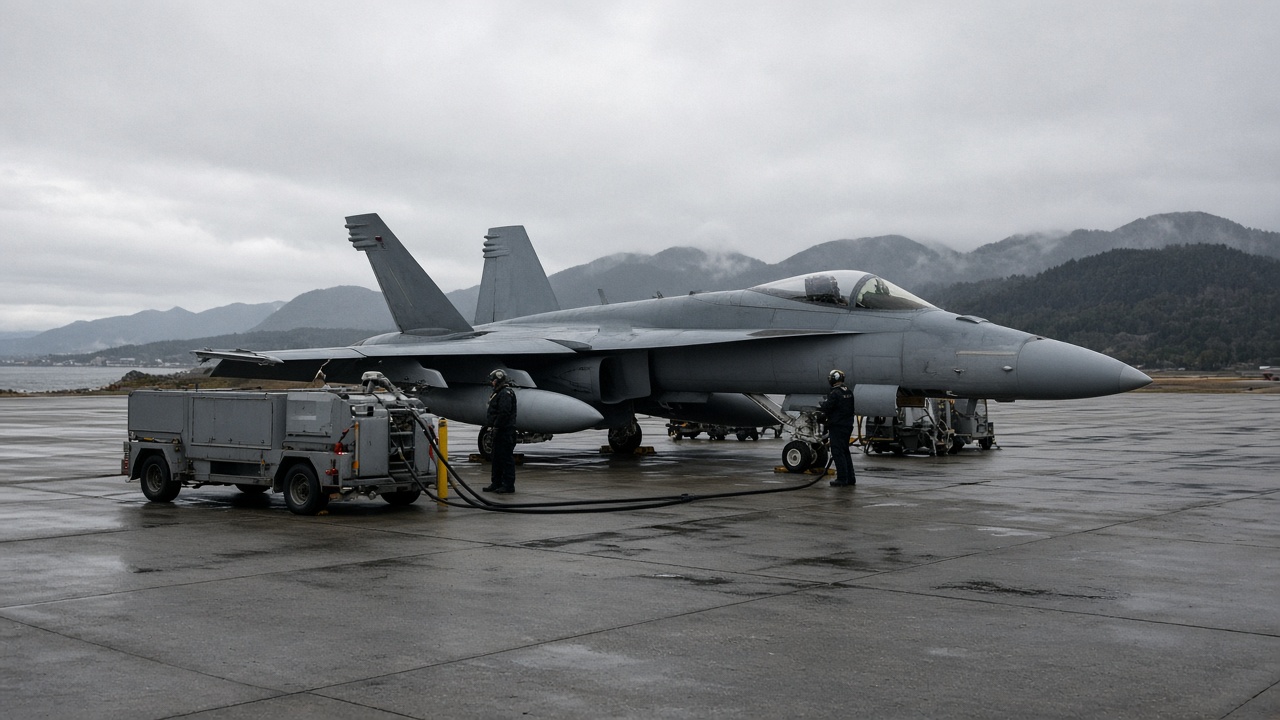
Taiwan’s defense minister confirmed Tuesday that the United States has offered a goodwill gesture over delays to Block 70 F-16V fighter deliveries, even as the first two of 66 jets ordered under the Peace Phoenix Soaring program remain staged in Hawaii without a public transfer schedule.
Minister of National Defense Wellington Koo told reporters at the Legislative Yuan that the bilateral contract does not include financial penalties for late delivery, meaning Taipei will not receive cash compensation from Washington for the slip. Koo was responding to local media reports that the U.S. government would help Taiwan seek compensation from manufacturer Lockheed Martin.
Where the fleet stands
Taiwan ordered 66 F-16V Block 70 aircraft in 2019 to modernize its air force against growing pressure from the People’s Liberation Army. The program, budgeted at NT$247.2 billion between 2020 and 2026, was originally slated to finish deliveries by the end of this year.
Production setbacks—including relocation of the final assembly line and supply-chain disruptions—pushed the timeline back. Taiwanese outlets reported that the first two jets departed the continental United States on Aug. 17 Eastern time and are now in Hawaii pending the flight to Taiwan. Koo declined to specify a delivery date, saying the ministry would announce one once confirmed.
Policy context after the Trump–Xi summit
Koo said Taipei continues “continuous discussions” with Washington on outstanding arms sales and has received repeated assurances since last week’s summit between U.S. President Donald Trump and Chinese leader Xi Jinping that American policy toward Taiwan has not changed.
Trump said in May that he was holding a roughly $14 billion arms package in abeyance after a Beijing visit, and China has long demanded an end to U.S. arms sales to Taiwan. After the Washington meeting, Trump said only that Xi understands his position on Taiwan; Koo told lawmakers Taipei has not been notified of any change to ongoing cases.
What Taipei expects next
Koo said production has reached a stage where delivery is possible and that the ministry will coordinate with U.S. counterparts on the remaining aircraft. He did not detail what form the U.S. goodwill gesture would take beyond continued talks.
Lawmakers from both camps pressed for a firm in-service date for the first pair, noting that the air force still relies on older F-16A/B airframes for daily quick-reaction alert missions. Koo repeated that operational security limits what can be disclosed before the jets touch down at a Taiwan air base.
Opposition legislators asked whether the delay would slip pilot conversion training scheduled for the fourth quarter, when the air force planned to stand up a new squadron for the Block 70 radar and avionics suite. Koo said training timelines would be adjusted once delivery dates firm up but did not offer a revised syllabus.
Analysts in Taipei said the Hawaii staging suggests the U.S. military is handling ferry logistics and weather routing rather than a political hold, though the lack of penalty clauses leaves Taiwan with limited contractual tools beyond diplomatic pressure. Koo’s emphasis on unchanged U.S. policy appeared aimed at reassuring markets after the Trump–Xi meeting, when cross-strait watchers parsed every line on arms sales.