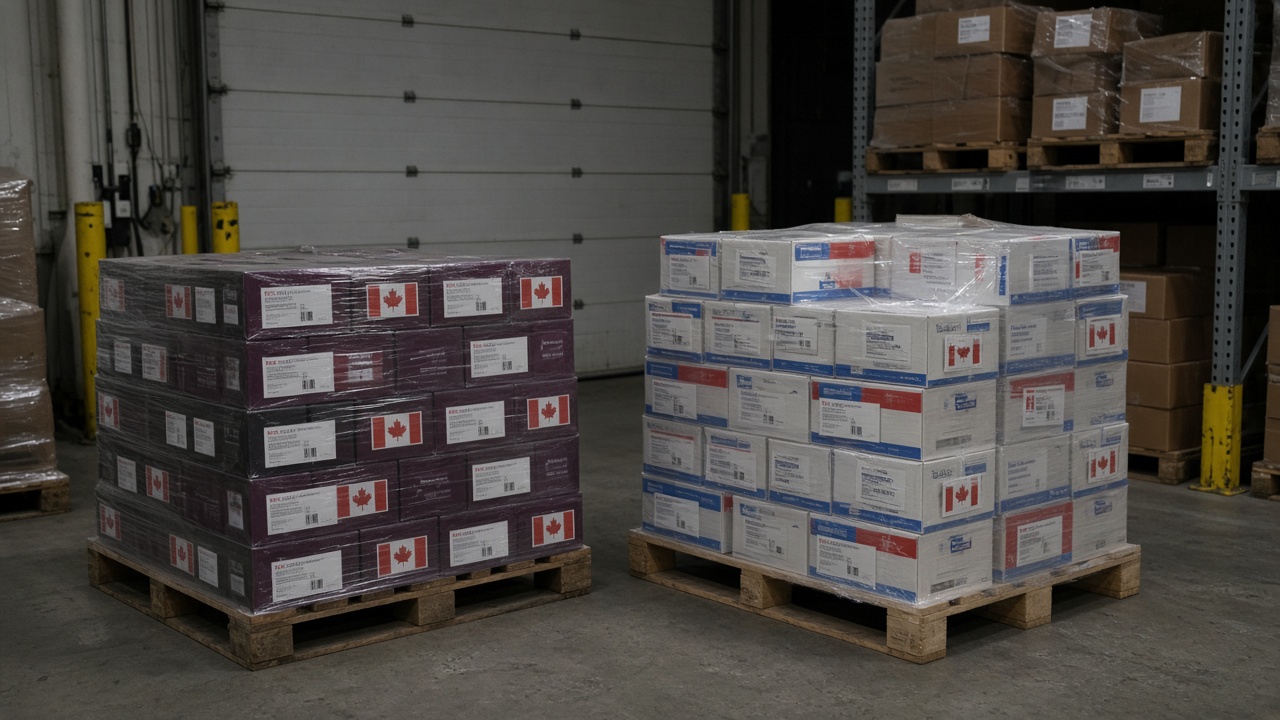
A U.S. import prohibition on nearly $1 billion worth of Canadian alcohol, dairy and motorcycles took effect at 12:01 a.m. Eastern on Tuesday, widening a trade fight that began when President Donald Trump imposed steep tariffs on Canadian goods and Ottawa retaliated in kind.
What the ban covers
The order blocks entry for a narrow list of Canadian products that Washington had already singled out in its broader tariff campaign. Trade attorney Patrick Childress, a former U.S. trade official now at Holland & Knight, told the Associated Press the measure is unlikely to move markets on its own because many of the same goods were already facing 50% duties that made U.S. imports uneconomical.
Jacob Jensen, director of trade policy at the American Action Forum, estimated the ban would hit about $967 million in Canadian shipments based on 2025 trade data. Roughly 87% of that value is alcoholic beverages, a category the administration linked to provincial decisions in Canada to pull American liquor from government store shelves after Trump escalated tariffs over the summer.
Dairy items on the list include whey, a longtime friction point in North American negotiations because Canada shields its farmers with tariffs once imports exceed negotiated quotas. Motorcycles are also barred; Quebec-based Bombardier Recreational Products confirmed its Can-Am Spyder and Canyon three-wheel models cannot be imported, though the company said most 2026 production had already shipped.
Why Washington moved now
Trump imposed 50% tariffs this year on roughly $20 billion in Canadian imports, invoking Depression-era trade powers and accusing Canada of discriminating against U.S. dairy, auto and alcohol producers. Canada answered with retaliatory tariffs of 15%, 25% or 50% on U.S. goods, matching the value of American levies.
The White House framed Tuesday’s ban as punishment for that retaliation rather than a new economic shock. Childress told the AP the standoff could drag for months because neither side yet faces enough pain to return to talks, even as two-way trade still totals about $880 billion annually.
Ottawa’s response and USMCA risk
Canadian Prime Minister Mark Carney campaigned on resisting U.S. pressure and has paired counter-tariffs with efforts to diversify trade toward Europe and India. Spokesman Gabriel Brunet, speaking for Canada-U.S. Trade Minister Dominic LeBlanc, said Ottawa’s priority is shielding workers and farmers while building partnerships outside the United States.
Trump told reporters Monday he expects Canadians to seek a deal on his terms. “They’re gonna come in and they’re gonna say, ‘Sir, we are sorry,’” he said, adding that any agreement must be “fair.”
Analysts said the episode further clouds renewal of the U.S.-Mexico-Canada Agreement, the pact Trump negotiated in his first term. Jensen warned exporters on both sides of the border will press officials for relief, but absent a broader tariff rollback the product ban mostly signals that the North American trading relationship remains in a punitive cycle rather than a negotiating pause.