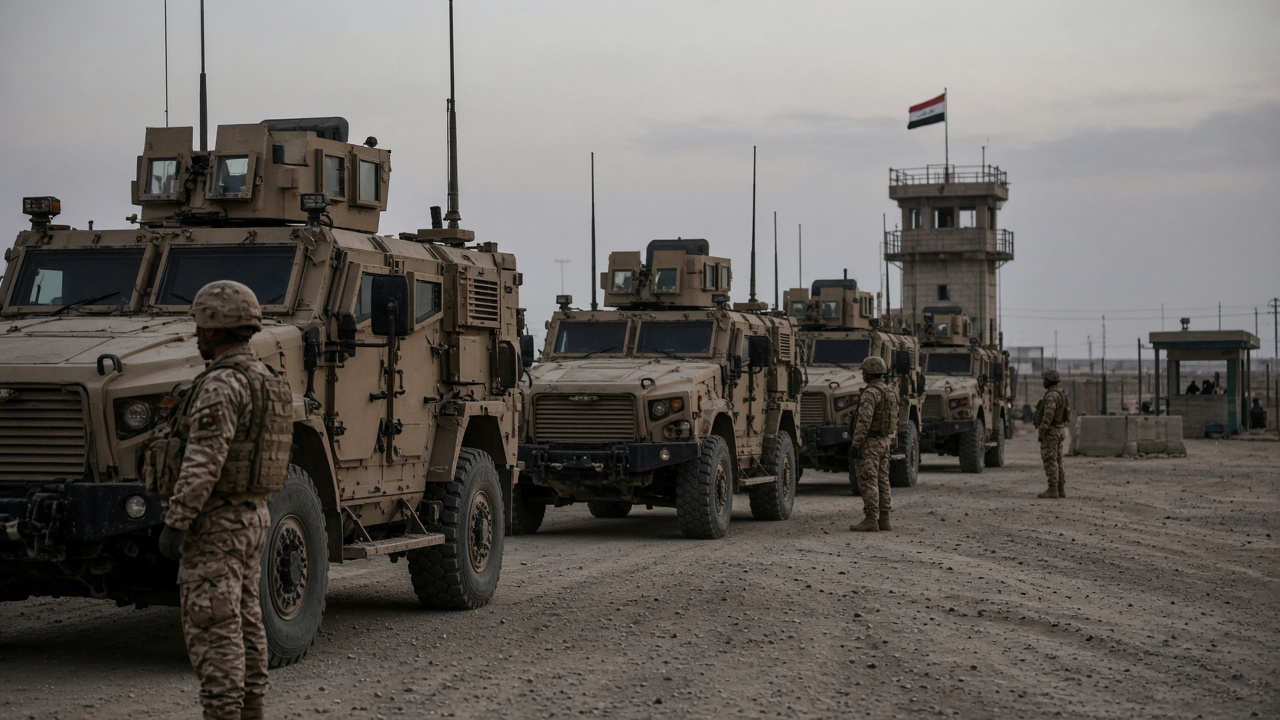
The United States has finished pulling its remaining combat forces out of Iraq, closing a military mission that began with the 2003 invasion and cost more than 4,500 American lives over two decades of war, counterinsurgency and renewed conflict in the wider Middle East, according to U.S. and regional officials cited by Reuters on Tuesday.
The departure does not erase every American footprint. Training, intelligence-sharing and contractor support for Iraqi security forces are expected to continue under agreements negotiated in Baghdad, but the combat formations that patrolled cities, hunted militant leaders and backed Iraqi offensives are gone. For Prime Minister Mohammed Shia al-Sudani’s government, the moment is both a sovereignty milestone and a gamble that Iraqi troops can hold the line against Islamic State cells and Iran-aligned militias without U.S. firepower overhead.
What changed on the ground
Reuters reported that the final combat withdrawal was treated as a strategic shift rather than a temporary rotation, coming as the U.S. concentrates assets on the seven-month war with Iran and as Iraqi leaders press for fewer foreign troops on their soil. Convoys have crossed into Kuwait in recent days, and U.S. commanders have stopped scheduling joint raids with Iraqi special forces that were a staple of the anti-IS campaign after 2014.
Iran and the militias it backs have publicly welcomed the exit. Officials in Tehran have long described the American presence as an occupation force that enabled Israeli strikes and Gulf military access across the region. With Iran’s allies now holding deep influence inside Iraq’s parliament and security ministries, U.S. planners worry that intelligence flows and base access could narrow even for the advisory mission that remains.
Baghdad’s balancing act
Iraq’s government has spent the past year trying to avoid being dragged fully into the U.S.–Iran war while still accepting help against Islamic State remnants in the western desert. Sudani has repeatedly said he wants only trainers, not combat brigades, yet militia rocket attacks on bases housing U.S. personnel continued until the drawdown accelerated this summer.
European diplomats in Baghdad said Iraqi officials are privately asking whether NATO or Gulf states might fill gaps if American air cover disappears. France and other coalition partners still maintain small advisory teams, but none match the surveillance and strike capacity the U.S. provided during the campaign against Islamic State.
Regional stakes
Analysts cited by Reuters said the withdrawal creates an opening for Iran to consolidate political influence in Iraq just as the Strait of Hormuz remains largely closed and Iraqi oil exports have been forced onto costlier overland routes. Iraq still ships millions of barrels when pipelines and southern ports function, but revenue pressure has already forced budget cuts and delayed infrastructure projects in Baghdad and the Kurdish north.
Republican lawmakers in Washington criticized the timing, arguing that leaving Iraq while Hormuz is contested signals retreat to adversaries. The Pentagon has not released a full troop count for what stays behind, but defense officials told reporters the remaining presence is sized for embassy security and limited training, not for rescuing Iraqi units if a major insurgent offensive returns.
What happens next
Iraqi parliamentarians are expected to debate a new security cooperation framework this fall that would cap foreign troop numbers and require parliamentary approval for any future U.S. combat return. Militia leaders have demanded a timetable for expelling every American adviser, while Kurdish regional government officials warn that a complete U.S. exit could leave them more exposed along disputed territories with federal forces.
For families of the Americans killed in Iraq since 2003, the withdrawal closes a chapter without a tidy victory narrative. Veterans’ groups noted that the mission evolved from regime change to sectarian war to the fight against Islamic State and, most recently, to keeping Iraq from becoming another front in the U.S.–Iran conflict. Whether Iraq can stay stable without U.S. combat troops is now Baghdad’s problem to prove.