WiseTech Global shares fell as much as 6.1 per cent on Tuesday after customs brokers in Sydney and Melbourne flagged repeated latency spikes on CargoWise-linked clearance APIs during the first hour of trade, according to three forwarding firms and exchange data.
Broker complaints pile up
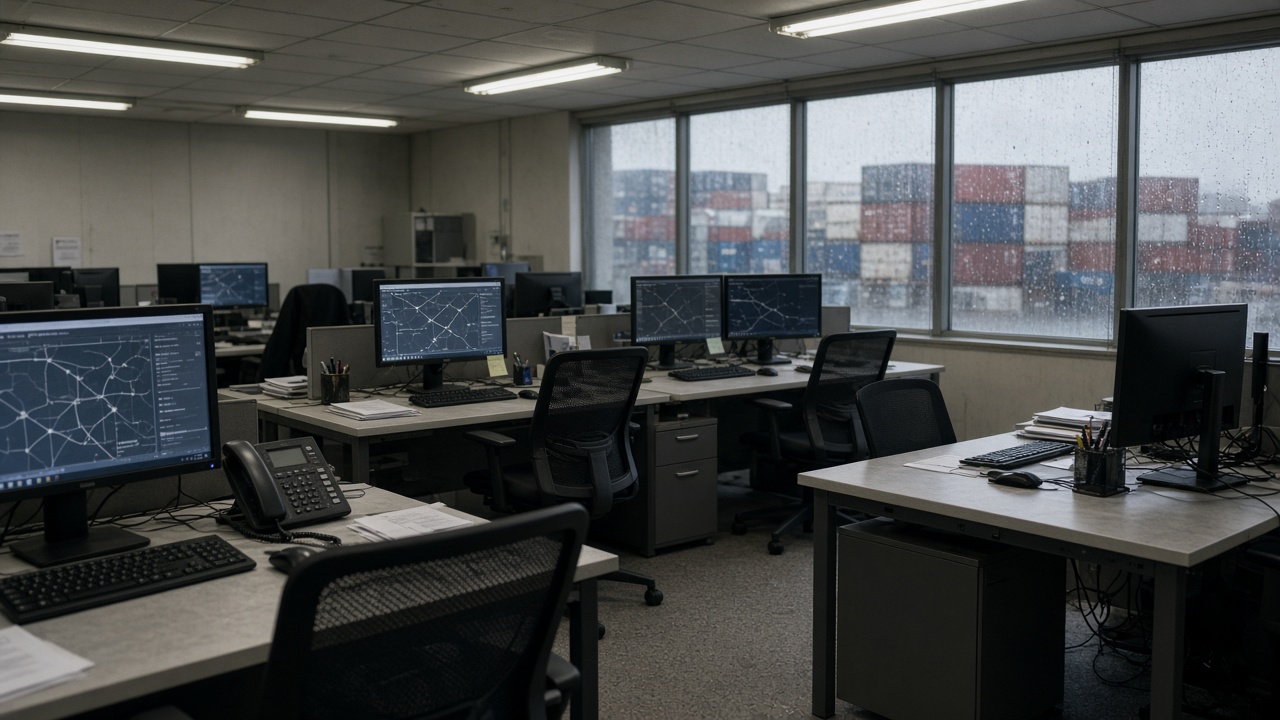
Staff at a midsize Melbourne forwarder said manifest uploads that usually clear in under ninety seconds stretched beyond four minutes shortly after 10:00 a.m. AEDT, forcing operators to queue entries for perishable dairy and automotive parts shipments. A Sydney-based broker said the delays appeared concentrated on routes that sync Australian Border Force status messages back into CargoWise dashboards, not on the core ledger functions used for quoting.
WiseTech issued a brief service notice acknowledging “intermittent elevated response times” on a subset of Oceania nodes and said engineers were rolling a patch across Sydney availability zones. The company did not attribute the incident to a cyber event, and the Australian Cyber Security Centre had not posted a related alert by midday.
Why the market cared
Investors have treated WiseTech’s logistics software as a defensive growth name tied to global trade volumes rather than commodity prices. Any hint that mission-critical customs integrations are stalling can unsettle holders who priced in sticky recurring revenue from large forwarding networks.
Macquarie analysts kept an outperform rating in a same-day note but warned that repeated API incidents could slow enterprise renewals if clients accelerate evaluations of rival platforms. WiseTech has spent heavily on data-centre capacity after prior outages in Europe, making Oceania reliability a sensitive talking point ahead of its November annual meeting.
Operational response
By the afternoon session, brokers reported latency returning to normal ranges, though some said they would maintain manual backup spreadsheets through the week in case of recurrence. WiseTech promised a post-incident report within five business days detailing root cause and compensating controls for customers on premium support tiers.
The episode lands as Australian importers prepare for a busy quarter of industrial component arrivals ahead of summer maintenance shutdowns. Forwarders said even short clearance delays can cascade into demurrage fees at container terminals, giving them room to demand service credits from software vendors.
Client workarounds and contract terms
Several large forwarders said they activated disaster-recovery playbooks that mirror manifest data into offline spreadsheets while waiting for API acknowledgements. Others routed urgent shipments through manual entry portals that Australian Border Force maintains for contingency events, accepting slower processing in exchange for certainty.
Standard enterprise contracts with WiseTech typically include monthly uptime targets above 99.5 per cent for core APIs, with service credits triggered when breaches persist beyond a defined window. Legal teams at two listed logistics firms said they were compiling timestamp logs to support claims if Tuesday's spikes recur.
Broader sector picture
Australian trade volumes have been volatile as miners and farmers adjust to currency swings and shifting Chinese demand. Software vendors argue that digitised customs workflows still beat paper processes, but brokers counter that single-vendor dependence creates systemic risk when clearance nodes stall during market opens.
WiseTech reiterated that no customer data was exposed during the incident and that encryption keys were not rotated. The company plans to host a technical webinar for Oceania customers on Friday to explain caching changes implemented after the patch rollout.