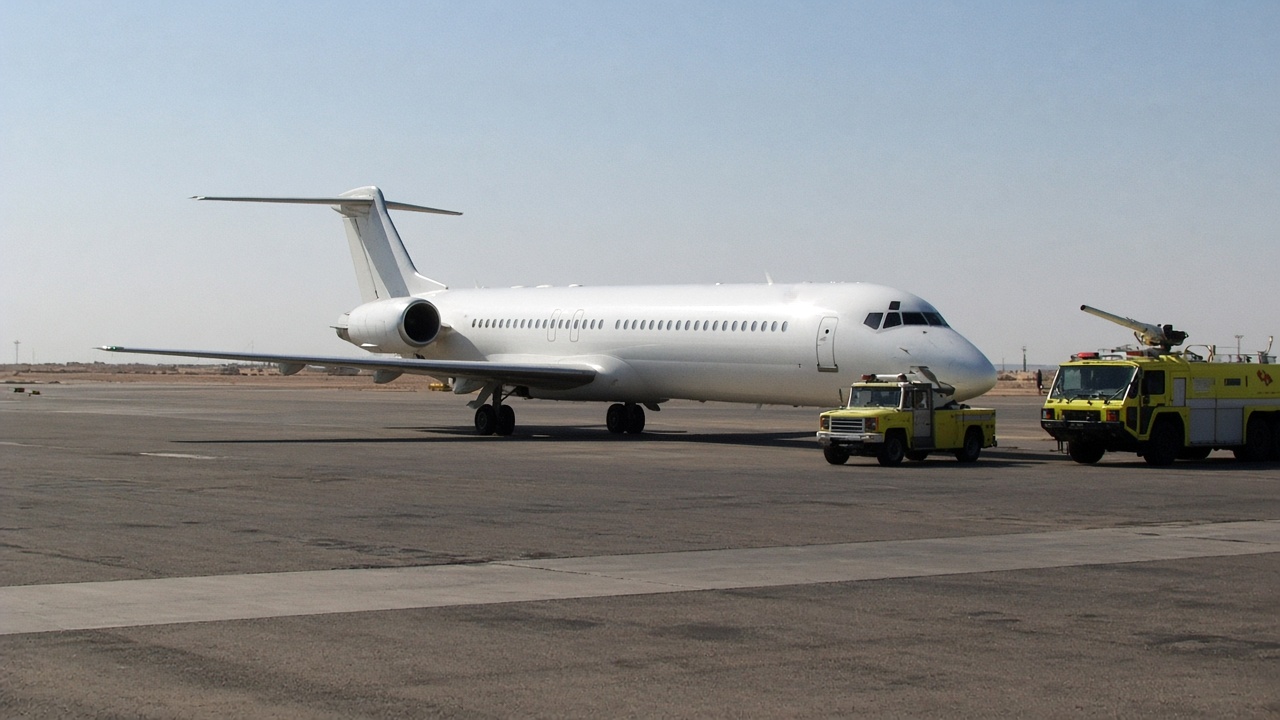
A Flydubai Boeing 737-8 MAX bound for Tel Aviv made an emergency landing in Tabuk, Saudi Arabia, on Wednesday after the flight crew radioed a distress call and both pilots were injured during an in-flight incident that sent the jet through a rapid descent over the Red Sea corridor.
The airline said flight FZ1073, with 174 passengers and six crew members, “experienced an incident while en route” from Dubai International Airport and landed safely at Prince Sultan bin Abdulaziz International Airport. Tabuk Airport, operated by Cluster2 Airports, said air traffic control received the distress call at 8:44 a.m. local time and the aircraft touched down at 9:45 a.m. The captain and first officer were taken to hospital; Flydubai said all passengers were accounted for and a replacement aircraft was being arranged.
Transponder codes and a steep drop
Public flight-tracking data showed the jet climbing normally before it descended from roughly 34,000 feet to below 17,000 feet within about a minute while still northeast of Tabuk. The aircraft briefly transmitted the transponder code associated with unlawful interference, according to tracking services cited by multiple news outlets, before switching to a general emergency squawk and diverting into Saudi airspace.
Israeli Prime Minister Benjamin Netanyahu’s office said the situation was “under control” and that authorities were working to return Israeli passengers home. Saudi Arabia’s General Authority of Civil Aviation had not issued a detailed public statement on the cause of the emergency by mid-morning Gulf time.
What investigators have—and have not—said
Flydubai has not described the cockpit events beyond confirming the diversion and cooperation with Saudi authorities. Israeli media, citing unnamed officials, reported that a physical altercation between the two pilots may have preceded the emergency descent. Some of those reports said that the first officer attacked the captain with a knife; Reuters and other outlets noted that Israeli officials were treating the episode as a possible possible security incident, while stressing that neither Flydubai nor Saudi investigators had publicly confirmed motive or criminal intent.
Passengers who spoke to Israeli broadcasters described shouting from the flight deck, a sudden loss of altitude, and blood visible on crew members after the situation was contained. Aviation safety blog The Aviation Herald, citing passenger accounts, reported that cabin crew and travelers helped restrain one pilot after the cockpit door was opened; that account has not been independently verified by regulators.
Rare routing through Saudi airspace
The diversion underscored how tightly choreographed Gulf–Israel aviation has become since normalization deals opened corridors that routinely cross Saudi territory. A Tel Aviv-bound jet parking at a Saudi civilian-military field would have been unthinkable a decade ago; Wednesday’s landing turned that corridor into an impromptu triage site for two injured flight crew and a planeload of travelers caught between Dubai and Ben Gurion.
Commercial aviation regulators in the United Arab Emirates, Israel, and Saudi Arabia typically lead parallel probes after such events, with the state where the aircraft lands controlling immediate access to the airframe. Flydubai said further updates would follow as facts are confirmed.
What happens next
Saudi investigators are expected to interview crew and passengers, download flight-data recorders if the aircraft is released for technical examination, and coordinate with Flydubai’s home regulator in Dubai. Israeli police have opened their own inquiry, according to Israeli press reports, amid questions about how a dispute—or something more serious—could escalate aboard a high-traffic route that carries business travelers and tourists daily.
For now, the confirmed record is narrower: a distress call, a hard landing in Tabuk, two pilots in hospital, and 180 people on board who walked away from the runway intact while authorities on three continents try to reconstruct what happened behind a locked cockpit door.