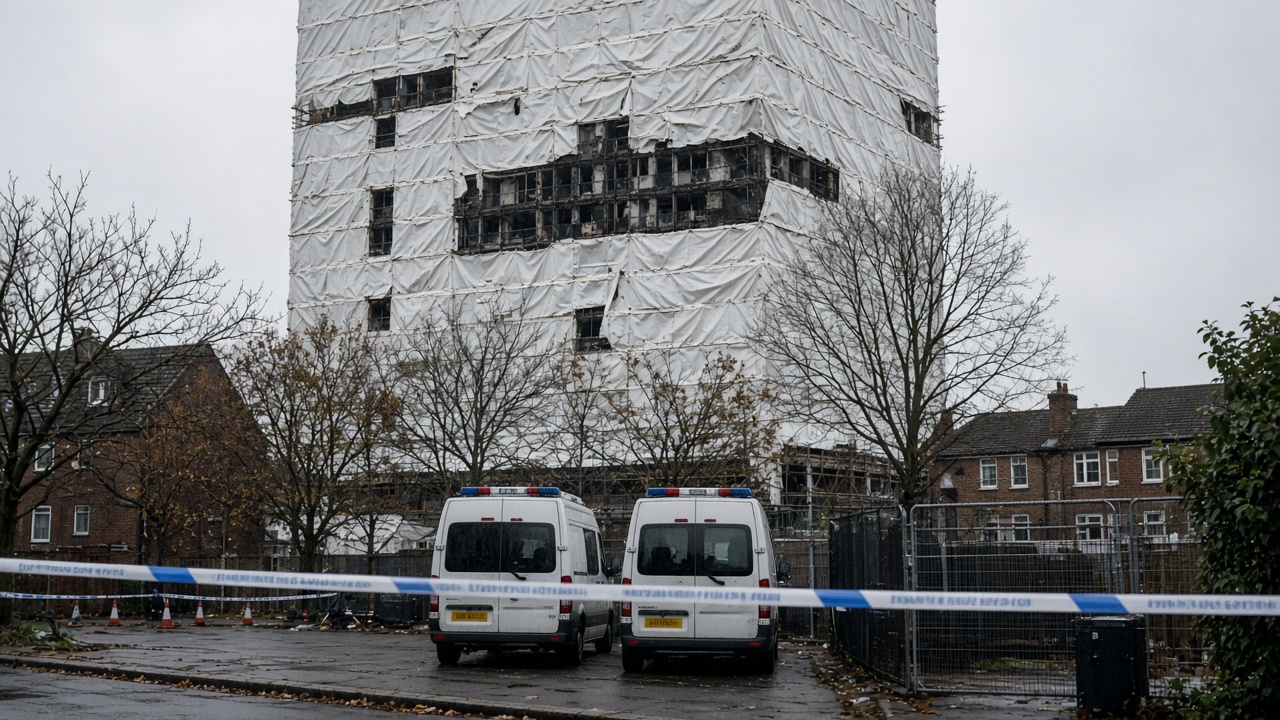
The Metropolitan Police has handed prosecutors its final Grenfell Tower investigation file, asking the Crown Prosecution Service to consider charges against 54 individuals and 20 companies over the June 2017 fire that killed 72 people in North Kensington.
Scotland Yard said Wednesday the referral covers alleged corporate manslaughter, gross negligence manslaughter, health and safety offences, fraud and fraud-related crimes, and misconduct in public office. The force described Operation Northleigh as one of the most complex inquiries it has ever run, spanning 15,000 people across 700 organisations and costing about £150 million.
Nine years to the CPS threshold
Detectives kept the tower site as a crime scene for 14 months, commissioning laboratory tests on cladding debris and the fridge-freezer in the fourth-floor flat where the blaze began. Evidence—including thousands of fragments and more than 45,000 documents—has been stored at a secure warehouse, parts of which the BBC viewed last year.
Police delayed completing the file until after the public inquiry’s 2024 report concluded the disaster was avoidable and mapped a chain of regulatory and commercial failures. Bereaved families argued the wait prolonged their anguish, but investigators said the inquiry’s technical findings shaped which conduct they could pursue criminally.
What prosecutors must decide
The CPS will apply the two-stage test used in every major case: whether there is a realistic prospect of conviction on the evidence supplied, and whether prosecution serves the public interest. The service said charging decisions should be made before the tenth anniversary on 14 June 2027.
The submission includes sample exhibits and reports totalling more than two million words. Police have taken 14,700 statements and built a partial replica of a tower section, now being dismantled, to help future juries understand how flames raced up the exterior.
Families’ response
Grenfell United, representing bereaved relatives and survivors, said no family should have to fight so long for accountability. “It has taken more than nine years to get here,” the group said in a statement, “and no one has been held criminally accountable for the deaths of our 72 loved ones.” The organisation insisted that convictions should carry prison sentences if guilt is proved.
Joe Powell, the Labour MP for Kensington and Bayswater, welcomed the referral but warned that justice had already been “agonisingly” delayed. He pledged to work with ministers to avoid further bottlenecks as prosecutors digest the material.
Political and building-safety context
Parliament has overhauled building-safety law since the fire, yet the criminal file remains the sharpest test of whether individuals who signed off on refurbishment decisions will face juries. Corporate defendants, if charged, can argue that responsibility was diffuse across contractors, consultants and local officials—a defence prosecutors will have to dismantle with the inquiry’s narrative as a guide.
Wednesday’s transfer does not guarantee courtroom trials; the CPS may narrow the defendant list or accept guilty pleas on lesser counts. Even so, for families who watched the tower burn on live television in 2017, the move from investigation to prosecution is the first formal step toward trials they have demanded since the ashes cooled.