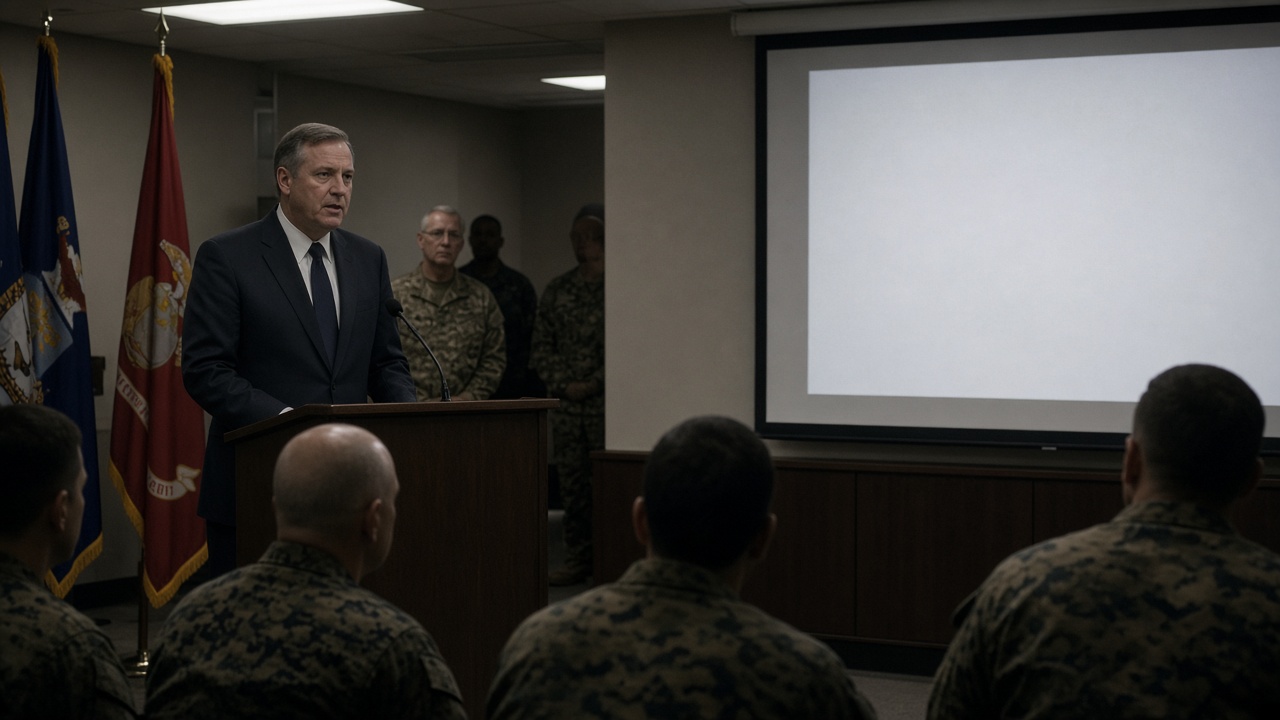
U.S. Defence Secretary Pete Hegseth told senior military leaders on Wednesday that American forces have “destroyed” Iran’s navy, air force, integrated air defences, senior leadership and military-industrial base while also crippling Tehran’s nuclear ambitions, a sweeping battlefield assessment delivered as diplomacy with Iran stalled again in New York.
Speaking at the Marine Corps base at Quantico, Virginia, outside Washington, Hegseth framed the months-long campaign as a decisive degradation of Iran’s ability to project power in the Gulf and beyond. His remarks were reported as President Donald Trump separately told reporters the United States faced a stark choice: reach an agreement with Iran or resume large-scale strikes.
What Hegseth said at Quantico
Hegseth’s language was categorical. According to accounts of the closed session with commanders, he said U.S. operations had eliminated Iran’s naval surface fleet as a fighting force, grounded much of its air force, punched through layered air-defence networks and struck facilities tied to missile production and nuclear research. He also argued that leadership targets had been hit hard enough to disrupt command and control.
The Pentagon has not released a detailed inventory of platforms destroyed, and independent verification of each claim is limited while the conflict continues. Iranian officials have previously dismissed similar U.S. characterisations as propaganda, and Tehran’s remaining missile arsenal has continued to pose a threat to bases and shipping lanes even after heavy losses.
Trump’s “deal or blow them up” framing
At the White House later on Wednesday, Trump sharpened the public messaging. Asked about negotiations, he said Washington had to decide whether to “blow them up or make a deal,” adding that losing 18 American service members in the war was “too many” but far below the toll of the Iraq war.
The comment landed as Secretary of State Marco Rubio’s decision to order Iran’s United Nations delegation to leave the country after General Assembly week underscored how little progress mediators have made. Foreign Minister Abbas Araghchi and his team departed New York for Doha after the U.S. mission demanded they go immediately, according to U.S. officials cited in American media.
Strait of Hormuz and what comes next
Trump repeated his assertion that the United States exercises “virtually total control” over the Strait of Hormuz, the choke point through which much of the world’s traded oil moves. Tanker traffic and insurance markets remain volatile, and Gulf governments have pressed both sides for a ceasefire that would reopen shipping lanes without a wider regional war.
Qatari and Omani intermediaries are still circulating compromise proposals, but neither Washington nor Tehran has publicly accepted terms that would halt strikes while addressing Iran’s nuclear programme and its support for armed groups. Hegseth’s assessment is likely to be used internally to justify a pause for talks—or to argue that additional pressure is unnecessary because Iran’s conventional forces are already broken.
Allies watch the numbers
European and Arab capitals are weighing two risks: that an overstated U.S. victory narrative could make Tehran dig in, and that a premature claim of success could leave shipping and bases exposed if Iran retains long-range missiles and drones. NATO members hosting U.S. bombers, including the United Kingdom, are also managing domestic fallout from security incidents tied to the war.
For now, the administration’s public line pairs Hegseth’s damage assessment with Trump’s ultimatum. Whether that combination opens a diplomatic off-ramp or sets up another round of strikes will depend on what Iran’s leadership believes it still has left to bargain with—and whether mediators can keep channels open after the expulsion from New York.