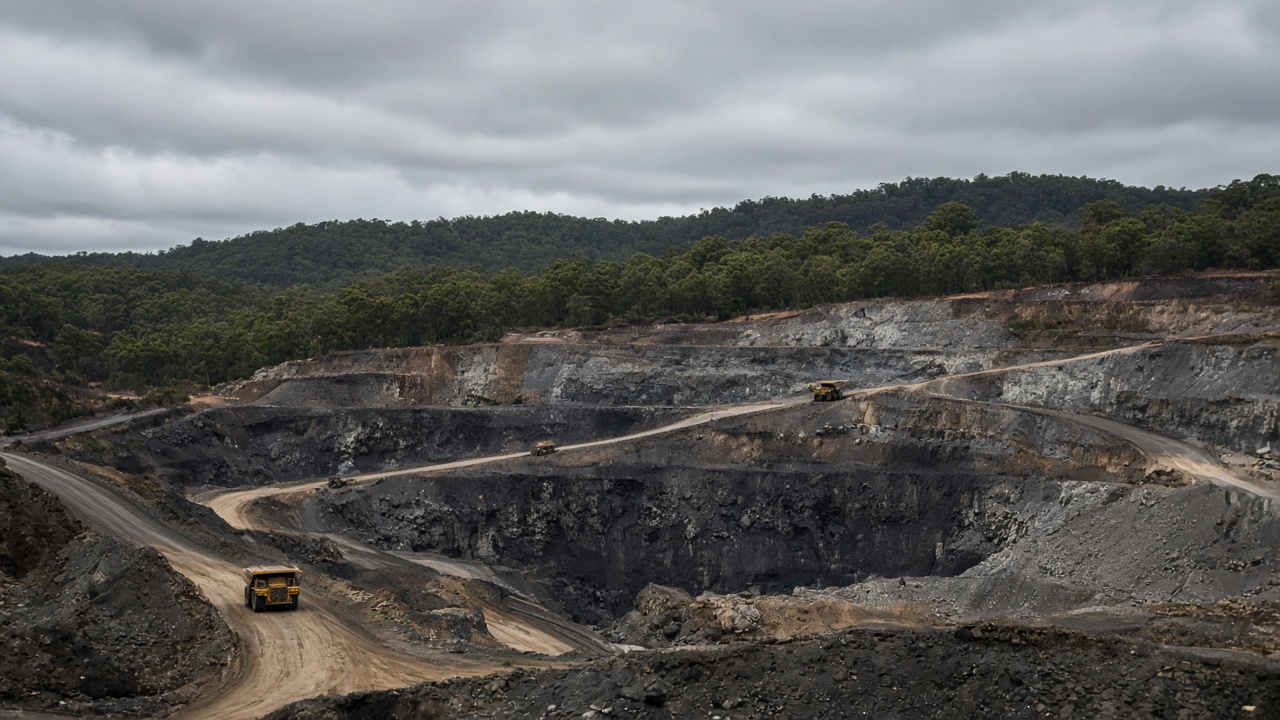
New South Wales' Independent Planning Commission has approved the Hunter Valley Operations Continuation Project, green-lighting open-cut coal mining near Singleton through 2045 in a decision climate groups condemned as incompatible with Australia's emissions pledges.
What the commission decided
The IPC published its determination on Wednesday after a lengthy assessment that drew more than 10,000 public submissions, union representations and briefings from state agencies. The project, operated in the Hunter Valley by major producers including Whitehaven Coal, seeks to extend work at existing pits rather than open entirely new fields.
In its reasons, the commission said it weighed greenhouse-gas impacts alongside economic benefits for the Hunter, including royalties, local business contracts and continued employment in a region where mining has shaped town budgets for decades. It concluded that the proposal met the planning tests set out for major resources projects in New South Wales, subject to conditions the panel attached to limit dust, water and rehabilitation obligations.
Environmental pushback
Conservation advocates had urged the IPC to reject the continuation, describing the mine's remaining coal reserves as a "carbon bomb" that would release emissions long after Australia has promised to steeply cut national output. Several groups said approving a mine life stretching into the 2040s undercuts federal climate targets and sends mixed signals to investors shifting toward renewables.
Local residents who opposed the project raised concerns about noise, blasting schedules and the pace of land rehabilitation once pits close. Supporters, including some council leaders and mining unions, argued that a refusal would accelerate job losses in towns already adjusting to earlier mine closures and rail disruptions.
Industry context
The Hunter Valley remains Australia's most export-intensive coal corridor, even as Asian buyers diversify and domestic banks tighten lending to fossil-fuel projects. Producers have sought extensions at established sites partly because rail and port infrastructure is already in place, lowering the cost of keeping operations running compared with greenfield developments.
Whitehaven and other operators have highlighted investments in equipment upgrades and workforce training in public hearings, while acknowledging that global thermal-coal demand faces long-term uncertainty. The IPC decision does not guarantee production levels; market prices and corporate capital plans will still dictate how much coal is actually shipped each year.
What happens next
Opponents may challenge the determination in court, a path used in previous New South Wales mining disputes. In the meantime, the proponent must satisfy the commission's conditions before major new disturbance begins, and state regulators will continue monitoring air quality and water use across the valley. For households far from the pits, the ruling is likely to surface again in state politics as parties argue over how quickly New South Wales should phase down export coal while supporting workers in affected communities.