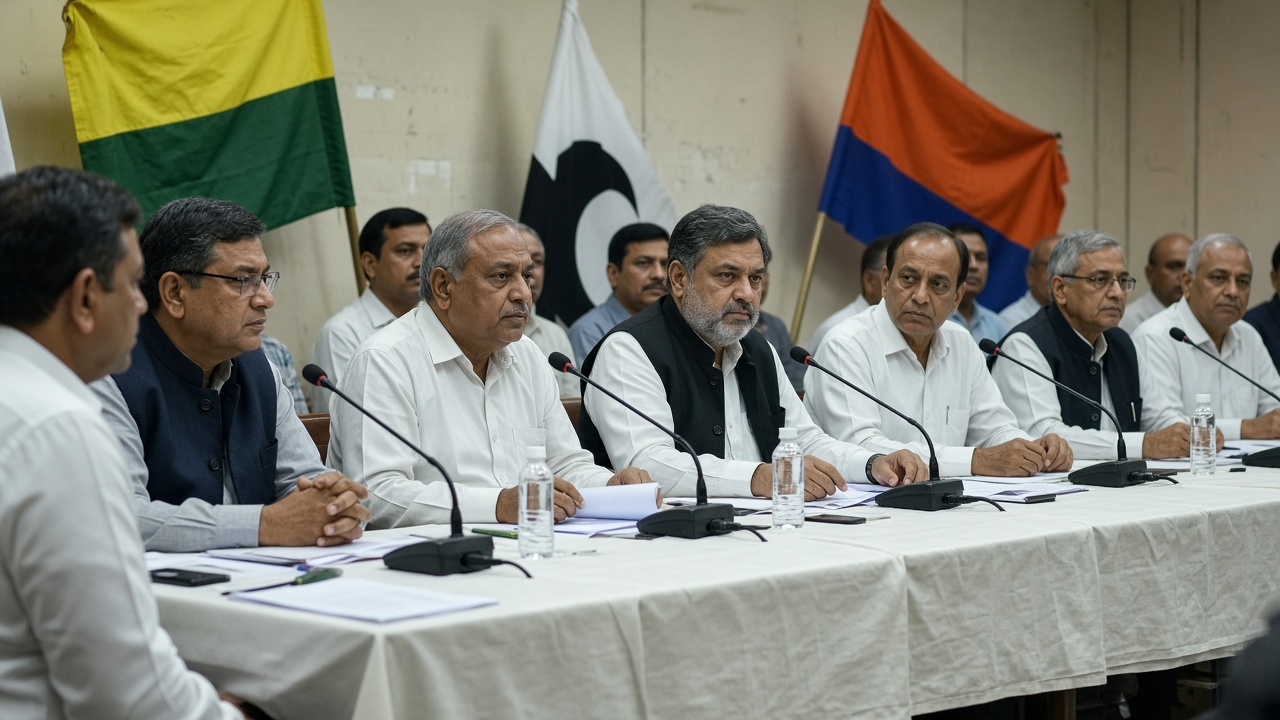
India’s opposition INDIA bloc closed a three-and-a-half-hour meeting in New Delhi on Wednesday with a coordinated protest calendar and a demand that future national elections use paper ballots, escalating a confrontation with the Election Commission over Special Intensive Revision of voter lists.
Congress president Mallikarjun Kharge told reporters that every party in the room agreed “one hundred per cent” to abandon electronic voting machines for ballot papers and to annul laws the alliance described as passed by a “chori government.” The bloc will hold “save democracy” marches from 2 to 8 October and stage demonstrations outside district magistrates’ offices, mobilising students and NGOs.
What triggered the huddle
The meeting followed an Indian Express investigation reporting that election commissioners Sukhbir Singh Sandhu and Vivek Joshi objected on record at least 14 times in ten months to SIR-related orders they said were issued without their knowledge. Opposition leaders have seized on the disclosures to argue that Chief Election Commissioner Gyanesh Kumar has undermined the commission’s collegial structure.
Kharge repeated calls for Kumar’s resignation and said the bloc would ask the Supreme Court to expedite pending petitions on roll revision and alleged electoral malpractice. Parties ranging from the Trinamool Congress and Nationalist Congress Party (Sharad Pawar) to the Rashtriya Janata Dal signed on to the joint plan, presenting a rare united front after months of state-level sparring.
Commission’s defence
The Election Commission has insisted that differing views are normal in any institution and that all orders carry full legal sanction under statutory procedures. Officials say SIR is meant to clean rolls before state polls, though opposition figures cite commission data showing large numbers of voters removed or forced to re-establish eligibility.
Prime Minister Narendra Modi’s Bharatiya Janata Party has accused the alliance of trying to delay elections it fears losing. BJP spokespeople argue the revision weeds out duplicate and deceased entries uncovered during door-to-door verification, particularly in states where opposition machines control local lists.
Ballot demand and street strategy
Returning to paper ballots has been a fringe demand for years; Wednesday’s unanimity among 19 parties gives it new parliamentary weight even though the government shows no appetite to reverse EVM adoption. Kharge framed the issue as restoring voter trust after the commissioner dissent story, linking it to broader anxieties about disenfranchisement.
The October marches are timed to keep pressure on Kumar before winter state campaigns. Opposition strategists hope visible rallies will complement court challenges, though past monsoon-season protests over the same SIR process produced arrests and water-cannon deployments in several capitals.
What happens next
Parliament’s monsoon session is winding down, limiting immediate legislative avenues for the ballot demand. The practical fight will play out in district verification camps, where party workers are documenting exclusions, and in the Supreme Court, where petitions already question Form 6 changes and summary deletions.
For Kharge, the meeting was as much about holding a fractious alliance together as about election law. By fixing dates and a single slogan—save democracy—the bloc gave state units a script for the next fortnight. Whether that converts into relief for voters flagged in SIR notices will depend on courts, local officials, and the commission’s willingness to publish reconciliation data opposition leaders say has been missing from public briefings.