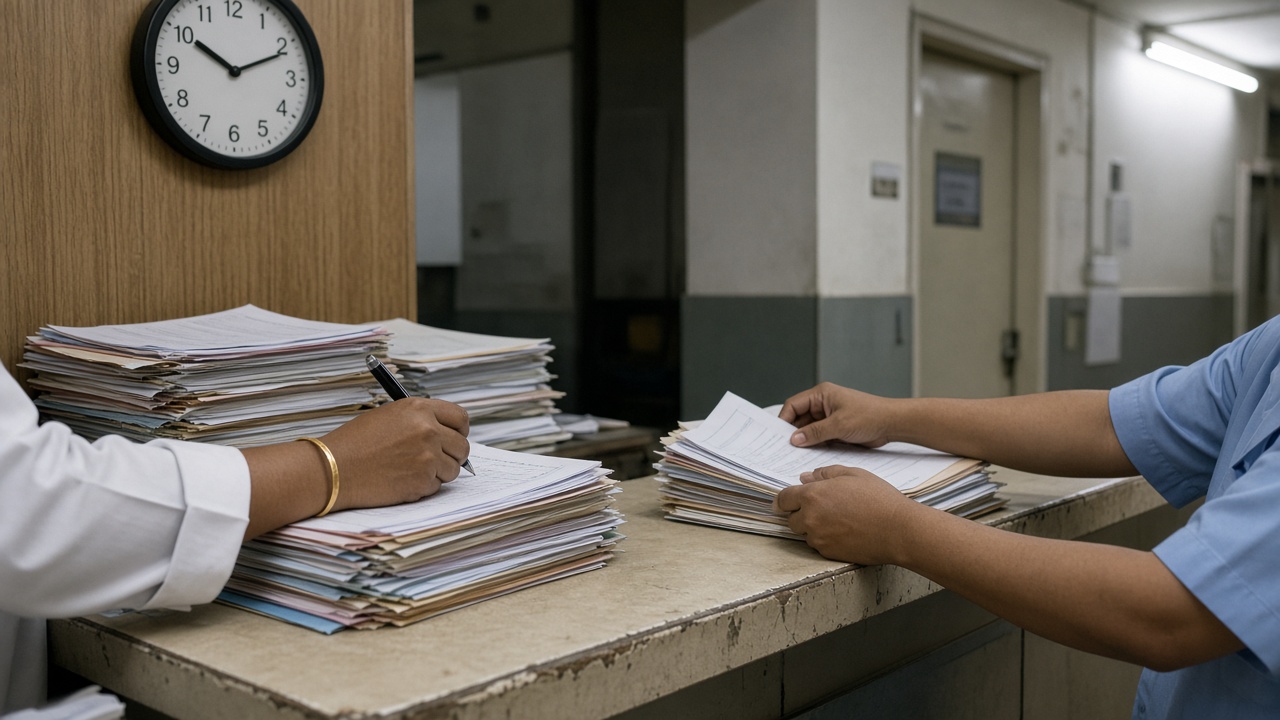
Major hospital chains began displaying Insurance Regulatory and Development Authority of India cashless timelines at billing counters this month, translating a May 2024 master circular into visible clocks patients can cite when third-party administrators delay approvals.
The rule on paper
IRDAI's health insurance master circular requires insurers to decide cashless pre-authorisation within one hour of receiving a complete hospital request and to grant final discharge authorisation within three hours of the discharge request. If insurer delay forces an extra hospital night, additional charges must come from shareholder funds, not the patient.
Systems were supposed to be live by 31 July 2024. Two years on, patient forums still log complaints about wards held hostage while tpas request duplicate documents.
Why panels went public in September
Apollo and Manipal units in metro cities pasted QR-linked explainer sheets after social-media videos showed families paying security deposits despite active policies. Insurers including ICICI Lombard and HDFC ERGO responded with dedicated hospital hotlines, yet front-desk staff say night-shift requests still miss the hour mark when specialist doctors delay estimates.
Moneycontrol's personal finance desk noted in a 23 September guide that timelines do not guarantee full approval—exclusions and co-pays still apply—but they give patients a regulatory hook to escalate.
Practical advice for policyholders
Before admission, photograph the policy number and emergency contact on the insurer's app. Ask the hospital to timestamp fax or portal submissions. If the one-hour window passes, lodge a complaint on IRDAI's integrated grievance management system and request written reasons for delay.
With dengue and post-monsoon fevers filling beds in several states, cashless friction is a public-health issue as much as a compliance tick. Visible clocks are a small step toward making the three-hour discharge promise enforceable in court, not just on circular paper.
TPA desk reforms
Third-party administrators are hiring night-shift doctors to read pre-auth packets, yet hospitals say scanned discharge summaries still arrive without digital signatures, forcing manual rework. IRDAI's integrated grievance portal saw a 12 per cent month-on-month rise in cashless complaints in August, according to industry estimates cited in trade press.
Group health policies sold to startups with young workforces see fewer disputes than retail policies with waiting periods on pre-existing diseases—another friction point when the one-hour clock starts before medical records upload completes.
Regulator enforcement
IRDAI has not published a public tally of penalties for missed clocks, but insurers privately warn branches that repeat offenders could lose empanelment fast-track status at premium hospital chains. That commercial threat may accomplish more than fines in a competitive retail health market.