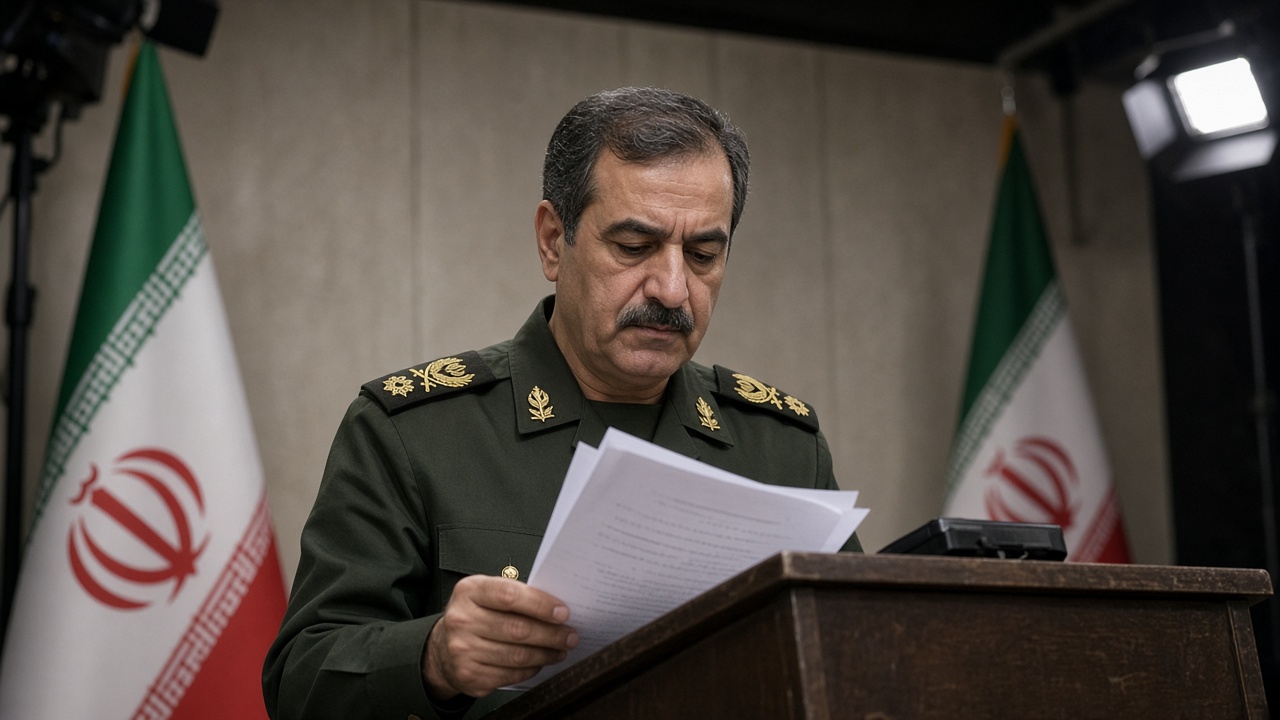
Iran’s Islamic Revolutionary Guard Corps took its case directly to American voters on Tuesday, with spokesman Brig. Gen. Hossein Mohebbi reading what he called a “letter to the American people” and urging street protests against President Donald Trump’s war policies weeks before the November midterm elections.
At a news conference in Tehran, Mohebbi said the conflict would end only if the United States admitted defeat and withdrew from the region. In follow-up comments reported by The Associated Press, he called on Americans to reconsider their leadership and demonstrate against what he described as Washington’s warmongering, accusing the administration of using Iran’s nuclear program as cover to “plunder Iran’s wealth” and reduce the country to “a colony.”
Messaging amid indirect talks
The public appeal landed against a more complicated diplomatic backdrop. Iranian state media said Wednesday that Foreign Minister Abbas Araghchi had presented President Masoud Pezeshkian with a formal U.S. response to Tehran’s proposal for a seven-day ceasefire and a phased reopening of the Strait of Hormuz. Government spokeswoman Fatemeh Mohajerani told IRNA that the cabinet was now weighing the counteroffer, even though Trump had publicly rejected Iran’s earlier plan.
Reuters reported that disagreement between the sides centers on the sequencing of any truce, with Araghchi expected to discuss the American reply in Tehran on Wednesday. Qatar has acted as an intermediary, and Iranian officials have insisted they are still awaiting an official answer despite Trump’s weekend dismissal of the seven-point framework discussed at the United Nations.
Hard line from the Guard
Mohebbi’s briefing underscored how security institutions are messaging in parallel with civilian negotiators. Supreme National Security Council secretary Mohsen Rezaei told visiting Azerbaijani officials Tuesday that Trump was “trapped in a quagmire” and “incapable of decision-making,” unable either to fight on or to settle. The Treasury Department, meanwhile, sanctioned 10 individuals and firms Tuesday for allegedly supplying Iran’s military logistics agency, part of what Washington calls Operation Economic Outcast.
On the water, the United Kingdom Maritime Trade Operations centre said unknown projectiles struck three vessels in the Strait of Hormuz on Tuesday, including crude and liquefied natural gas tankers. The channel carried roughly a fifth of global oil and LNG exports before the war choked traffic, keeping energy markets on edge even as ceasefire language circulates in capitals.
What U.S. officials face at home
Mohebbi’s timing was difficult to ignore in Washington. Republicans are defending narrow congressional majorities on 3 November, and the war’s cost—military casualties, Hormuz insurance premiums, and domestic fuel volatility—has become a campaign issue in several swing districts. The IRGC letter did not propose policy concessions; it asked American citizens to pressure their government to stop fighting.
U.S. intelligence and public-diplomacy officials have long treated similar Iranian outreach as propaganda, but the blend of voter-focused rhetoric and battlefield pressure is unusual this close to an election. If Pezeshkian’s government engages seriously with the reported U.S. counterproposal, Mohebbi’s call for protests could sit awkwardly beside any ceasefire choreography. For now, both tracks are moving at once: negotiators trading papers in Doha, and the Guard telling Americans to march.