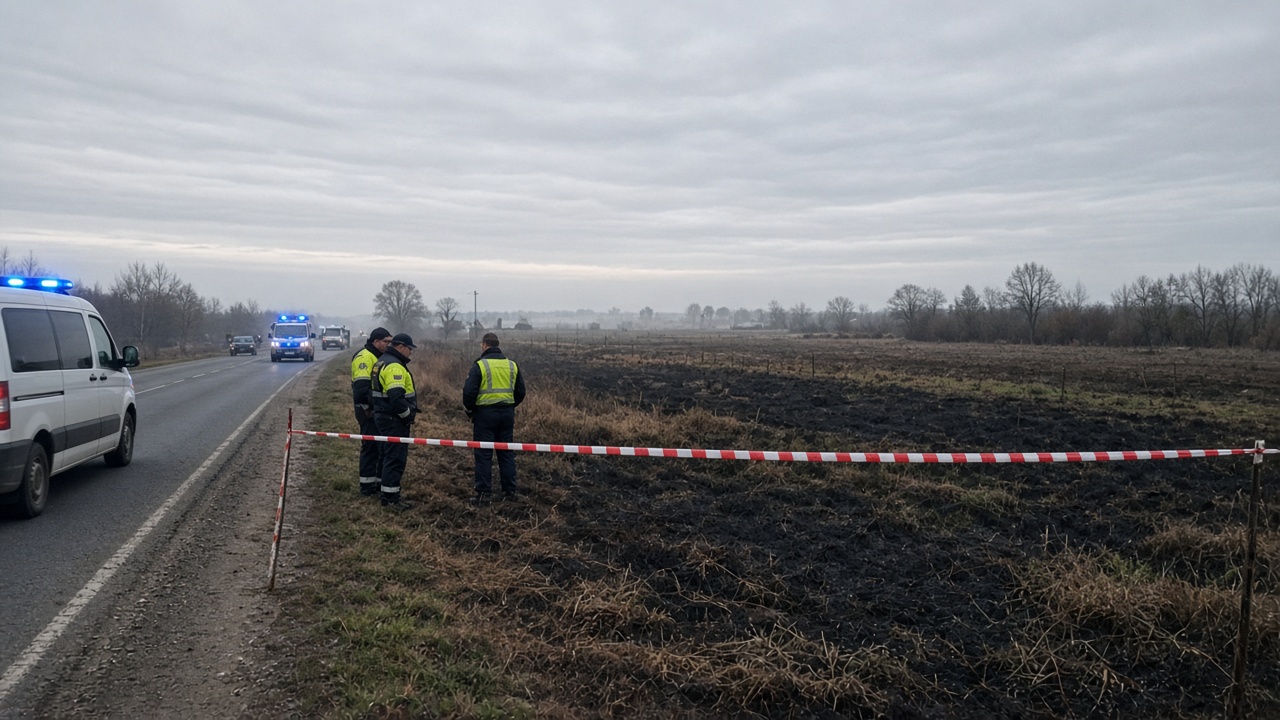
Moldova’s interior ministry said a drone exploded and damaged property in Anenii Noi district early Wednesday, hours after Russia launched another large-scale air attack on Ukraine that killed at least four people in the Kyiv area and knocked out power infrastructure across several regions.
The blast site lies well inside Moldovan territory, roughly midway between the capital Chișinău and the Ukrainian border. Moldova is not a NATO member, but the incident underscores how stray or misdirected ordnance from the war next door can land far from the front line — a risk European capitals have tracked since the invasion began.
What Moldovan officials reported
In a Facebook post, the ministry said the device detonated in Anenii Noi and that police and firefighters were sent to secure the area and collect evidence. It did not immediately attribute the drone to any military, and there were no reports of casualties in Moldova from the explosion itself.
Anenii Noi sits in the country’s agricultural heartland, east of Chișinău. Ukrainian officials said Russia fired a mix of cruise missiles and Shahed-type drones overnight, with air alerts lasting much of the night in Kyiv. President Volodymyr Zelenskyy said strikes hit energy facilities in the capital region and also damaged infrastructure in Zhytomyr, Mykolaiv, Kirovohrad and Rivne oblasts.
Context from Ukraine’s latest barrage
Ukraine’s air force said it faced 188 aerial threats in the latest wave, including dozens of missiles, and that air defences downed or neutralised the majority. Mayor Vitali Klitschko reported three deaths inside Kyiv and multiple fires, with emergency services describing dense fog over the city on Wednesday morning.
Russia’s defence ministry said it struck a communications centre in Kyiv, energy sites linked to military production in the region, and port infrastructure near Izmail on the Danube. Western officials have repeatedly warned that cross-border drone debris and navigation errors pose hazards for neighbours; Romania and Poland scrambled fighter aircraft overnight as Russian attacks continued in western Ukraine.
Why spillover matters for Moldova
Moldova has walked a narrow line since 2022, condemning the invasion while managing deep economic ties to both Brussels and Moscow. Pro-European President Maia Sandu has pushed EU accession talks, but Transnistria — a Russian-backed breakaway region — still hosts a contingent of Russian troops.
Previous incidents involving missile fragments or drones have forced Chișinău to summon Russian diplomats and tighten airspace monitoring. Wednesday’s detonation is likely to renew calls in parliament for better radar coverage and faster NATO-standard equipment, even if full alliance membership remains distant.
What happens next
Moldovan investigators will try to recover fragments, trace the flight path and determine whether the device was a downed Ukrainian interceptor, a Russian strike drone that failed to reach its target, or another type of munition. Ukraine’s prosecutor general has opened war-crimes cases over repeated attacks on civilian power networks as winter approaches.
For now, authorities asked residents near the blast zone to avoid handling debris and to report unfamiliar objects to police. Zelenskyy is expected to press partners again for additional air-defence missiles, while Moldova will be watching whether any further ordnance falls outside Ukraine’s borders during the next overnight raid.