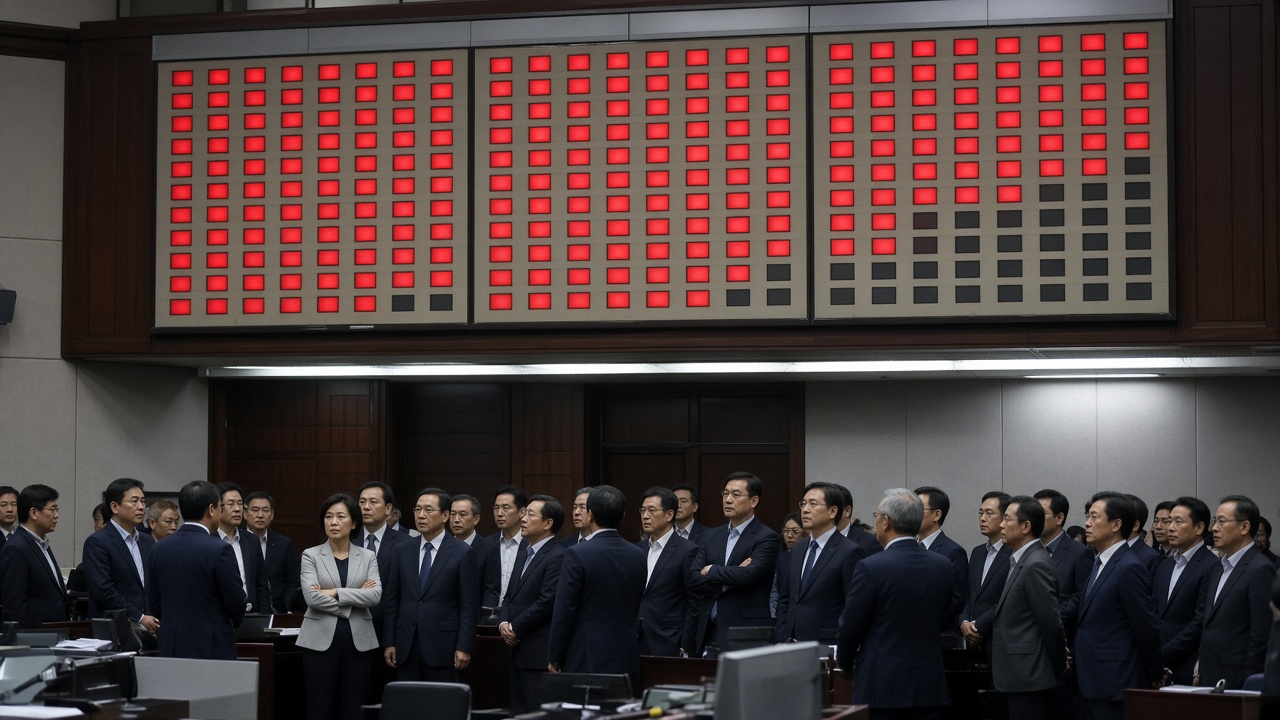
Taiwan’s opposition-controlled Legislative Yuan on Tuesday rejected all 27 of President Lai Ching-te’s nominees for the Control Yuan, the constitutional body that investigates official misconduct and protects civil rights. Lawmakers from the Kuomintang and the Taiwan People’s Party combined to deny the slate the 57 affirmative votes needed for confirmation in the 113-seat chamber, ensuring the watchdog will remain vacant after a two-month gap.
Lai had named 29 nominees on June 11, including human-rights advocate Chen Yung-hsing as proposed Control Yuan president. Two nominees withdrew earlier, but the remaining 27 — covering the president, vice president, and 25 members — all failed Tuesday’s roll-call votes on the first day of the new legislative session.
Why the opposition held the line
KMT caucus leader Fu Kun-chi told reporters the Control Yuan had become a partisan weapon during the previous Democratic Progressive Party administration, citing probes he said targeted Taipei Mayor Chiang Wan-an’s family while ignoring alleged graft by ruling-party officials. TPP caucus whip Hung Yu-shiang said his party would continue pushing to abolish the agency through the legislature’s constitutional amendment committee.
Both parties framed the vote as accountability rather than obstruction. They also boycotted Premier Cho Jung-tai’s policy address earlier in the day, leaving the chamber largely empty except for DPP lawmakers who praised Cho’s presentation. KMT officials called the boycott a silent protest over what they described as the executive branch’s refusal to respect legislative oversight, including disputes over budget timelines and presidential promises to deliver national security briefings in person.
What the presidency and watchdog say
Presidential Office spokesperson Kuo Ya-hui said Lai respects the legislature’s power but deeply regrets the outcome, warning that stalled investigations will harm citizens who rely on the Control Yuan and the affiliated National Human Rights Commission. The Control Yuan issued a statement calling the result a serious blow to oversight and pledging to keep serving pending cases with its reduced staff.
Chen Yung-hsing, the defeated presidential nominee, said Lai had offered concrete reform ideas and that lawmakers had squandered a chance to modernize the body. DPP caucus whip Chuang Jui-hsiung said the opposition had chosen gridlock over governance, noting that petitioners who filed complaints during the vacancy now face indefinite delays.
Institutional stakes
The Control Yuan is one of Taiwan’s five yuan under the 1947 constitution, with members nominated by the president and confirmed by the legislature for six-year terms. Debates over abolishing or restructuring the agency have intensified since a nominee withdrew in June, prompting cross-party talk of constitutional change even though amending the charter requires a supermajority that neither camp currently holds alone.
Legal scholars say a prolonged vacancy weakens Taiwan’s anti-corruption architecture at a moment when local elections in late November will test every party’s turnout machinery. Opposition parties are simultaneously promoting a NT$20,000 universal cash handout — double the NT$10,000 figure Lai embedded in the 2027 budget — adding another fiscal fight to an already crowded agenda.
What happens next
Lai must decide whether to renominate the same figures, propose a new slate, or negotiate with the KMT and TPP on structural reforms as a precondition for votes. The Control Yuan cannot launch fresh investigations requiring a full quorum until members are seated, though staff can continue work on open files.
Foreign diplomats in Taipei routinely monitor oversight bodies as part of democratic benchmarking; an empty Control Yuan gives critics fresh talking points even as the administration stresses that courts, prosecutors, and the Anti-Corruption Agency remain active. For now, the headline is simple: every nominee lost, the watchdog stays hollow, and the legislature moves on to budget battles with no resolution in sight.