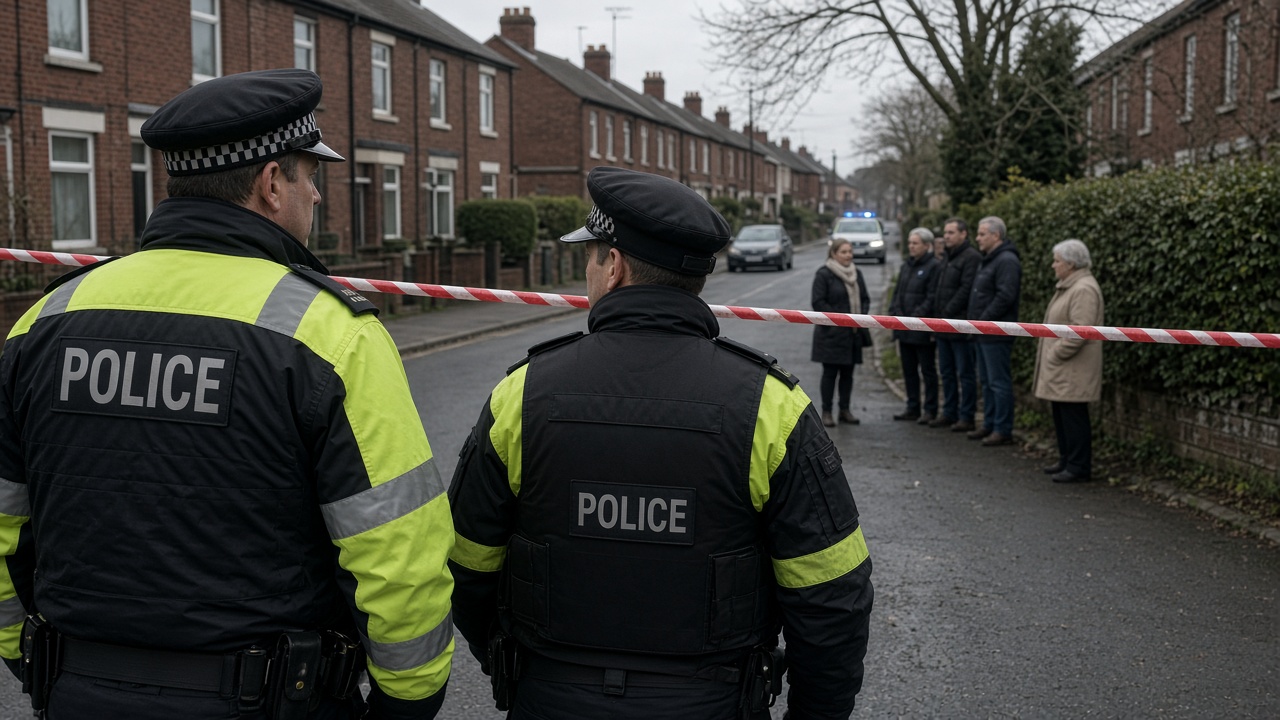
Chief Constable Jon Boutcher said a large-scale criminal investigation is under way into an unlawful protest that has kept the Garvaghy Road in Portadown closed, even as Northern Ireland Secretary Chris Bryant hosted another round of talks at Hillsborough Castle over the disputed Drumcree parade.
The standoff entered a fourth day on Wednesday with the Orange Order still waiting to begin a march that was cleared only after a marathon series of court hearings late on Saturday. Residents opposed to the route have physically blocked the road, arguing the Parades Commission determination should not stand.
What Boutcher told officers and the public
In a sharply worded statement, Boutcher said the Police Service of Northern Ireland had “once again become the shock absorber of our society” and would not allow “mob rule” to prevail. He said his priority remained keeping people safe while seeking compliance with the commission’s ruling, which limited the parade to 35 participants and an 08:00 start rather than the larger afternoon timing the Order wanted.
Boutcher directed investigators to prioritise evidence collection and a criminal justice process over the Garvaghy Road protest. Assistant Chief Constable Ryan Henderson offered to meet the Orange Order, residents’ representatives and other groups as Bryant’s mediation continued.
How the march reached this point
The Drumcree dispute defined Northern Ireland’s summers in the 1990s, when attempts to march along the mainly nationalist Garvaghy Road triggered widespread disorder. The route has been effectively barred since 1998 until a court overturned a Parades Commission decision last week, clearing a restricted march for the first time in nearly three decades.
Lawyers for the Garvaghy Road Residents Coalition filed a fresh legal challenge to halt the procession. Three separate court sessions stretched from Saturday afternoon into Sunday morning before judges allowed the march to proceed in theory — but not in practice once residents blocked the street.
Political pressure in London and Belfast
Bryant has shuttled between community leaders at Hillsborough, trying to prevent a repeat of street violence that would overshadow broader efforts to stabilise power-sharing. Unionist politicians have accused the PSNI of failing to clear the road; nationalist representatives say residents are exercising legitimate protest against a route they consider provocative.
Boutcher insisted shouting would not change operational decisions. “The upholding of the Parades Commission determination does not come at any cost,” he said, signalling that arrests and prosecutions could follow once investigators finish reviewing video, witness statements and liaison records from the scene.
What happens next
Talks at Hillsborough were scheduled to resume Wednesday with no public timetable for when — or whether — the Orange Order would attempt the short parade along Garvaghy Road. Any prosecution files would go to the Public Prosecution Service, which would decide charges independently of the political negotiations.
For residents and marchers alike, the immediate question is whether police will physically open the road under the commission’s terms or whether further court orders will be sought. Boutcher’s criminal probe signals that, whatever the parade outcome, participants in the blockade may face lasting legal consequences.