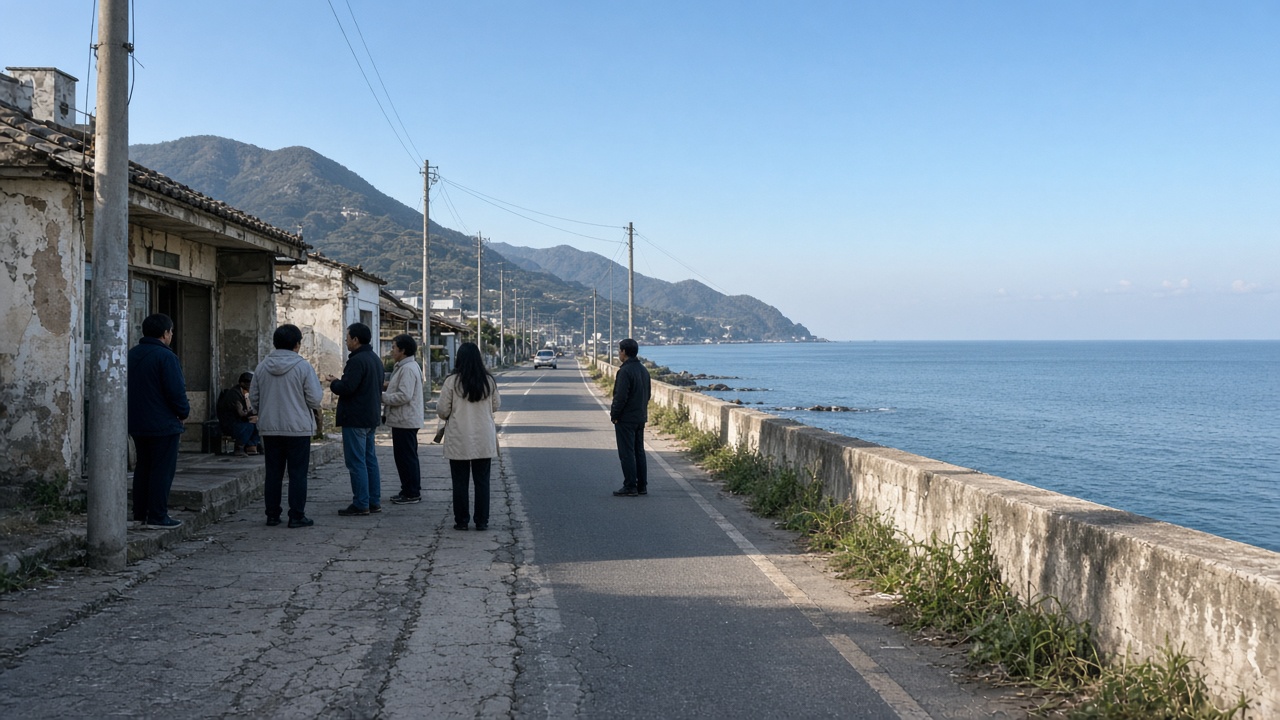
A magnitude 5.9 earthquake struck in the ocean east of Taiwan at 1 p.m. Wednesday, rattling Hualien and counties along the east coast while the Central Weather Administration reported no immediate injuries or damage.
Epicenter and shaking
The weather agency said the epicenter was located at sea about 136 kilometers east of Hualien County Hall at a depth of 13.3 kilometers. The strongest shaking on Taiwan’s seven-tier intensity scale reached level 2 in parts of Hualien, Yilan, Chiayi County, Changhua and Yunlin, while much of the island felt lighter level 1 tremors.
Because the quake originated offshore and at moderate depth, ground motion in Taipei and other western cities was brief and mild. Hualien, which sits on Taiwan’s most seismically active arc, has endured larger events in recent years, including destructive tremors that strained building codes and emergency response in the county.
Agency response
The Central Weather Administration issued the standard rapid report within minutes and said it would update forecasts for aftershocks if needed. Local fire departments in Hualien and Yilan said they had not received calls for trapped residents or structural collapses in the first hour after the event. Schools and offices in the east continued afternoon schedules after brief pauses for safety checks.
What residents should watch
Officials urged coastal communities to review tsunami protocols even though Wednesday’s quake did not trigger a warning. Taiwan’s cabinet-level disaster agencies maintain SMS alerts for larger offshore events, and Hualien’s county government periodically drills evacuations from low-lying townships. Wednesday’s event served as a reminder that the Philippine Sea plate boundary remains active as the autumn typhoon season overlaps with frequent seismic releases.
Engineers said level 2 shaking is generally within design limits for modern structures, but older unreinforced buildings in eastern towns remain a focus of retrofit programs funded after recent major quakes. The weather agency will publish a revised bulletin if aftershock clusters appear near the lunchtime epicenter.
Taiwan’s cabinet-level Central Emergency Operation Center did not raise its alert level after the event, and rail operators on the eastern line reported brief speed restrictions before resuming normal schedules. Tourism operators in Hualien said harbor tours and canyon trips continued with standard safety briefings, noting that offshore quakes often pass without tsunami risk when epicenters remain far from shore.