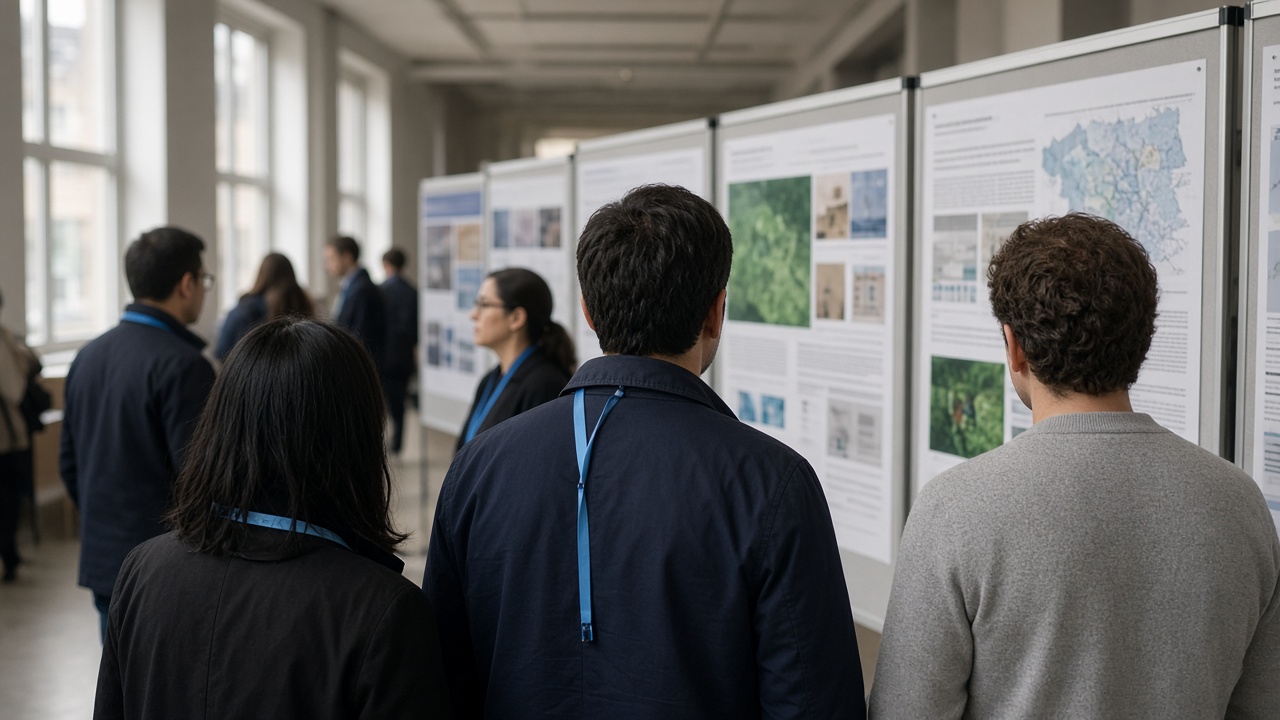
The Pacific Neighborhood Consortium opened its 2026 annual meeting on September 9 at the Dharma Drum Liberal Arts College in New Taipei’s Jinshan district, returning to Taiwan for the first time since 2017. Academia Sinica vice president Peng Hsin-kai chaired the gathering, telling attendees that artificial intelligence now sits inside humanities workflows—from optical character recognition on Qing-era sect documents to large-language-model summaries of Republican-era women’s magazines.
Program scale
Organizers accepted 124 oral presentations and 18 posters from Taiwan, Japan, Korea, the United States, and Southeast Asia. Workshops run by the Electronic Cultural Atlas Initiative demonstrated geospatial tagging for Buddhist temple archives and museum collections maintained by Academia Sinica’s digital center.
Exhibits included the institute’s text recognition and proofreading platform, aimed at speeding transcription of historical manuscripts without outsourcing sensitive collections to foreign clouds.
Why Taiwan hosted
PNC moved its secretariat to Academia Sinica in 1997; hosting duties rotate among member countries. Peng argued that East Asian digital humanities need regional infrastructure because Western models misread classical Chinese punctuation and calendar systems. Several papers compared topic-modeling outputs on Taiwan political speech corpora with Japanese parliamentary records, highlighting divergent censorship baselines.
Public takeaway
The meeting is academic, not commercial, but it signals where Taiwan’s government-funded AI ethics conversation meets cultural preservation budgets. Grants announced alongside the conference lean toward open corpora rather than closed chatbots—a priority for ministries worried about hallucinated citations in school materials.
For readers in Taipei, PNC 2026 is a reminder that “sovereign AI” is not only about banks and defense; it is also about who controls the digitized record of the island’s past.