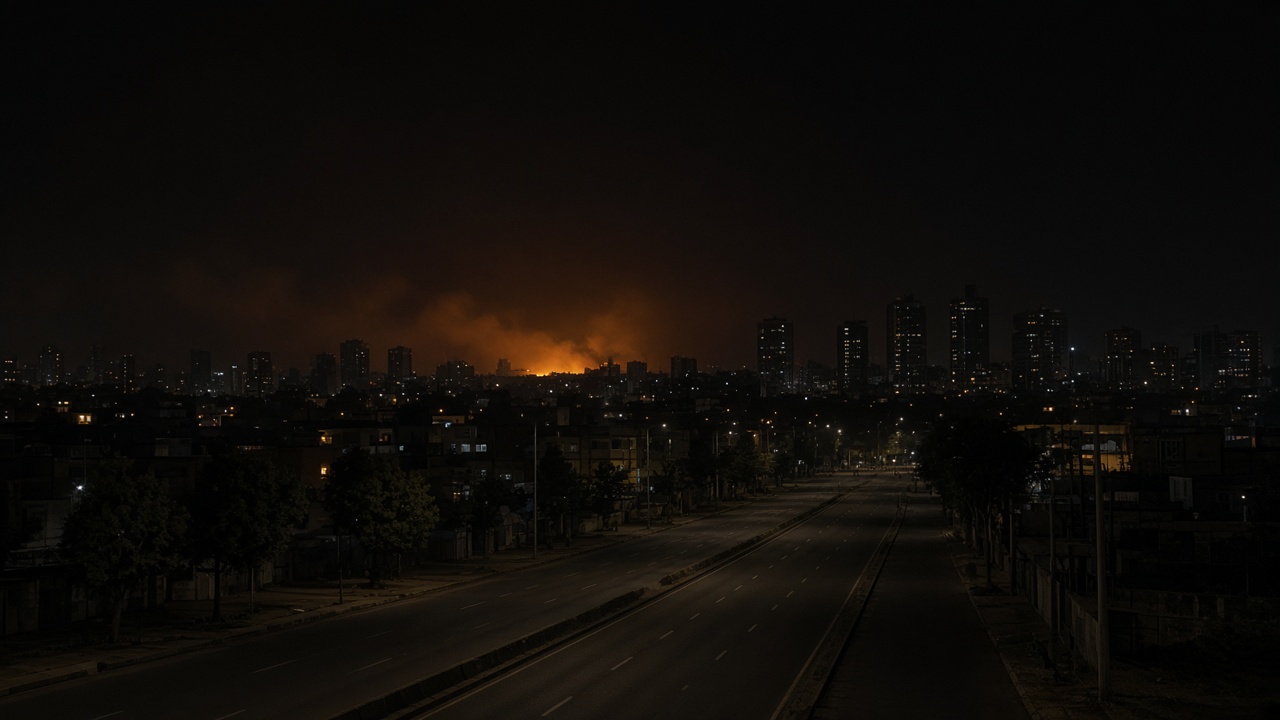
Explosions rang out across Addis Ababa overnight on Wednesday into Thursday, residents and diplomatic sources said, puncturing the capital's relative distance from a renewed war in Ethiopia's north that has now lasted more than a week. The blasts came only hours after Ethiopia's national intelligence service banned drone flights over Addis Ababa and surrounding areas, citing security concerns as fighting widened between federal forces and a coalition of armed opposition groups.
Blasts near military and intelligence sites
Witnesses told BBC Amharic they heard a loud detonation around 00:30 local time in the Gotera area of southern Addis Ababa, near a base used by the security services. Another resident in the western suburb of Torhayloch, close to Ethiopia's military headquarters, said an explosion interrupted an evening with friends. Reuters cited three diplomatic sources who confirmed blasts overnight but declined to discuss details on the record.
Ethiopian officials had not publicly confirmed the cause of the explosions, the precise targets, or any casualties by Thursday morning. The offices of Prime Minister Abiy Ahmed, the defence ministry, and federal police did not respond to BBC requests for comment, and spokespeople for the government and the Ethiopian National Defence Force did not immediately answer Reuters inquiries.
Opposition alliance claims drone strikes
A source linked to the Ethiopian Peoples' Forces Alliance for Survival told Reuters the coalition carried out several drone strikes in Addis Ababa, including some aimed at the military headquarters. Reuters said it could not independently verify the claim; witnesses near the military base reported no obvious damage in the immediate area. If confirmed, it would mark the first known armed-drone attack on the capital by anti-government forces, hundreds of kilometres from front lines in Tigray, Amhara, and Afar.
Opposition fighters had not previously been widely documented as operating armed drones, though analysts and diplomats have warned in recent days that both sides may be expanding aerial capabilities as the conflict escalates. The intelligence service's drone ban, announced Wednesday, underscored official anxiety that the capital could be drawn into the fighting that erupted last week—the largest flare-up since the 2020–2022 civil war in Tigray.
Federal advance toward Mekelle
While Addis Ababa absorbed the shock of overnight blasts, federal forces continued a northward push in southern Tigray. Al Jazeera reported Wednesday that government troops had advanced to within about 40 kilometres of Mekelle, the regional capital, after weeks of clashes that also spread into neighbouring Afar. Pro-government Tigray Peace Forces militia said Wednesday they had taken the town of Korem, roughly 100 kilometres south of Mekelle, alongside the national army—a claim opposition media disputed.
Thousands of civilians have fled Mekelle, according to Al Jazeera's reporting from the region, with electricity and internet service cut in parts of Tigray. Diplomats warn that renewed fighting along Ethiopia's borders with Eritrea and Sudan could draw outside powers into a wider confrontation and disrupt food and trade routes, including corridors toward Djibouti's ports.
What comes next
Thursday's unanswered questions—who launched the blasts, whether drones were involved, and whether the capital will see more attacks—are likely to shape both domestic politics and international mediation efforts. African Union and Western envoys had already been pressing for a ceasefire before the overnight explosions. For now, Ethiopia faces a conflict that is simultaneously grinding through northern towns and, for the first time in this phase, echoing in the streets of Addis Ababa.