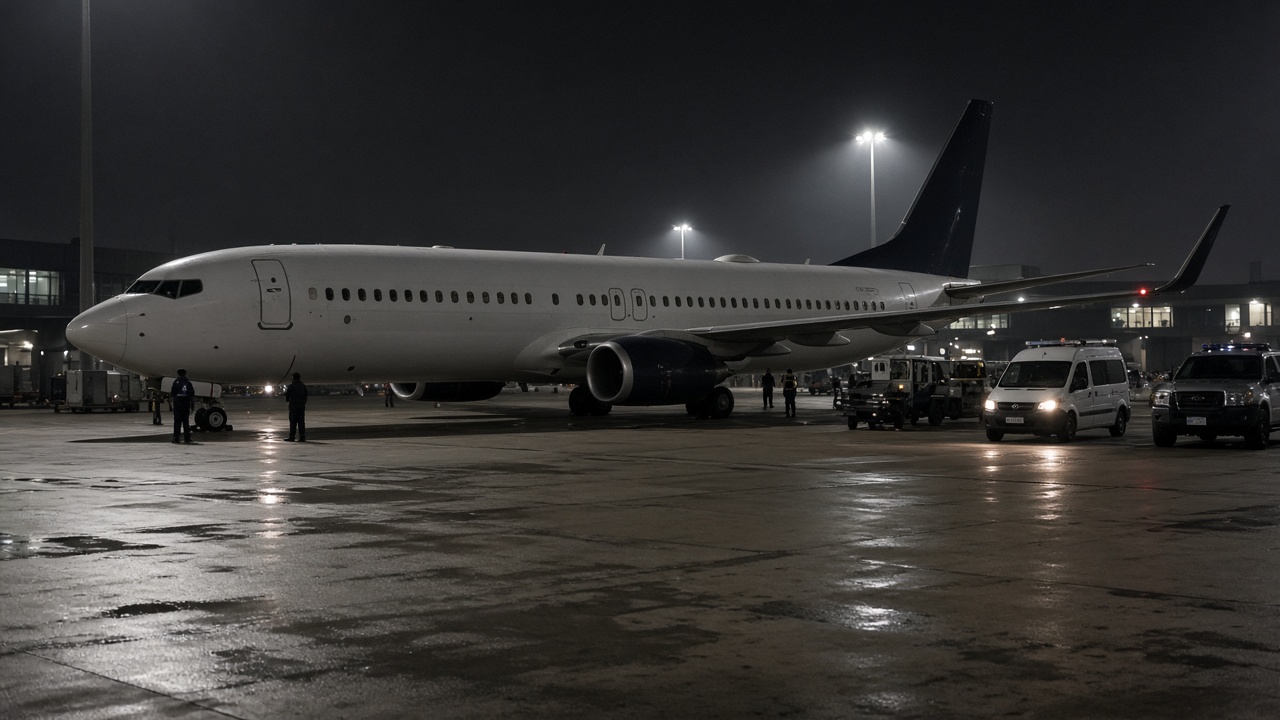
Flydubai said Thursday it has suspended all flights to and from Israel while investigators in the United Arab Emirates and Saudi Arabia question an Omani copilot who attacked the captain on a Dubai–Tel Aviv service, an incident that sent the Boeing 737 into a steep descent before passengers restrained the assailant and a relief crew landed in Tabuk.
What changed overnight
The low-cost carrier’s decision to pause the Israel network came a day after Flight FZ1163 diverted to northwestern Saudi Arabia with roughly 170 people on board, most of them Israeli nationals returning from the Gulf. Tracking data published by Flightradar24 showed the jet losing altitude from about 33,000 feet to 17,000 feet within a minute before circling near the Jordanian border and touching down in Tabuk just over an hour later.
Israeli Prime Minister Benjamin Netanyahu told CNN on Wednesday that the attacker was an Omani national and remained in Saudi custody. Saudi and Emirati officials have released few details beyond confirming active investigations. On Thursday, the UAE attorney general ordered a criminal inquiry, state news agency WAM reported, without naming suspects or charges.
Inside the cockpit
Passengers and Israeli officials have described a struggle that began when the injured captain unlocked the cockpit door. Several travelers entered the flight deck and subdued the first officer while off-duty flydubai crew aboard the aircraft helped stabilize the aircraft, according to accounts relayed by Israeli media and U.S. outlets including NPR. The captain was hospitalized; the first officer was arrested after landing.
Netanyahu said he would present “heroism” awards to four Israelis who intervened. Flydubai, which is government-owned in Dubai, has not published a timeline for restoring Tel Aviv service and has referred operational questions to the probe.
Regional and security fallout
The attack lands amid fragile Gulf–Israel normalization and ongoing conflict involving Iran and its proxies. A successful assault on the flight deck would have been catastrophic over densely populated routes between the UAE and Israel; the Tabuk diversion instead leveraged Saudi airspace that has gradually opened to Israeli carriers since 2020 accords.
Aviation security analysts note that insider threats in the cockpit are rare but especially difficult to screen because credentialed crew already hold airport access. Omani nationals have flown for Gulf airlines for years; Muscat maintains diplomatic ties with both Tehran and Western capitals, though Oman publicly condemned the stabbing.
What investigators must answer
Prosecutors in Abu Dhabi will need to establish motive, whether the copilot acted alone, and whether any communication or radicalization trail exists. Saudi interrogators hold the suspect; coordination between Riyadh, Dubai and Israeli security services is likely but largely out of public view.
For travelers, the immediate effect is grounded flydubai tickets and heightened scrutiny of crew pairing on politically sensitive sectors. Regulators in the UAE and Israel are expected to review medical and security vetting without waiting for the criminal case to conclude.