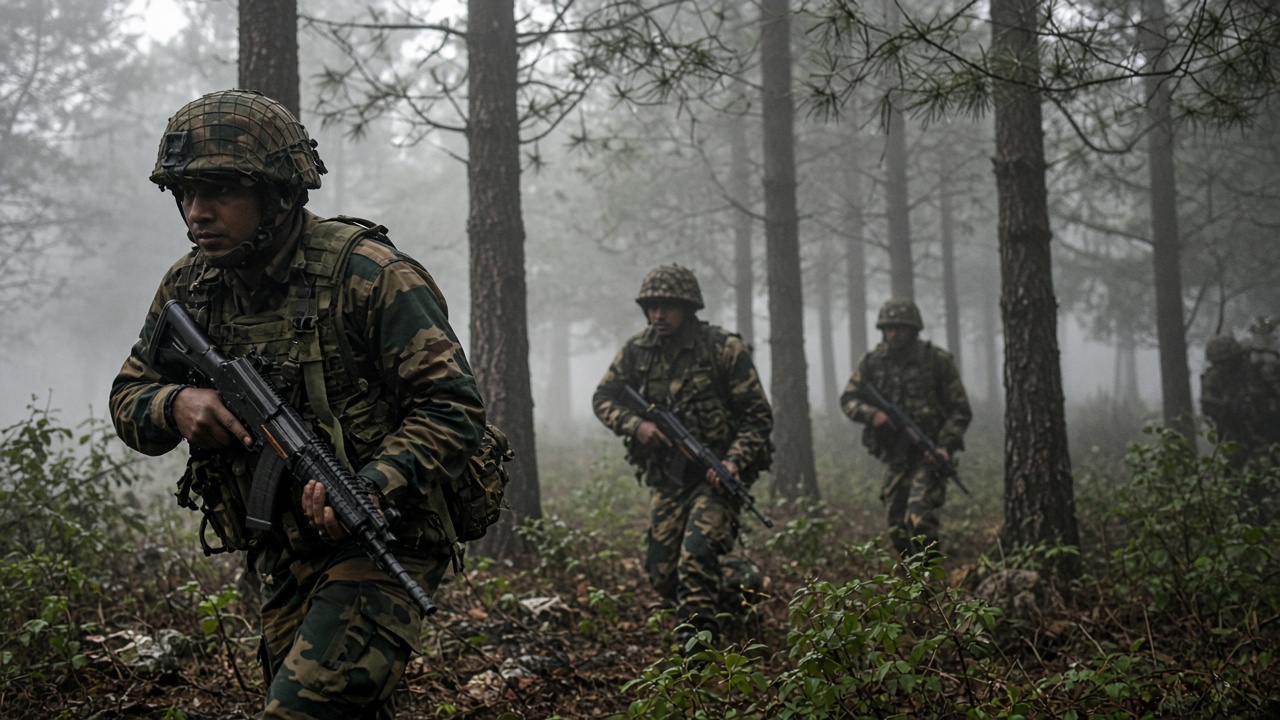
Indian security forces killed Mohammad Asif, the Pakistani Lashkar-e-Taiba commander known as Hashim Musa, in an overnight gunfight in the upper reaches of Yousmarg, about 60 kilometers from Srinagar, the Union home ministry said Thursday. Officials described his death as the elimination of the last surviving member of a four-man squad blamed for the April 2025 Baisaran Valley attack in Pahalgam that left 26 tourists and a local horseman dead.
The encounter
The Army, Jammu and Kashmir Police and paramilitary units cordoned forested terrain after intelligence pinpointed Musa’s movement, according to statements cited by The Times of India and other national outlets. Exchange of fire continued through the night before troops recovered weapons and confirmed the militant’s identity using biometrics and prior dossiers.
Musa was a former Pakistan Special Services Group operative who infiltrated the valley around 2022, investigators said. Agencies had tracked the cell for roughly two years as it carried out a series of high-profile ambushes across Jammu and Kashmir.
Trail of attacks
Home ministry officials linked Musa’s group to multiple strikes beyond Pahalgam. The roster includes a May 2023 ambush in Rajouri that killed five soldiers, a December 2023 attack on Army vehicles in Dera Ki Gali, a June 2024 assault on a pilgrim bus in Reasi that killed nine people and wounded dozens, and subsequent strikes near Gulmarg and Ganderbal.
The Pahalgam massacre, in which gunmen opened fire on visitors in a meadow popular with domestic tourists, shocked India and triggered a sharp escalation in rhetoric between New Delhi and Islamabad. Pakistan has repeatedly denied sponsoring cross-border infiltration, while Indian leaders framed the killings as evidence of continued proxy warfare.
What Musa’s death means
Neutralizing the last identified commander of the squad removes an operational node but does not by itself dismantle Lashkar infrastructure in Pakistan or local recruitment networks in the valley. Intelligence officials caution that replacement commanders can be inserted within seasons if launch pads remain active.
Still, the ministry called the killing a “massive victory” and a serious blow to the LeT ecosystem in Jammu and Kashmir. For families of Pahalgam victims, the news closes a chapter in a manhunt that dominated nightly broadcasts for months.
Political and security next steps
Chief Minister Omar Abdullah and home minister Amit Shah are expected to highlight the operation in campaign settings ahead of state polls, framing it as proof of a hardened counter-terror posture. Security planners will likely review tourist corridor deployments around Pahalgam and Sonamarg before the autumn travel peak.
Diplomatically, India will use the encounter to press Pakistan at upcoming forums, while watchdogs will ask whether forensic evidence from the site is shared with prosecutions tied to earlier attacks. For now, the government’s public message is singular: the Pahalgam plot’s named command chain, as identified by Delhi, is no longer at large.