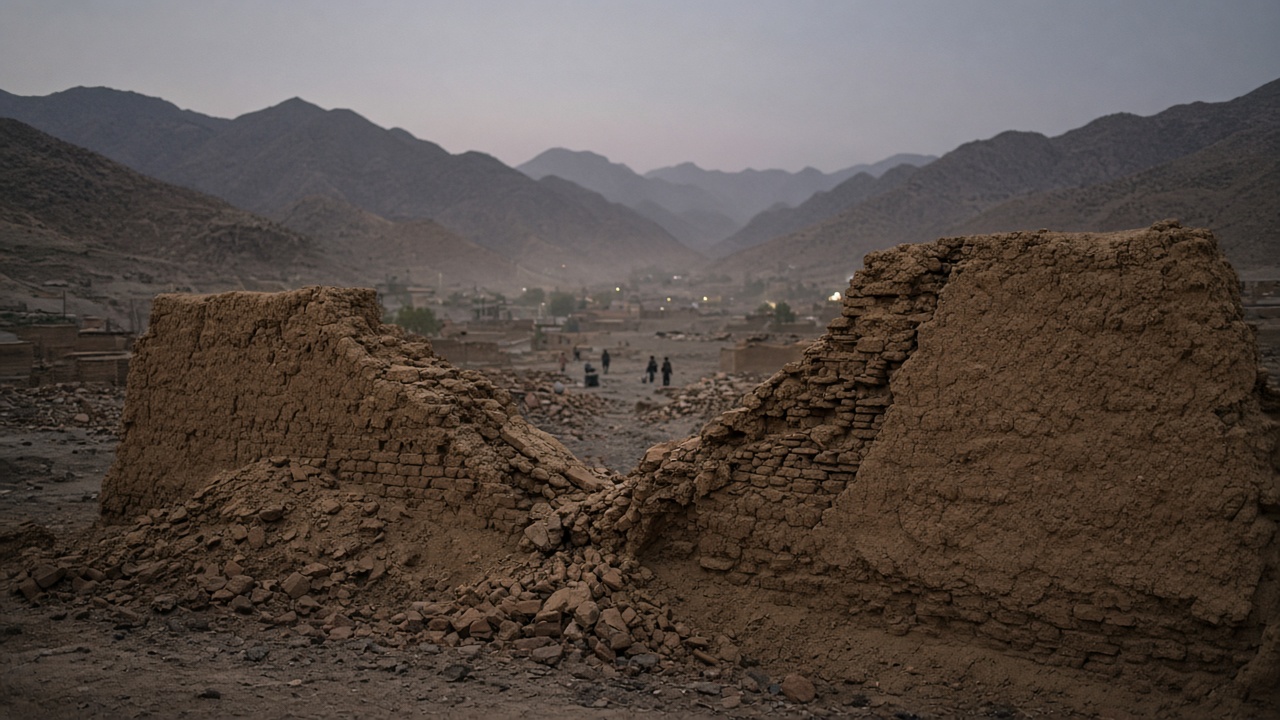
The United Nations mission in Afghanistan said Thursday that overnight airstrikes killed at least ten civilians, most of them children, and wounded nine others in northeastern Kunar and southern Helmand. The tally is the first independent casualty figure in a new round of cross-border attacks that Pakistan framed as precision strikes on militant camps and the Taliban government condemned as aggression against homes.
UNAMA did not name the country that carried out the raids, but Pakistan’s information ministry had already confirmed strikes in Afghanistan and said initial reporting pointed to 22 fighters killed. No other state has claimed aerial operations inside Afghanistan in recent days. Al Jazeera and wire services could not independently verify either side’s numbers.
What Kabul and Islamabad say happened
Spokesman Zabihullah Mujahid said the attacks hit three civilian houses late Wednesday, destroying them and killing nine women and children while wounding eleven people. In a post on X, he called the operation a crime and said Helmand and Kunar bore the brunt of the bombing.
Pakistan’s Ministry of Information described the mission as “well planned and calibrated,” aimed at hideouts linked to groups that attack Pakistani territory, including Tehrik-i-Taliban Pakistan. The ministry said large quantities of weapons and ammunition were destroyed and insisted “maximum precautions” were taken to avoid collateral damage. It added that the campaign would continue at full pace.
The two governments have traded accusations for months. Islamabad says Kabul harbors militants who stage cross-border raids; the Taliban deny giving TTP safe haven and say Pakistani jets repeatedly strike villages. Fighting escalated sharply in February, when Pakistan declared an “open war” posture after a surge in clashes.
Why UNAMA’s count matters
UNAMA’s confirmation lands amid a year of heavy civilian harm along the border. The mission said earlier that more than 1,100 Afghan civilians had been killed or injured in 2026 alone from cross-border violence, without attributing every incident. Thursday’s statement gives diplomats a verified anchor as casualty claims diverge by an order of magnitude.
CBS News and other outlets noted that UNAMA attributed ten deaths and nine injuries specifically to the latest raids. Pakistan’s figure of 22 dead applies only to militants, with no public breakdown by location. Hospitals and local officials in Kunar and Helmand have not yet published patient lists that outsiders could reconcile with either narrative.
The strikes are the third Pakistani aerial operation inside Afghanistan in about two weeks, following attacks that Kabul said killed civilians in Kandahar and other provinces. Each cycle follows a similar pattern: Islamabad announces intelligence-led strikes; the Taliban show damaged compounds; UN agencies and neighbors urge restraint.
What comes next
Neither capital announced talks to de-escalate. Pakistan’s statement pledged continued operations until militant infrastructure is “wiped out,” while Mujahid’s language signaled Kabul may seek condemnation in regional forums. China and Gulf states that have mediated past flare-ups have not publicly intervened in this episode.
For U.S. and European policymakers, the episode revives questions about aerial access over Afghan airspace and about whether renewed pressure on the TTP will pull NATO-adjacent capitals into the dispute. For now, the measurable fact on the ground is UNAMA’s count: ten civilians dead, nine hurt, in two provinces that border Pakistan’s restive northwest.