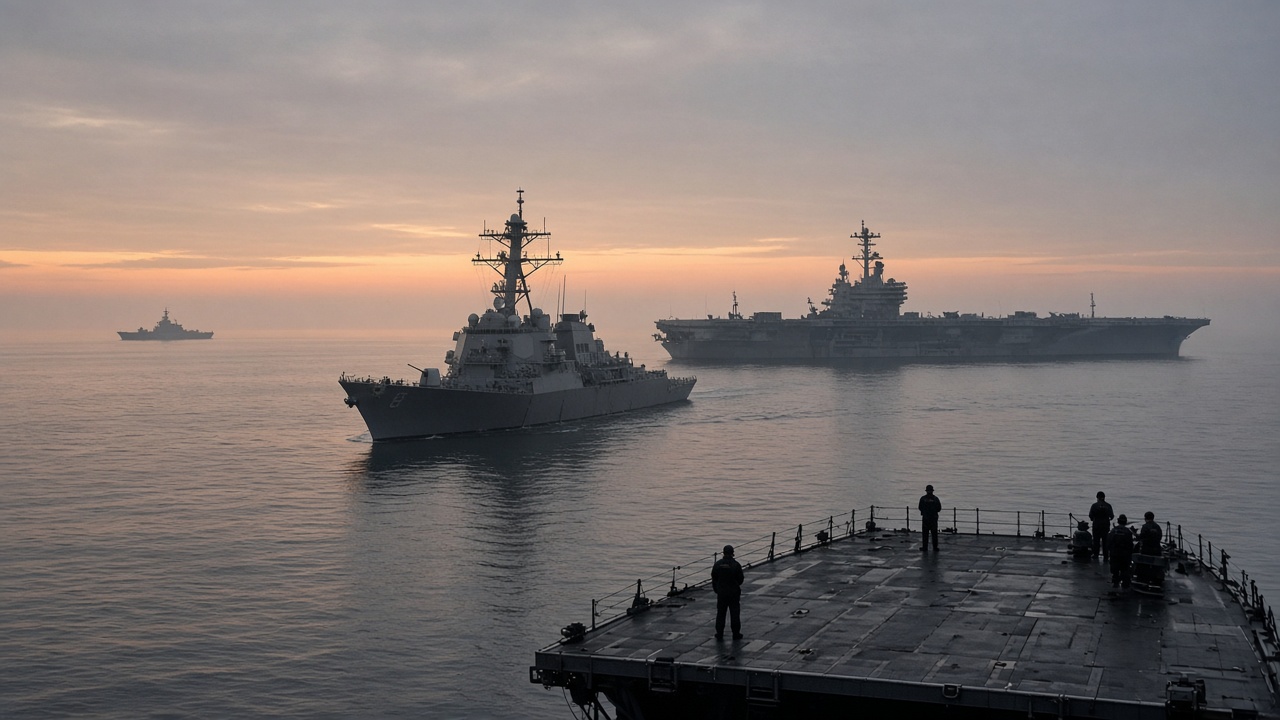
The U.S. military is sending about 9,000 additional personnel aboard naval vessels toward the Middle East, U.S. officials and allied reporting said Thursday, as Washington’s mediated talks with Iran stalled and President Donald Trump publicly left room for a sharper bombing campaign after the November midterm elections.
The troop movement lands on the same day Secretary of State Marco Rubio ordered Iran’s negotiating team to leave the United States following a weekend of Qatari-brokered meetings that failed to produce a breakthrough on reopening the Strait of Hormuz or reviving the June ceasefire framework. A U.S. official confirmed to Fox News Digital that Rubio told Foreign Minister Abbas Araghchi and his delegation they had “overstayed their welcome” in New York after little progress on a seven-day confidence-building period.
What the deployment signals
Australian and U.S. media described the personnel as moving with a carrier strike group as the administration weighs new strikes against Iran. Rolling coverage in Melbourne’s The Age cited the dispatch of about 9,000 troops on ships, while market reporters linked the maneuver to Brent crude trading above $102 a barrel and renewed anxiety over energy flows through the Gulf.
The maritime buildup is distinct from the daily rhythm of air defenses and basing adjustments that have marked the seven-month conflict, but it arrives as Trump told TIME that further bombing is “possible” if talks remain deadlocked. He also said he believed the war with Iran could end “right after” the U.S. midterms, without offering a public timeline for renewed negotiations.
Where diplomacy stands
Qatar has continued shuttling messages between Washington and Tehran, yet the two sides remain split over the sequencing of concessions — when Iran would reopen Hormuz, what nuclear steps Tehran would take, and what economic relief the U.S. would provide. Rubio’s expulsion of the delegation does not formally end the channel, but it underscores how little trust remains after repeated failed rounds.
Japanese Foreign Minister Toshimitsu Motegi, speaking with Araghchi by phone Thursday, urged maximum flexibility and pressed Tehran to engage constructively on Hormuz, reflecting Asian economies’ exposure to oil disruption. In Washington, Defense Secretary Pete Hegseth has simultaneously promoted a shift toward autonomous systems and drone-centric forces, even as conventional naval power remains the visible lever in the Gulf.
What commanders watch next
Military planners will track whether the additional sailors and marines embark as a deterrent posture or as preparation for strike packages if Trump authorizes new waves of attacks. Gulf allies that host U.S. facilities have not publicly detailed new force-protection measures tied to the sailing, but energy traders are already pricing a wider conflict premium.
Congressional war-powers debates have not produced a binding constraint on the executive branch, and the administration has rebuilt portions of its munitions stockpile after earlier strikes, Trump told TIME. For now, the combination of expelled negotiators, floating reinforcements, and a president willing to discuss post-election escalation keeps the region on a short fuse heading into October.