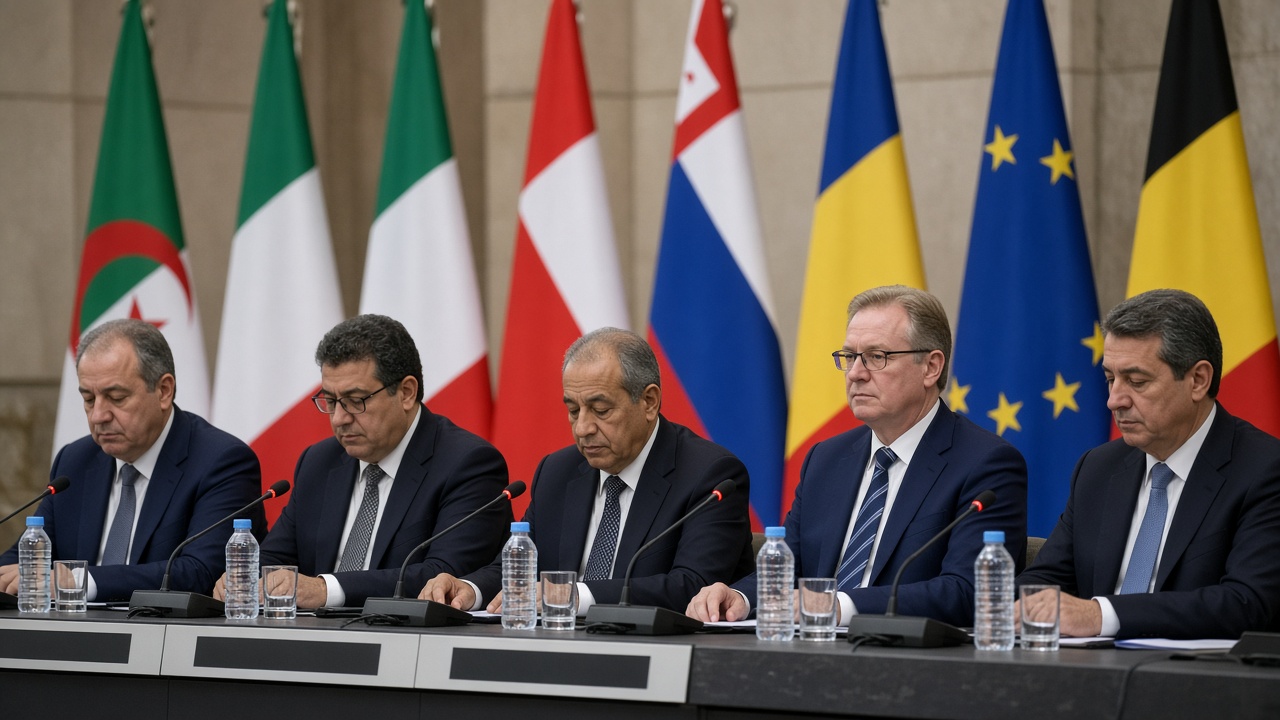
Energy ministers from Algeria, Tunisia, Italy, Austria and Germany signed the Algiers Ministerial Declaration on Thursday, committing to a dedicated technical secretariat for the SoutH2 green-hydrogen corridor with oversight from the United Nations Industrial Development Organization. The step follows a second ministerial meeting in the Algerian capital and gives the five-country project its first standing governance body after more than a year of feasibility work led by Sonatrach, Sonelgaz and European pipeline operators.
What the corridor would carry
The partners describe SoutH2 as a roughly 3,000-kilometre route that would move renewable hydrogen produced in Algeria through Tunisia to consumer markets in Italy, Austria and Germany. Anadolu Agency, citing officials at the signing, said the corridor is designed to transport about four million tonnes of green hydrogen annually—figures the German economy ministry echoed in its own readout of the talks. That volume is framed as a meaningful share of Europe’s projected clean-hydrogen demand later this decade, though none of the governments published binding offtake contracts on Thursday.
Work on the concept began in October 2024, when Algeria’s national energy firms signed a memorandum of understanding with Germany’s VNG, Italy’s Snam and SeaCorridor, and Austria’s VERBUND Green Hydrogen to study integrated production and export economics. A political-intent declaration followed in Rome in January 2025. Thursday’s Algiers text advances that paperwork into institutional machinery: a secretariat meant to coordinate engineering, permitting and financing conversations rather than announce a single construction start date.
Industrial alliance on the Algerian side
Ministers also reviewed the Algeria-to-Europe Hydrogen Alliance, known as ALTEH2A, which is meant to expand electrolysis and export capacity on the African side of the Mediterranean. Italy’s environment and energy security minister, Gilberto Pichetto Fratin, told reporters after the meeting that hydrogen remains central to decarbonisation plans and that hosting the ministerial session in Algiers underscored North Africa’s role in the new energy map, according to AGI and HydroNews accounts of his remarks.
Algerian President Abdelmadjid Tebboune received the visiting ministers after the signing, state media reported, signalling political backing beyond the technical agencies that will staff the secretariat. For European capitals still importing fossil gas while retrofitting networks, the appeal of repurposed pipeline corridors is obvious; the harder questions—certification of “green” molecules, water use in arid production zones, and price floors—are exactly what UNIDO-backed coordination is supposed to tackle next.
What changes now
The declaration does not authorize construction or allocate public capital by itself. It does require the secretariat to report on milestones to the five ministries and to keep industry working groups aligned on hydrogen quality standards and cross-border safety rules. Investors watching North African renewables said the institutional step reduces the risk that bilateral MOUs drift after elections or cabinet reshuffles on either shore.
European Commission energy officials were not signatories to Thursday’s document, but Italian and German ministries stressed that SoutH2 is compatible with wider EU diversification goals that accelerated after Russian pipeline flows shrank. If engineering studies confirm that existing gas infrastructure can be adapted without prohibitive leakage risk, the next decision point is likely a staged pilot volume rather than the full four-million-tonne target on day one.