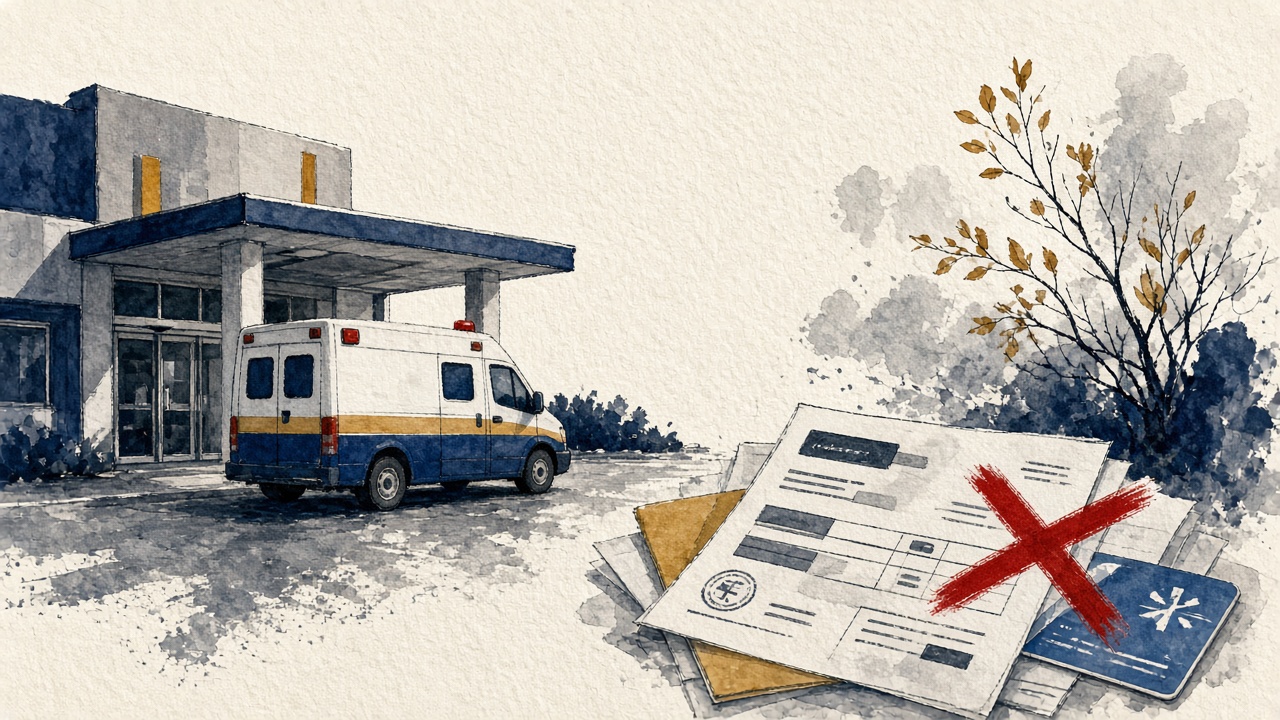
On 1 July 2025 the line item many New South Wales households dread quietly ticked up again: a $464 emergency ambulance call-out fee before anyone counts the kilometres back to the station. Flash a Medicare card at the hospital and the public system picks up your care as a public patient. Flash the same green-and-gold plastic at the paramedics and it buys you nothing. The invoice lands in the mail anyway, addressed to the person on the stretcher, even when a stranger made the Triple Zero call.
That gap is not a billing glitch. It is how Australian health financing was stitched together when Neal Blewett, as health minister, brought Medicare back on 1 February 1984. The Commonwealth rebuilt universal cover for doctors and public hospitals. Pre-hospital ambulance stayed with the states. Forty years later the Productivity Commission still logs 4.5 million ambulance incidents a year, and a patchwork of eight funding models that can turn the same emergency into a $0 ledger entry in Brisbane and a four-figure charge in Sydney.
The invoice that Medicare never sees
NSW Ambulance publishes its prices in plain figures. From 1 July 2025 a resident needing a road, helicopter or fixed-wing emergency response pays that $464 call-out plus $4.18 for every kilometre or part thereof, counted as the round trip from station to scene to hospital and back. Hold a Queensland driver's licence and the opening charge on the same service is $909, with a higher per-kilometre rate, before any clinical care in the emergency department is priced.
The state shaves its own residents' bills, but only partly. NSW residents pay 51% of the full emergency fee; the government advertises a 49% subsidy on the rest. Service NSW is blunt about what Medicare does not do: it does not pay ambulance invoices. If you are not on a concession card, not covered by a qualifying private fund, and not caught by another exemption, the accounts team expects payment. Revenue NSW eventually collects unpaid debts.
You will be charged for the service provided to you regardless of who may have called Triple Zero (000).
Neal Blewett's Medicare bargain never promised otherwise. When the Hawke government passed its legislation in September 1983 and flipped the switch the following February, the Commonwealth signed hospital agreements that traded grants for free treatment as a public patient. Ambulance authorities remained state creatures, billing under their own Acts. The recurring subject in this story is not the hospital wristband but the ambulance accounts line: call-out fee first, kilometres second, Medicare nowhere on the form.
Theory one: the card should cover the stretcher
The first guess is that Medicare simply forgot ambulances. The Commonwealth's own websites rule that out. Services Australia lists ambulance services under what Medicare does not pay for. The Department of Health and Aged Care repeats the exclusion beside dental and optical care. The Medicare Benefits Schedule is built to pay for listed clinical services; ambulance transport is not on that list, and private health insurance is explicitly marketed to fill the hole.
We don't cover the cost of emergency transport or ambulance services to hospital.
Consumer group CHOICE still warns that the gap surprises people who assume universality means every emergency ride. That surprise is understandable but mistaken: universality was always scoped to MBS items and public-hospital admission, not the siren on the street.
Theory two: the states are just cashing in
Hospital emergency departments also feel pressure when ambulances cannot offload patients, but that is a capacity story, not proof that call-out fees fund the entire fleet. NSW Ambulance's own submissions to the Special Commission of Inquiry into Healthcare Funding describe rising Triple Zero volumes and staffing investments, funded partly by appropriations and partly by the transport-fee stream this article traces. The commission's hearings, beginning in November 2023, spend their time on activity-based hospital funding and Commonwealth–state splits, the same constitutional seam that keeps ambulance off the Medicare schedule.
The second guess blames greedy states milking emergencies. Follow the money nationally and the picture is more mixed. In 2024–25 ambulance service organisations collected about $6.3 billion. Government grants and indirect funding supplied 79.9% of that revenue. Transport fees, what patients, insurers and hospitals pay for rides, accounted for 15.9%. Subscriptions and other income made up the rest. Ambulance is mostly tax-funded; user charges are a deliberate slice, not the whole engine.
That slice still matters, especially in user-pays jurisdictions. A decade earlier the same Productivity Commission tables told a different mix story: transport fees were about 21.6% of funding in 2017–18, with $260 million collected in 2014–15 alone. Governments have been paying a larger share as budgets grew, but the bills in your letterbox are real policy levers, not an accident of underfunding.
The chart tracks only one state, but it shows why the ambulance invoice keeps outpacing inflation in Australia's largest city. The resident emergency call-out rose from $364 on 1 July 2016 to $464 in 2025, with stepped increases in the gazetted fee orders that implement section 67L of the Health Services Act 1997. Each July the call-out line on the accounts form moves; Medicare's exclusion does not.
Theory three: you should have bought ambulance cover
The third guess shifts responsibility to you and your insurer. That is sometimes right and sometimes useless. Private health policies can include ambulance transport, but the Department of Health reminds readers that coverage is not automatic with every extras package. In NSW the politics are stranger: hospital cover is intertwined with ambulance exemption law.
Section 17 of the Health Insurance Levies Act 1982 says no ambulance fee is payable if you were a contributor to a registered health benefits fund when the service was provided. NSW Ambulance explains the mechanism on its FAQ page: funds pay an ambulance levy to the state, and members send their membership details instead of paying the call-out. Drop hospital cover to save premiums while keeping only Medicare, and you are back on the cash invoice unless another exemption applies.
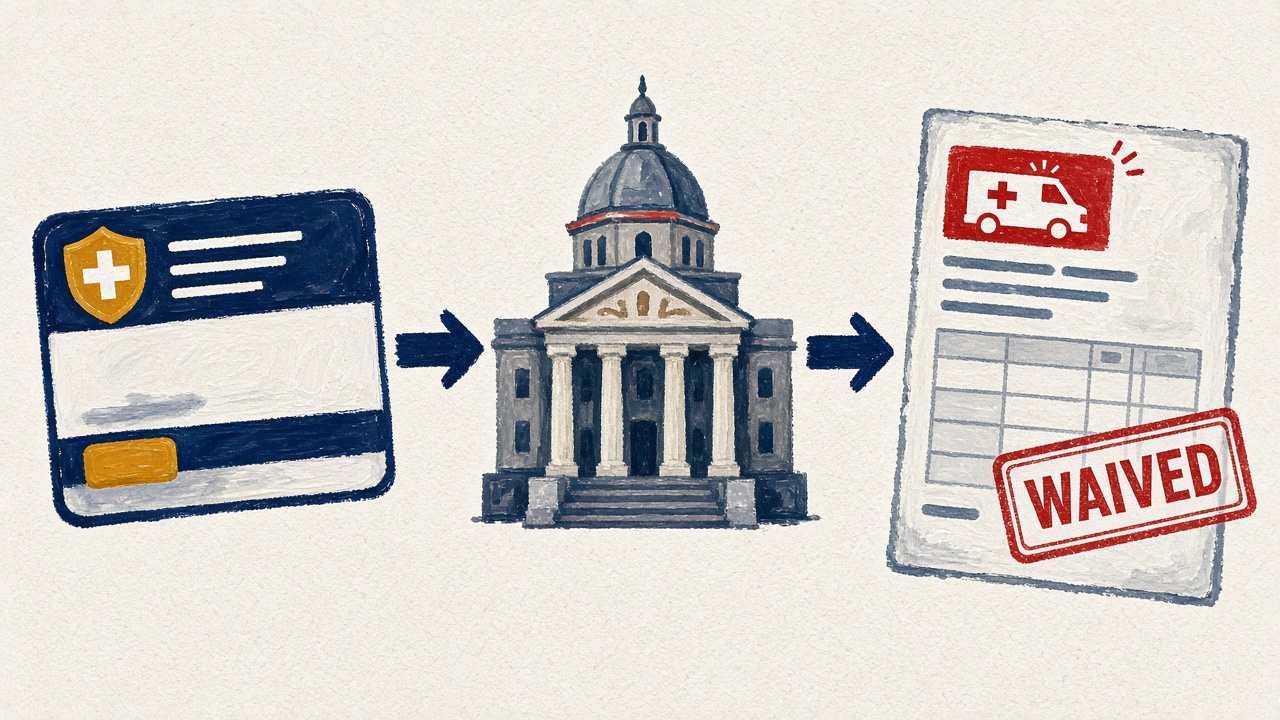
Concession-card holders, many pensioners and some veterans travel free in NSW. Everyone else is playing a postcode lottery against a flow chart published online. CHOICE's practical advice, check whether your policy covers air ambulance, inter-hospital transfers and emergencies only, is boring because the statutes are boring. Boring still hurts when you guessed wrong.
The 1984 bargain that stopped at the hospital door
None of this started with a software error in Services Australia. It started with a federal–state split older than Medicare itself. Whitlam's Medibank experiment under Whitlam already used conditional hospital grants, roughly half of operating costs, to buy free public care. Fraser dismantled that version. Hawke's Medicare restored the model with new legislation in 1983 and a start date the Parliamentary Library still cites: 1 February 1984.
Senate committee histories of the health system describe the core Medicare deal: Commonwealth money in exchange for free public-hospital treatment. Paramedics were not part of the swap. States kept statutory monopolies on ambulance provision, today the Productivity Commission notes governments run services everywhere except Western Australia and the Northern Territory, where St John holds contracts. Queensland's own parliamentary briefing contrasts its appropriation-funded Queensland Ambulance Service with NSW's user-pays model and Victoria's subscription culture. Tasmania's health department still tells residents Medicare does not cover ambulances, then waives most bills for locals.
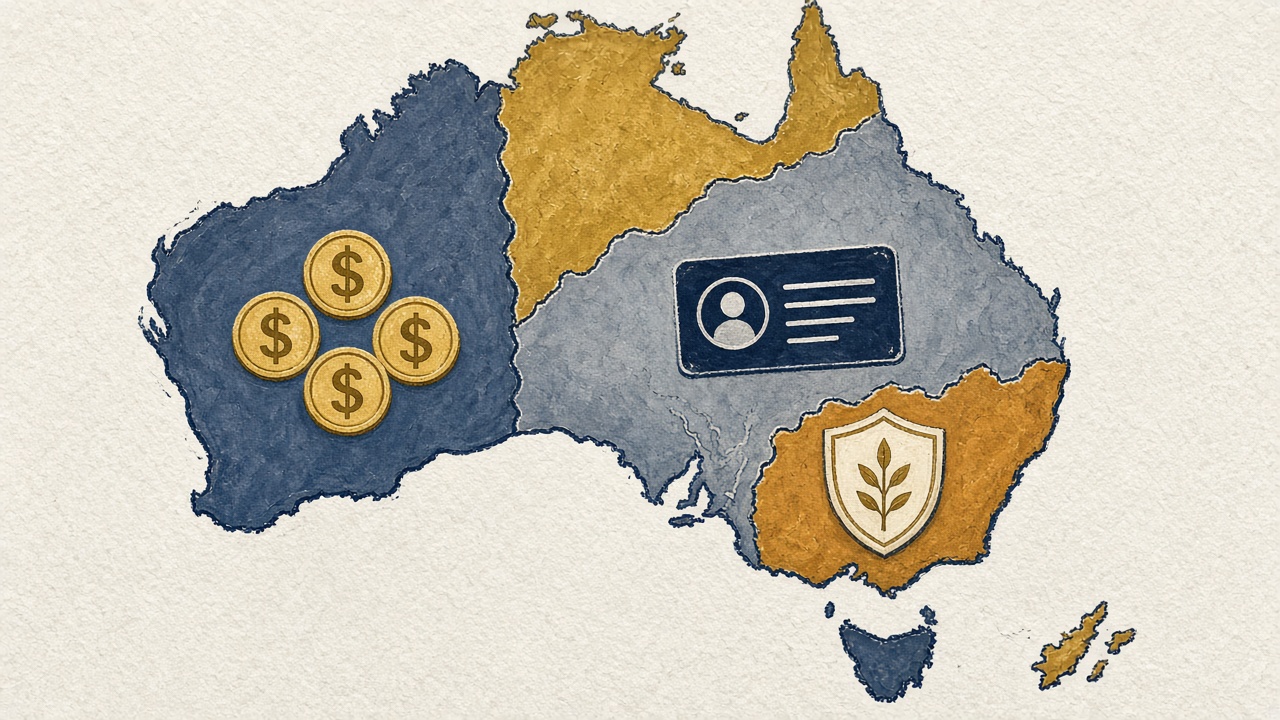
Privatehealth.gov.au, the official comparison site, summarises the consumer-facing result: Queensland and Tasmania fund emergency ambulances for residents; other states expect subscriptions, surcharges or insurance. The Medicare card in your wallet is evidence of the 1984 hospital bargain, not a promise about the van in the driveway.
How the real system bills you
Western Australia and the Northern Territory add another wrinkle: St John Ambulance holds the primary contract, yet residents still face subscription or insurance questions spelled out on state sites. The national picture in the Productivity Commission data is an accounting aggregate; your wallet meets the version encoded in your home state's Act.
Once the constitutional dust settles, the lived experience is eight mini systems. Queensland Ambulance Service tells residents there is no cost for treatment and transport, including emergencies elsewhere in Australia if Queensland remains your principal residence. Forward an interstate invoice with proof of residency and the service may pay it for you. That is why the ending image for this story is paperwork, not drama: a Queensland address on a driver's licence attached to someone else's state invoice.
In NSW the Health Services Act fee schedule sets the numbers; the July orders move them. Residents without cover meet the subsidised call-out. Visitors meet the full non-resident schedule. Medicare never enters the calculation.
Tasmania waives most resident charges, echoing Queensland's socialised approach on an island scale. Victoria and South Australia lean on memberships. The Productivity Commission's national totals hide those local choices inside aggregated transport-fee dollars. Advocates who argue ambulance should be folded into Medicare are really arguing for a new intergovernmental agreement, one that would have to buy out or override decades of state revenue design, including NSW's levy on funds.
There's no cost for ambulance treatment and transport for Queensland residents.
When the postcode on the invoice changes everything
Interstate students and grey nomads learn this the hard way: Tasmania's visitor pages warn that reciprocal agreements do not cover every aeromedical flight, and Queensland asks for proof that the Sunshine State was still your principal residence when the paramedics arrived. The paperwork is tedious because the entitlement is territorial, not national.
Counter-case Queensland is not a utopia; it is a funding choice written into the Ambulance Service Act and explained on a government FAQ. Counter-case NSW is not a scandal; it is a published fee table plus a fifty-one-forty-nine split and a statutory exemption for fund members. Both coexist inside one country that prints a single Medicare card.
Medicare covers the treatment after you cross the hospital threshold. The ride that gets you there is still governed by state law, gazetted dollars per kilometre, and in NSW the ambulance accounts invoice that ticks up every July while the card in your wallet stays the same.