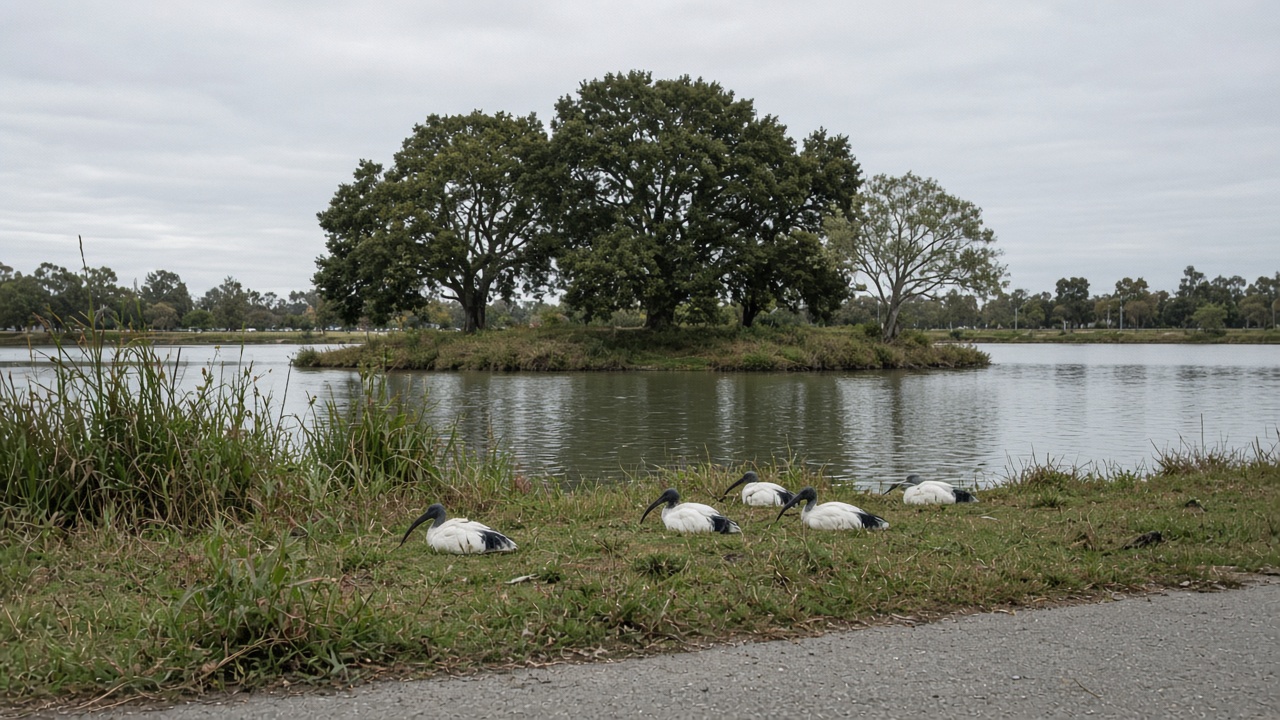
Victorian authorities are testing deceased birds from Lake Weeroona in Bendigo for highly pathogenic avian influenza after wildlife rescuers recovered 59 carcasses, including ibises and water hens, from an island on the urban lake.
The Department of Energy, Environment and Climate Action said samples supplied by a local veterinary clinic would be assessed at a testing laboratory. No case of H5 bird flu has been confirmed in the Bendigo area so far, the department emphasised Friday.
Rescuers responded Wednesday to reports of a sick bird near the island. Subsequent searches turned up dozens of dead animals in a concentrated area, triggering concern that H5N1 — which has affected poultry and wild birds elsewhere in Australia this year — might have reached central Victoria.
Public access and council response
The City of Greater Bendigo said it is following Agriculture Victoria’s direction to leave the birds in place on the island, which is inaccessible to the public and not treated as a recreational space. Council rejected social media claims that it had ignored the site, saying staff are monitoring parks and working with state agencies.
DEECA urged anyone who sees sick or dead birds or wildlife to report cases through the Agriculture Victoria website or the Emergency Animal Disease Hotline on 1800 675 888. Officials have not ordered broader lake closures but warned against handling carcasses.
Statewide bird flu context
Victoria has been managing avian influenza outbreaks in commercial flocks and wild populations for months. The state government is considering emergency extractions of threatened bird species as the virus spreads, a step that would signal officials expect continued pressure on native populations.
Lake Weeroona is a well-known Bendigo landmark, drawing walkers and photographers year-round. A confirmed H5N1 cluster on the island would force tighter biosecurity messaging for backyard poultry keepers in surrounding towns and could affect planned events near the waterfront.
What test results will decide
Laboratory turnaround will determine whether the die-off is avian influenza, another pathogen, or an environmental toxin. Until results return, Agriculture Victoria is treating the event as a possible emergency animal disease scenario without upgrading the public risk rating for Bendigo residents.
Wildlife groups said the sudden cluster is unusual even for a drought-stressed lake ecosystem. If H5N1 is ruled out, investigators will still need to explain why so many birds died in a short window on a single island — a question local rescuers say cannot wait on speculation.