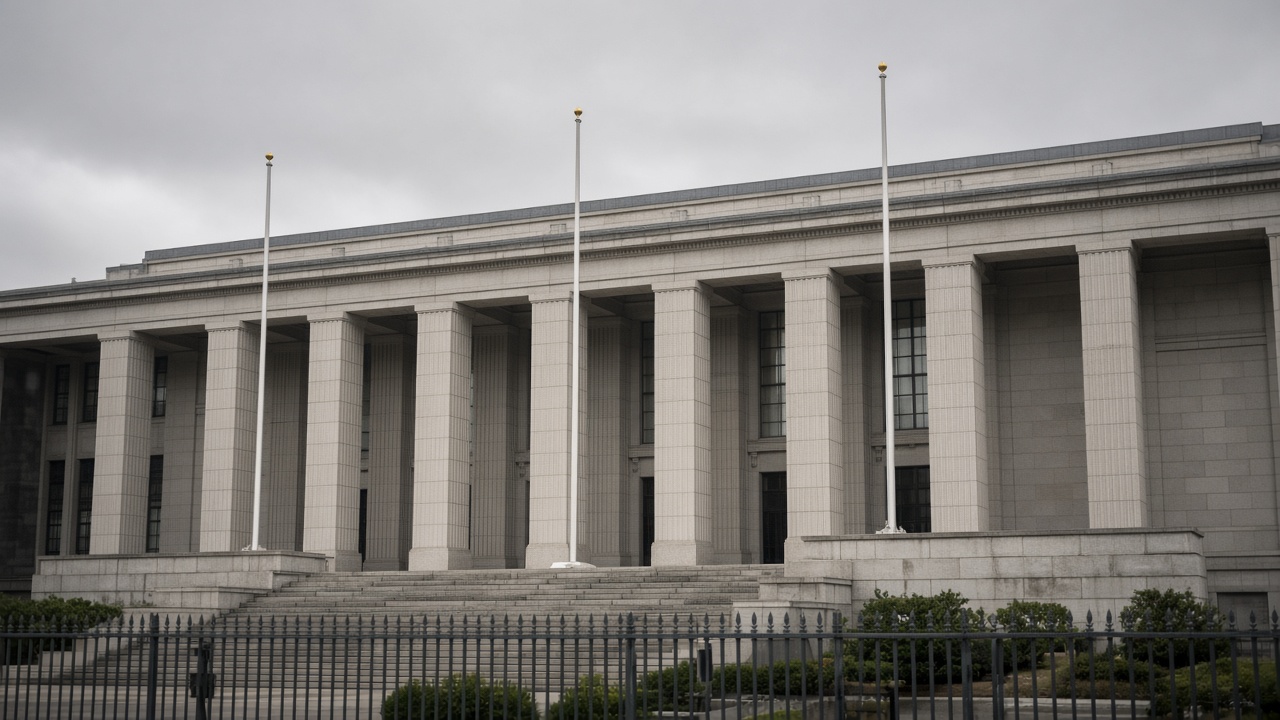
Democratic Progressive Party legislators said Wednesday that a Kuomintang draft to let voters nullify Constitutional Court rulings through referendums would collapse the separation of powers that Taiwan rebuilt after martial law.
The fight traces to December 2024 amendments on how justices are appointed and how the court hears cases. When the Constitutional Court struck portions of that law last year, opposition lawmakers turned to the Referendum Act as a second front.
What the opposition bill would do
KMT caucus leaders listed the referendum measure as priority legislation alongside criminal-law revisions on corporal punishment after the Central Election Commission blocked a public vote on caning. Their referendum plan exempts only impeachment decisions involving the president or vice president; every other constitutional interpretation could be relitigated at the ballot box.
Under the draft, agencies could not reverse a referendum-approved policy for three years, and the president would have to implement results within three months. DPP caucus deputy executive Chen Pei-yu said the legislature cannot elevate itself above the judiciary by writing a bypass into ordinary law.
Executive branch response
Presidential Office spokespersons deferred to party caucuses but noted that past referendums already strain administrative capacity. Legal scholars at National Taiwan University told a forum that international democratic indices treat court-stripping referendums as autocratic drift, even when couched as populist reform.
Cross-strait watchers read the timing as domestic positioning before local elections. None of that reduces the institutional risk: investors who price Taiwan risk on rule-of-law stability will treat a successful vote to erase a constitutional judgment as a discrete credit event.
What happens in committee
Judiciary and Organic Laws committees scheduled marathon hearings for mid-October. Moderate KMT members hinted they might narrow the scope to statutory interpretations rather than entire judgments, but DPP whips said any version that invites voters to erase court holdings is a non-starter. For now the bill is a thermometer for how far the opposition will push structural change in a divided legislature.
Business lobby watch
European Chamber members in Taipei scheduled a legal briefing on referendum uncertainty, saying contract clauses tied to regulatory stability could be renegotiated if court judgments become reversible by popular vote.