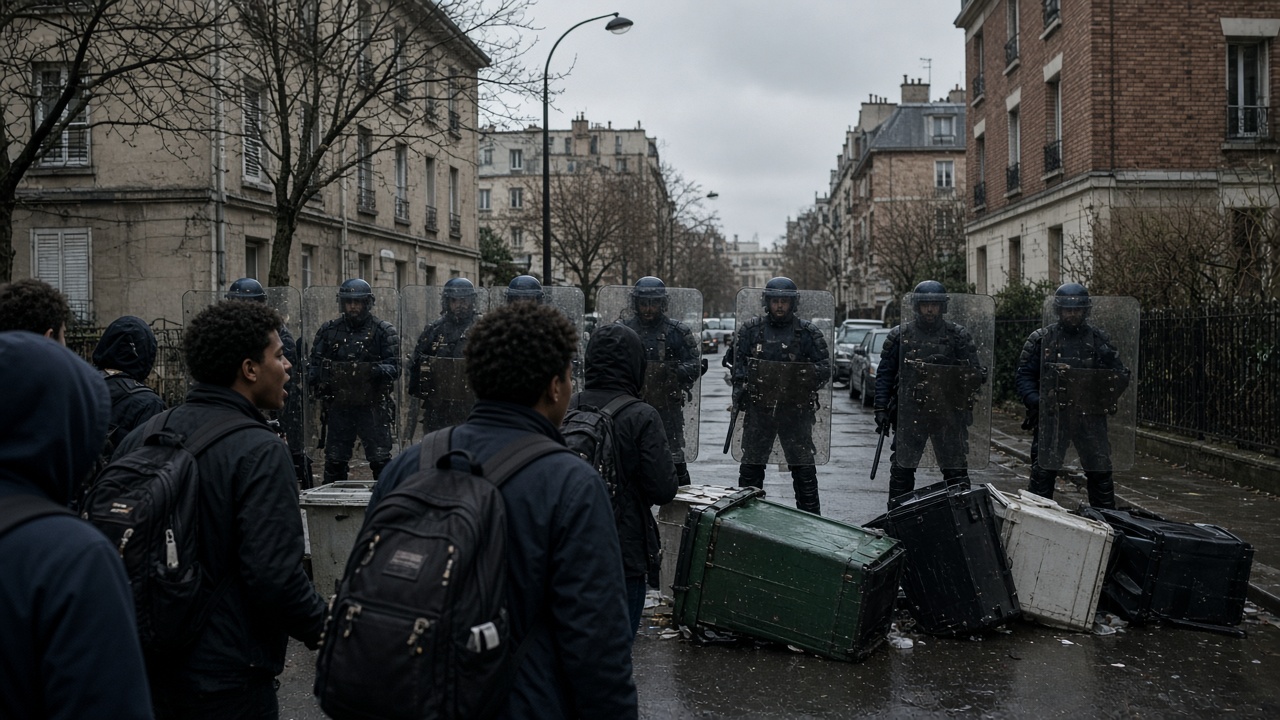
France closed about 400 lycées on Friday and the interior ministry said police detained 1,949 secondary-school students in a single day, the sharpest tally yet in a week of protests that education officials now describe as sliding into urban violence.
The education ministry said roughly 100 schools have been severely damaged since the movement spread beyond initial walkouts, and that 40 headteachers have been injured trying to keep corridors safe. Pupils have cited overloaded timetables, overcrowded classes, missing teachers, and classrooms that became unbearable during heatwaves earlier in the year. What began as coordinated absences has drawn riot police into suburbs around Paris and other cities, with authorities treating some gatherings as public-order emergencies rather than student politics as usual.
Detentions and damage
Interior ministry figures put total detentions since the protests started at nearly 3,000, with Thursday's 1,949 arrests marking an abrupt acceleration. French law allows wide police powers when officials classify gatherings as violent; lawyers' groups have warned that mass roundups of teenagers risk flooding juvenile courts without addressing the grievances that triggered the walkouts.
Education Minister officials told reporters that closures on Friday were preventive: authorities would not staff buildings they could not secure. Parents' associations in several départements said they supported demands for smaller class sizes but condemned vandalism that destroyed science labs and sports equipment. The ministry has not published a consolidated repair bill, but regional accounts describe broken windows, fire extinguishers discharged indoors, and stolen IT hardware.
Why British readers are watching
For the United Kingdom, the unrest matters less as a domestic copycat risk than as a stress test inside the European Union's second-largest economy weeks before budget season across the Channel. French growth has already faced headwinds from energy costs and industrial unrest; prolonged school shutdowns add childcare burdens for working parents and signal a government struggling to contain youth anger without conceding on staffing budgets.
British travellers and universities monitoring exchange programs have received embassy alerts to avoid protest corridors in the evenings. Eurostar and airline operators have not cancelled services, but operators said they were watching station neighborhoods where students have blocked access roads. No UK institution has reported injuries among British students abroad, but several Russell Group universities advised year-abroad participants to register with consular services.
Political stakes for Paris
President Emmanuel Macron's government has not announced an emergency education package in response to the closures. Opposition parties on the left have demanded immediate hiring targets for teachers and caps on weekly instructional hours, while conservative lawmakers have called for tougher sentences for participants who attack school staff. Macron's minority in the National Assembly limits his ability to pass large new spending without alliances that have frayed on prior budget votes.
Police unions said officers are exhausted after successive nights of deployments, echoing complaints heard during the 2023 pension protests but with a younger cohort on the streets. Teachers' unions scheduled weekend meetings to decide whether to join students with a national strike action, which could widen the shutdown beyond the 400 buildings already idled.
Friday's closure count will be the benchmark ministers use on Monday when parliament returns. If detentions keep rising without a negotiating channel, France faces the prospect of a full autumn term disrupted in the same suburbs that have driven prior cycles of car-burning unrest — this time with school reform, not pension age, as the flashpoint.