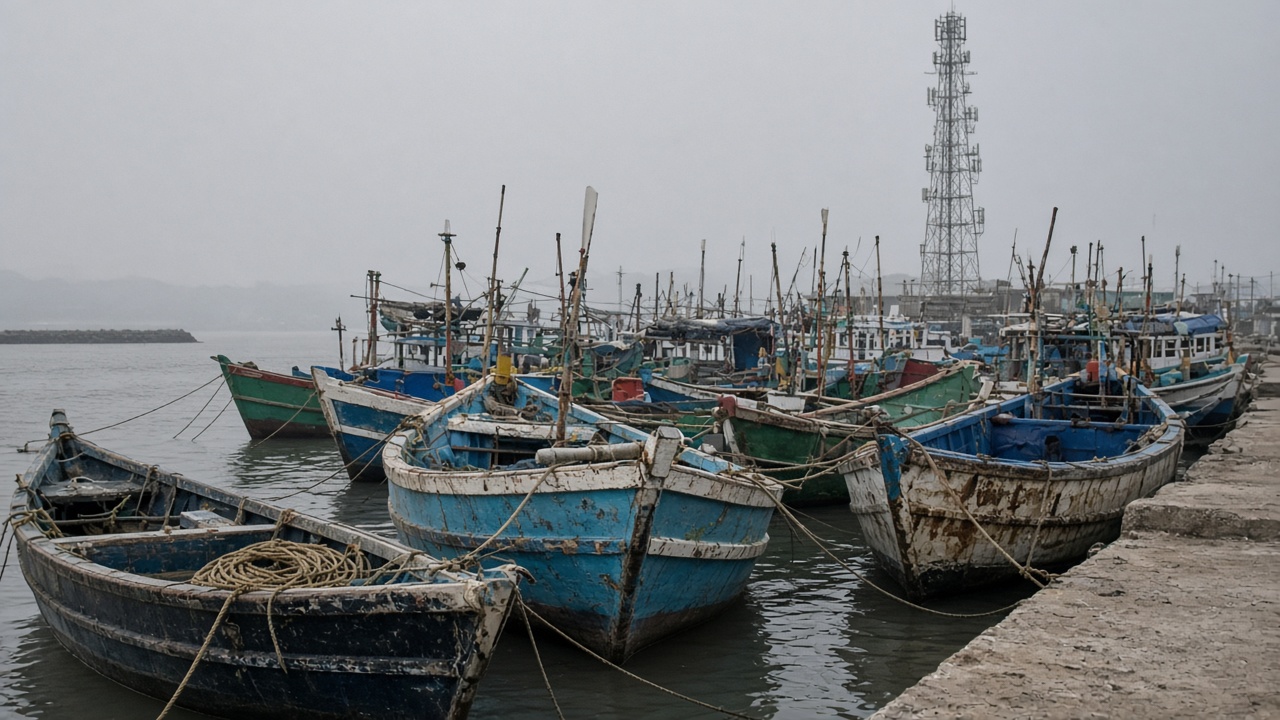
Researchers at IIT Madras and Google DeepMind released a compact Tamil speech model tuned to read cyclone and fish-landing advisories for All India Radio’s coastal networks, targeting fishermen who rely on voice bulletins more than smartphone alerts. The model runs on a single GPU card at district emergency centres, a constraint chosen after last season’s bandwidth outages during northeast monsoon squalls.
Why speech, not text
Marine fisheries departments in Tamil Nadu and Puducherry said a large share of active boat owners still receive warnings through MW radio rather than apps. Text-to-speech systems trained on news anchors performed poorly on technical meteorology terms and harbour names. The new model was fine-tuned on 1,200 hours of archival bulletins plus synthetic clips generated from fisheries glossaries.
Deployment path
Pilot playback began at Rameswaram and Nagapattinam control rooms on Wednesday, with human operators able to override audio within five seconds if the model mispronounces a latitude line. MeitY’s Bhashini team listed the weights on its open-model hub for state governments that want to replicate the stack without cloud dependency.
DeepMind contributed distillation techniques that shrink a larger multilingual model into a 400-million-parameter variant suitable for edge boxes. IIT Madras engineers open-sourced the evaluation scripts so universities can benchmark other Indic coastal languages.
Limits and safeguards
The system does not generate new forecasts—it only vocalises text issued by the India Meteorological Department and state disaster authorities. That boundary matters after election authorities elsewhere cracked down on synthetic campaign audio. Fisheries officials said they will watermark broadcasts with a standard station tone so listeners can distinguish machine-read segments from live presenters.
Broader AI context
The release arrives the same week the RBI held rates steady while upgrading growth forecasts, a reminder that India’s AI investment spans both trading floors and village harbours. If the pilot survives the October squall season, Odisha and Kerala stations are next in line for Tamil and Malayalam variants.
Community feedback
Fisher cooperative leaders in Rameswaram listened to test broadcasts on Wednesday evening, asking engineers to slow pronunciation of latitude-longitude pairs. Operators agreed to insert two-second pauses between bulletins so crews can write coordinates on wet notebooks.
Funding and scale
The India AI Mission’s applied research pool may grant follow-on rupee support if the model cuts missed-warning minutes during cyclone drills. Telecom operators offered to cache audio files at coastal towers, reducing dependence on backhaul links that floodwaters often sever.
Academic rivals at IIT Kharagpur are benchmarking Bengali harbour advisories using the same open evaluation kit, signalling a possible multilingual coastal safety stack by next monsoon.
Regulatory alignment
Disaster management guidelines already require dual-language alerts; adding machine-read Tamil satisfies audit checklists without replacing human forecasters during cyclone landfall.