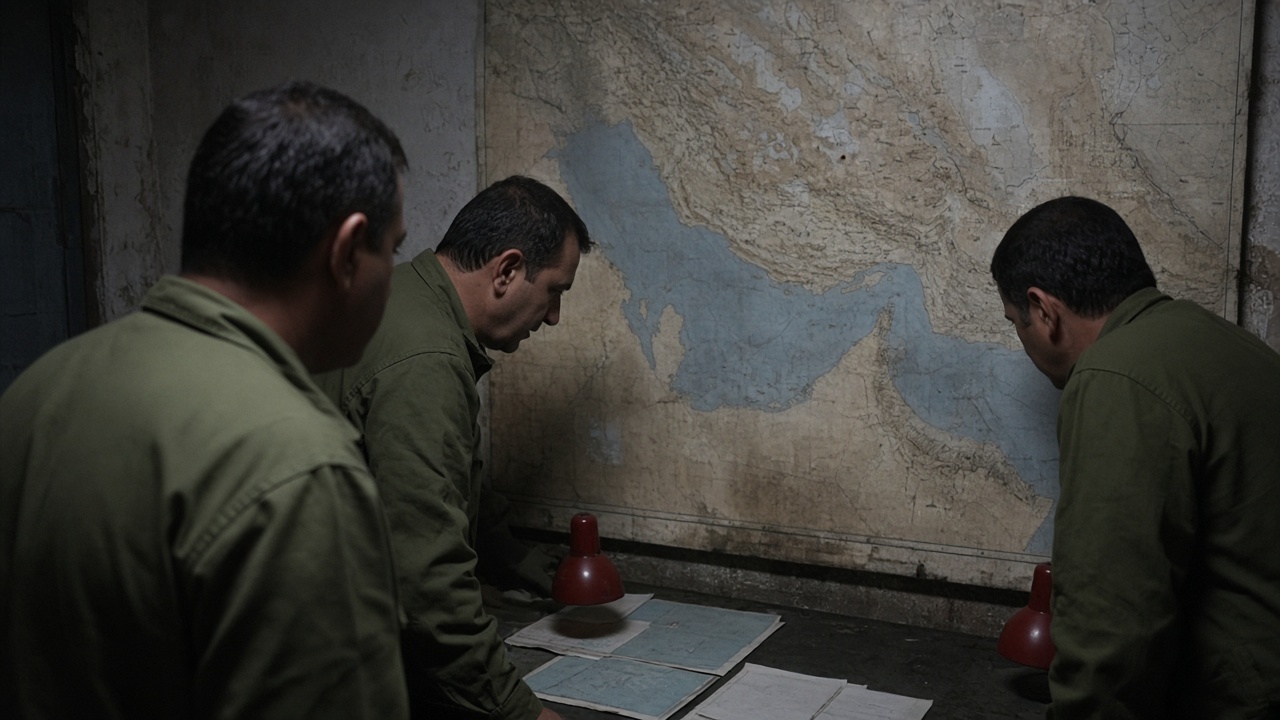
Senior Iranian commanders are reviewing plans to widen the list of potential targets beyond U.S.-linked assets if the United States resumes large-scale military attacks, according to people briefed on the discussions. The planning reflects a view inside Iran’s leadership that any renewed American campaign would need a sharper answer than earlier rounds of exchanges, even as negotiators still pursue talks meant to avoid another spiral.
What the command review covers
The review is described as contingency work rather than a public order to strike. Sources said commanders are weighing how far retaliation could extend if Washington again hits Iranian territory at the scale seen during the summer crisis, when U.S. and Israeli strikes targeted nuclear and military sites and Iran answered with missile and drone salvos across the Gulf.
That wider target set would move beyond the bases, ships and facilities already treated as fair game in prior exchanges, the sources said. They did not specify individual sites, and Iran’s government has not acknowledged the review in official statements.
Pressure from Washington and the Gulf buildup
The internal review lands as the U.S. military prepares another visible surge toward the Middle East. A U.S. official said roughly 9,000 additional troops and a third aircraft carrier are heading to the region, adding to the Roosevelt strike group and Marine reinforcements already ordered toward the Gulf.
President Donald Trump said Thursday that Iran would be struck “very hard” if investigators confirm links between Tehran and the co-pilot who attempted to crash an Israel-bound flight. Israeli Prime Minister Benjamin Netanyahu said early findings pointed to religious radicalization; Israeli intelligence officials echoed that assessment in briefings described by the Associated Press.
Those statements feed the same cycle Iranian planners say they are trying to prepare for: public threats from Washington, Israeli security narratives, and a U.S. fleet posture that Tehran reads as pre-strike positioning even when diplomats meet in New York or Doha.
Talks, sanctions, and the escalation ladder
Iranian officials have not abandoned the talking track. Secretary of State Marco Rubio curtailed an Iranian delegation’s stay in New York this week after Qatar-mediated discussions stalled, a move Tehran cast as pressure tactics rather than a break in diplomacy. Separate reporting described Saudi and Qatari lobbying against a renewed U.S. bombing campaign in August, when Patriot batteries were quietly sent to protect energy infrastructure in both kingdoms.
Analysts who follow the Gulf said the command review is best read as Iran keeping options open while oil markets remain volatile and the Strait of Hormuz sees repeated security incidents. Any decision to act on a broader target list would still require political approval from Supreme Leader Ayatollah Ali Khamenei and his security cabinet, not battlefield commanders alone.
What allies are watching
European and Gulf capitals are tracking whether the review stays on paper. NATO members have already absorbed higher fuel costs from Hormuz disruptions and G7 reserve releases meant to cap diesel prices. A wider Iranian strike matrix would raise questions about insurance for commercial shipping, air corridors over Iraq and the United Arab Emirates, and the status of the remaining U.S. troops in Syria and Iraq.
For now, U.S. officials describe the carrier movements as deterrence. Iranian sources describe the command review the same way—as a deterrent of their own, meant to signal that a repeat of summer-scale U.S. attacks would not be answered with the same limited playbook. The gap between those two readings is what negotiators in Doha and New York are still trying to bridge.