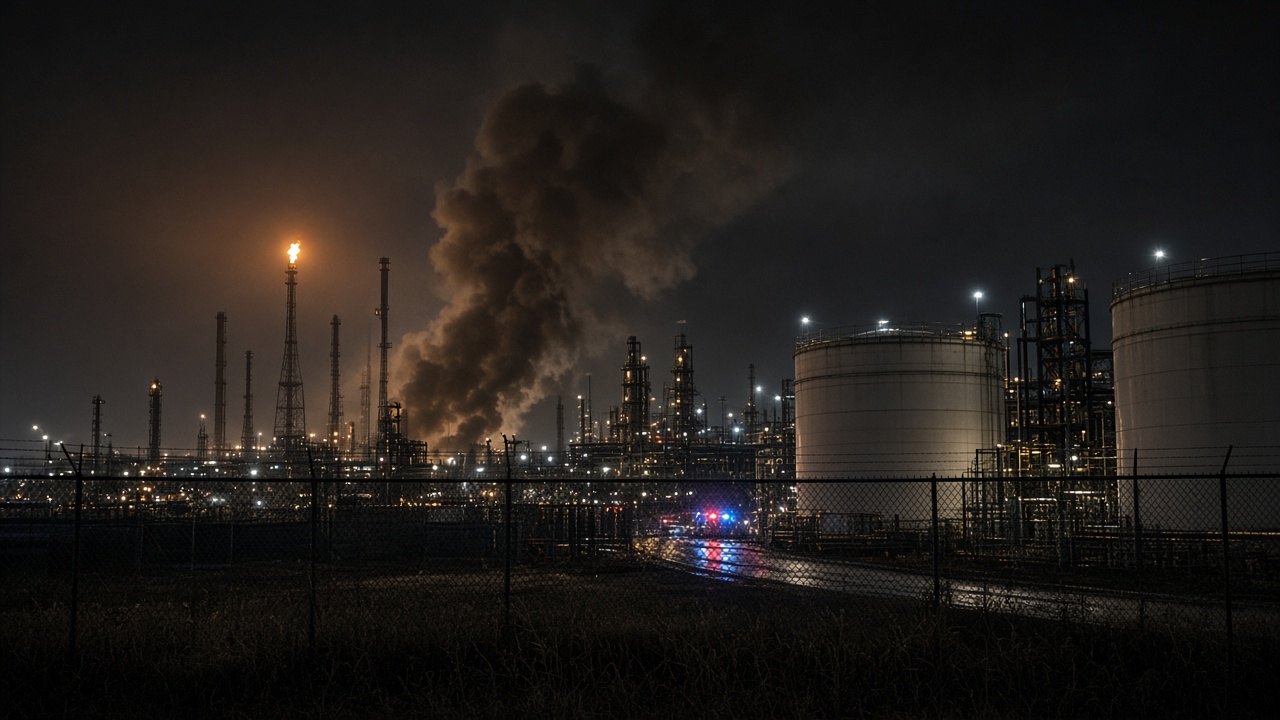
Ukrainian forces said they struck a Lukoil facility in Volgograd and an oil dispatch station in the Samara region overnight, with fires reported at both sites, as Kyiv pressed its campaign against Russian refining and export hubs while Moscow continued drone and missile attacks across Ukraine.
What Kyiv claimed
President Volodymyr Zelenskyy said Ukrainian units carried out operations in several Russian regions, including strikes that hit the Lukoil installation in Volgograd and the Samara-area dispatch point. Ukrainian officials have framed such attacks as a way to narrow Russia’s ability to fund the war and to disrupt fuel flows that support military logistics.
The Russian Ministry of Defence, meanwhile, said its forces struck what it described as military-linked targets in Ukraine, including a bridge over the Dnipro in Kyiv, a power station near the capital, the Izmail port area near Odesa and a cargo vessel. Moscow routinely describes Ukrainian civilian infrastructure as military-related; Kyiv denies using civilian sites for war purposes.
Refining targets and market nerves
Volgograd and Samara sit deep inside Russia’s European territory, far from the front line but within the growing reach of Ukrainian drones. Previous Ukrainian strikes on refineries and depots have temporarily cut processing capacity and forced Russian operators to reroute crude and products.
Energy traders have watched those attacks alongside Middle East supply risks and Western reserve releases. Any sustained damage to large Lukoil assets can tighten domestic Russian product balances even when global crude prices move on other headlines.
Russia’s parallel pressure on Kyiv
On the same night, Russian strikes battered multiple Ukrainian regions. Zelenskyy said attacks hit a kindergarten in Kherson, a grocery store in Kharkiv and apartment blocks in Kramatorsk and Sumy, with at least four people wounded across the Dnipro, Odesa, Kharkiv, Kyiv, Poltava and Rivne areas.
In Kyiv, authorities closed the Southern Bridge, Paton Bridge and sections of the Metro Bridge after drone damage, snarling rush-hour traffic across the Dnipro. The closures underscored how even unsuccessful mass drone waves can paralyze a capital when air defenses force shutdowns of key crossings.
What happens next
Russian authorities had not issued a detailed public damage assessment for the Volgograd or Samara sites as of Friday Pacific time. Independent verification of fire extent, production losses and repair timelines typically lags by days.
Ukraine is expected to keep pairing diplomacy with deep strikes as it seeks additional sanctions tightening from allies. Moscow is likely to answer with more combined drone and missile salvos, keeping both countries’ energy and transport networks in each other’s crosshairs.
In the Black Sea port of Tuapse, Russian officials said drone debris damaged an enterprise but released few details, another reminder that the economic perimeter of the war now stretches from Caspian refineries to Danube grain corridors.