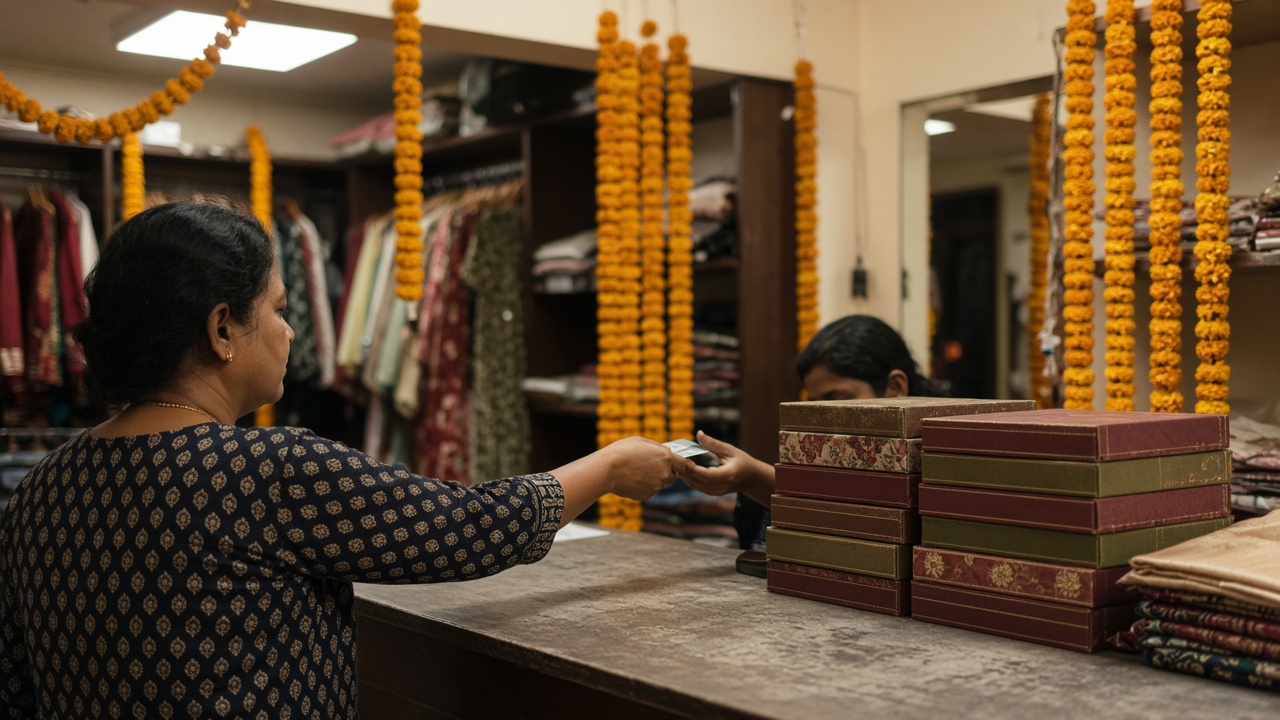
HDFC Bank and State Bank of India extended Navratri-focused EMI holiday programmes this week as credit-card spends climbed toward pre-Dussehra peaks on apparel, smartphones and domestic air tickets. Issuers are competing for share of wallet during the nine-night festival without cutting headline interest rates, which still track the RBI’s unchanged 5.5% repo.
What issuers offered
HDFC Bank widened a three-month no-cost EMI moratorium on select merchant categories for cardholders who convert purchases above Rs 25,000 before October 5, according to customer emails reviewed by the desk. SBI Cards paired similar deferrals with bonus reward points on grocery and fuel spends capped at Rs 2,000 per billing cycle. Both programmes require on-time minimum payments on other balances, underscoring that “holidays” are marketing concessions rather than blanket forbearance.
Spending patterns
Payment networks reported double-digit year-on-year growth in contactless transactions at fashion and jewellery merchants in Gujarat and Maharashtra, states that celebrate Navratri with heavy foot traffic. Travel portals said advance bookings for the long Dussehra weekend spiked after Wednesday’s RBI decision, which raised growth forecasts and soothed equity markets after a bruising September.
Smaller private banks leaned on co-branded store cards rather than broad EMI waivers, focusing on electronics chains rolling out festival discounts. Fintech wallets linked to RuPay credit lines also pushed cashback on UPI spends, though the National Payments Corporation of India has been suspending scam-tied handles in parallel enforcement actions.
Debt risk
TransUnion CIBIL data cited by issuer risk teams still shows rising delinquencies on sub-Rs 50,000 card balances among first-time borrowers. EMI holidays can defer stress but do not erase obligations; regulators have previously cautioned banks against evergreening consumer credit through repeated moratoriums.
With Gandhi Jayanti closing branches on Thursday, call-centre teams handled conversion requests online. Customers who miss cut-off dates will pay standard finance charges on revolving balances—often above 40% annualised for unsecured cards.
Rate outlook
Because the MPC held rates, floating-rate personal loans and many card APRs remain sticky. Issuers bet that festive psychology will outweigh borrowing costs for middle-income households upgrading phones or booking holiday travel.
December’s policy meeting is now the earliest window for a repo cut that could flow through to card rates. Until then, Navratri promotions are the industry’s primary lever—and Thursday’s bank holiday gave customers a breather to read the fine print before Friday’s spending rush.
Regulatory backdrop
The Reserve Bank’s unchanged repo means banks are not rushing to cut deposit rates, preserving margin that funds EMI waivers. Issuers book marketing costs against interchange revenue, which spikes during festival weeks when customers swipe for jewellery and appliances.
Consumer courts in Maharashtra have seen a rise in complaints about hidden processing fees on zero-cost EMIs; Thursday’s holiday gave ombudsman staff time to draft advisories warning that GST on interest components still applies even when issuers subsidise the rate.
Merchant perspective
Large format retailers in Ahmedabad said average ticket sizes rose 12% year-on-year during the first seven Navratri nights, with smartphones and air purifiers leading categories. Smaller merchants without issuer tie-ups relied on pay-later apps that charge merchants higher MDR, squeezing margins unless volumes compensate.
Regulatory backdrop
The Reserve Bank’s unchanged repo means banks are not rushing to cut deposit rates, preserving margin that funds EMI waivers. Issuers book marketing costs against interchange revenue, which spikes during festival weeks when customers swipe for jewellery and appliances.
Consumer courts in Maharashtra have seen a rise in complaints about hidden processing fees on zero-cost EMIs; Thursday’s holiday gave ombudsman staff time to draft advisories warning that GST on interest components still applies even when issuers subsidise the rate.
Merchant perspective
Large format retailers in Ahmedabad said average ticket sizes rose 12% year-on-year during the first seven Navratri nights, with smartphones and air purifiers leading categories. Smaller merchants without issuer tie-ups relied on pay-later apps that charge merchants higher MDR, squeezing margins unless volumes compensate.
Cross-border spends
Travel cards with lower forex markups saw elevated authorisations for Dubai and Bangkok trips booked during the long weekend, according to payment processor summaries shared with the desk. Issuers reminded customers that dynamic currency conversion at foreign terminals still costs more than rupee-settled charges.