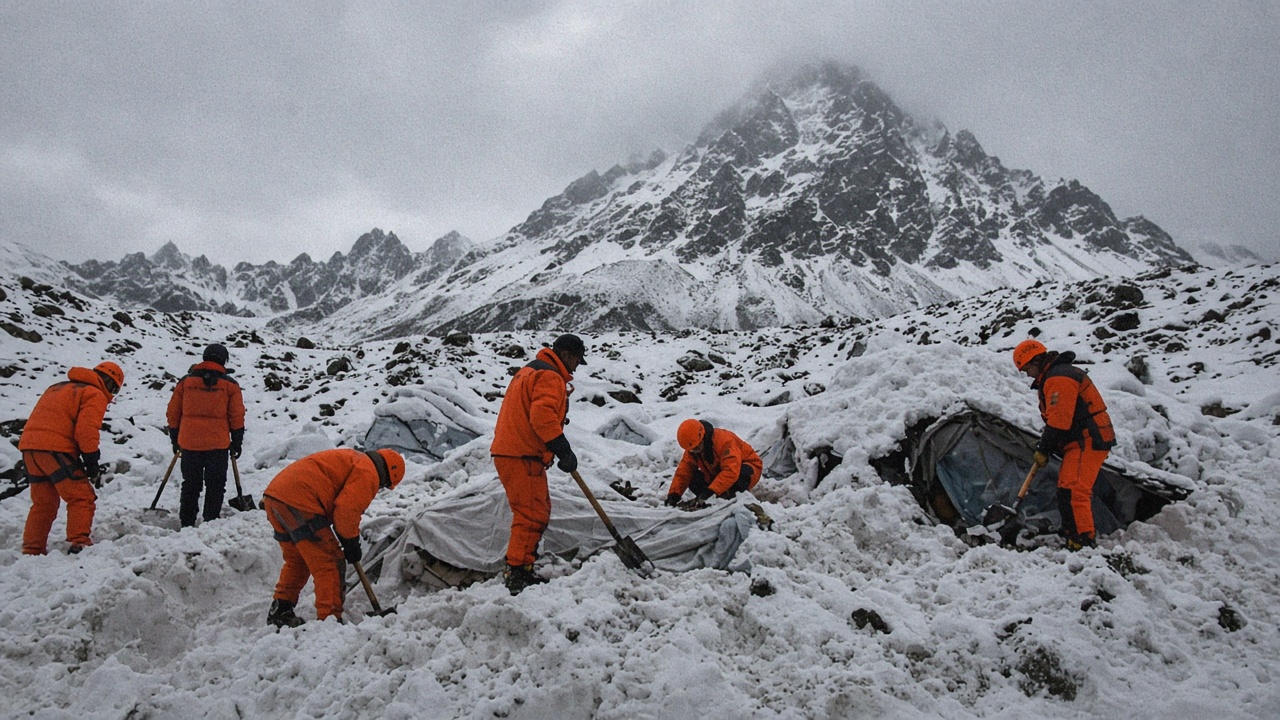
Search teams recovered eight more bodies on Thursday from the base camp of Himlung Himal in Nepal’s Manang district, bringing the confirmed death toll to fifteen Nepali expedition workers buried when an avalanche swept their camp early on Sunday. One guide, Pasang Nuri Sherpa, remains missing as leaders of the recovery effort warn that deep snow and unstable slopes may force a pause until conditions improve.
What happened at Himlung
The slide hit at about 12:45 a.m. on September 27, according to Nepali officials and the Nepal National Mountain Guide Association, which is coordinating the response. Twenty-seven Nepali staff from two outfitters were at the site preparing tents, ropes and logistics for autumn expeditions on the 7,126-metre (23,345-foot) peak near the Chinese border. Foreign climbers were still en route and were not in camp when the avalanche ran, association president Tul Singh Gurung told reporters.
Eleven survivors were pulled from the debris in the first hours. Recovery teams working in shifts dug through more than four metres (about fourteen feet) of snow to reach buried tents. Bodies recovered earlier in the week were joined on Thursday by eight more found in the same camp area, Gurung said. Helicopters were expected to ferry the latest remains toward Kathmandu as families waited for identifications confirmed by the association and local authorities.
Season under pressure
Himlung is a common stepping stone for mountaineers training for higher Himalayan objectives, and the autumn season typically closes at the end of October. Losing fifteen support workers in a single event ranks among Nepal’s deadliest recent mountain accidents outside the Everest corridor, where avalanches in 2014 and 2015 killed dozens of guides and climbers on the world’s highest peak.
Guides leading the operation—including IFMGA-certified teams in two phases—said the mission would be suspended while avalanche risk remains high. A Facebook statement from the association listed fifteen recovered workers by name and noted that further search for Sherpa would resume only if the mountain stabilises. Separately, officials in the Manaslu region reported heavy snowfall burying equipment at another base camp, underscoring how early winter weather is complicating work across Nepal’s guiding industry.
Economy and risk
Mountaineering and trekking underpin a large share of Nepal’s foreign tourism earnings, employing guides, porters, cooks and logistics staff who often accept front-line avalanche and crevasse risk so clients can summit. Climate scientists have documented accelerating glacier melt and shifting snowpack across the Himalayas, and guide associations have pressed for better weather forecasting and insurance for high-altitude workers.
For now, the Himlung camp is a recovery site, not a launch point. Outfitters must decide whether to abandon autumn attempts on the peak or wait for a late window that may never open. Families in Sankhuwasabha, Gorkha, Khotang and other districts are mourning workers whose labour made foreign expeditions possible.