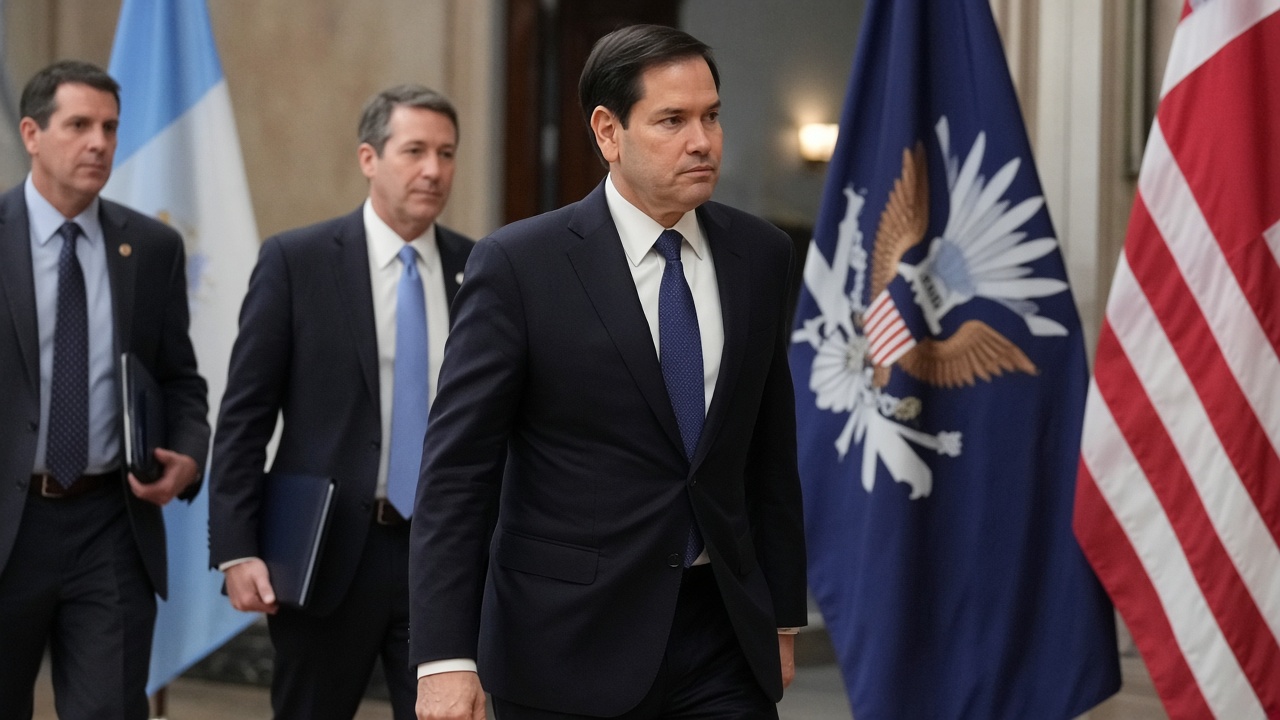
Secretary of State Marco Rubio directed Iran's United Nations delegation, including Foreign Minister Abbas Araghchi, to leave New York on Monday evening after a weekend of Qatari-mediated contacts produced no movement toward reopening the Strait of Hormuz or pausing the eight-month war, U.S. officials said. The decision landed hours before Araghchi's team boarded a flight to Doha and underscored how little trust remains between Washington and Tehran even when both sides keep talking through intermediaries.
What Washington says happened
Two U.S. officials, speaking on condition of anonymity to describe internal deliberations, told reporters that Rubio concluded the Iranians had "overstayed their welcome" once the high-level General Assembly program ended. President Masoud Pezeshkian had already returned home, but Araghchi had stayed in New York for indirect discussions about navigation through Hormuz, a ceasefire framework and the nuclear file.
According to accounts first reported by Axios and confirmed by Anadolu, the U.S. mission to the United Nations informed Iran's mission Monday evening that the delegation had to depart immediately. A U.S. official quoted by Axios said the assembly "was over, so it was time for them to go." Araghchi and his aides left several hours later, boarding a flight to Doha at about 1:20 a.m. Tuesday local time.
ABC News reported that Araghchi had been expected to remain in New York until Wednesday before Rubio intervened. A second source told Axios that Araghchi was already scheduled to travel back to Tehran on Monday night, suggesting the practical effect of the order may have been limited even as the public messaging sharpened.
Tehran's counter-narrative
Iran's mission to the United Nations rejected the portrayal of an expulsion. In a post on X, the mission said the delegation left Monday evening "in accordance with the schedule that had also been communicated to the U.S. Department of State in advance on September 17." It accused the State Department of "propagating baseless and worthless news" after achieving nothing at the negotiating table.
Foreign Ministry spokespeople in Tehran have repeated that Araghchi traveled to New York to pursue peace, not to sell a wider war. The dueling statements leave outside observers to weigh timing against intent: whether Rubio's order changed plans or merely framed a departure that was already in motion.
Where the talks stood
Qatari mediators spent the weekend trying to bridge positions that have hardened since the U.S. and Israel opened the conflict in late February. Iran has tied any reopening of Hormuz to relief from the U.S. maritime blockade and sanctions pressure, while Washington has demanded concessions on nuclear transparency and regional attacks before easing enforcement.
Indirect meetings involving Araghchi's team and U.S. interlocutors, routed through Doha, failed to produce a joint statement or even a agreed path to another round, regional diplomats said. Oil markets remain volatile; Brent crude traded above $100 a barrel this week as traders priced in the risk that diplomacy would lag behind military deployments, including a third U.S. carrier group now heading toward the Middle East.
What comes next
Regional sources told Axios that Qatari officials continue to shop a compromise package to both capitals, but neither side has publicly endorsed the latest draft. Araghchi arrived in Doha on Tuesday en route to Tehran, where hard-liners in parliament are likely to seize on the New York episode as proof that face-to-face engagement with Washington wins only humiliation.
For the Trump administration, the episode is a reminder that UNGA week optics can outrun substance. Rubio's move may have been as much about signaling impatience to allies in the Gulf as about clearing hotel floors in Manhattan. Still, expelling—or, at minimum, abruptly ending—the stay of a sitting foreign minister is an unusual step in the middle of a hot war, and it leaves the next opening for talks unclear.