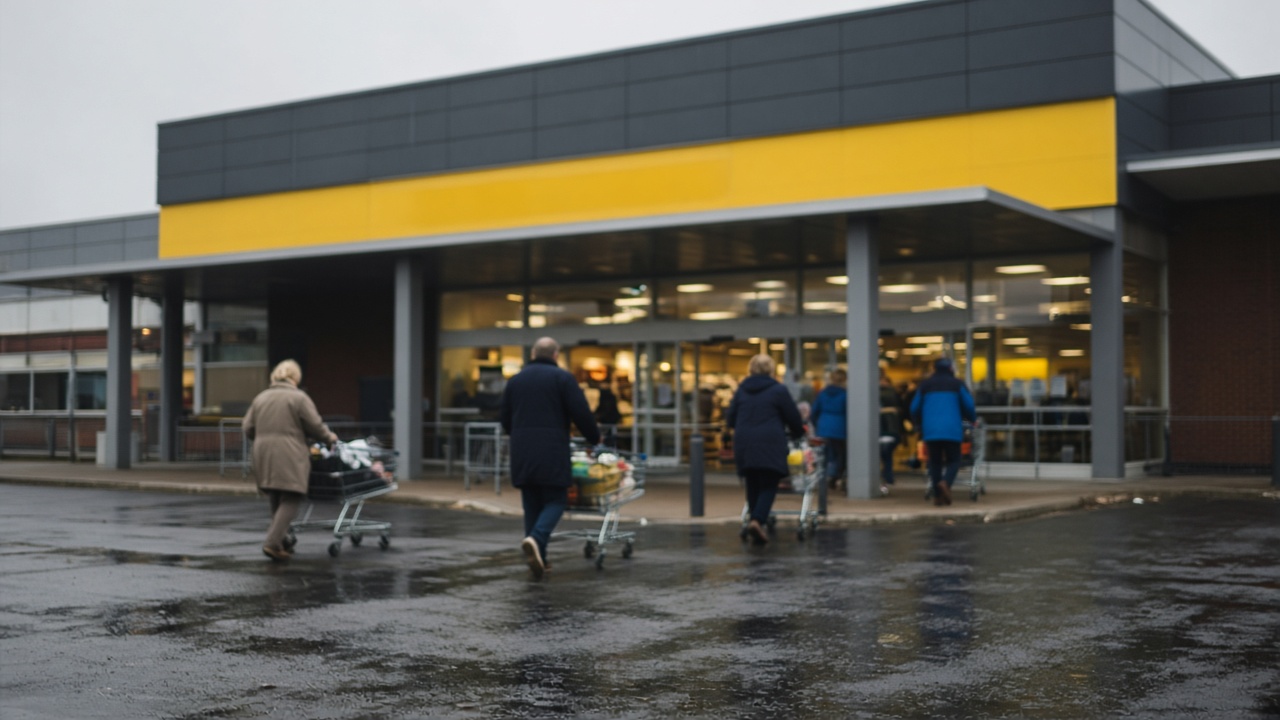
Tesco raised its full-year adjusted operating profit guidance to between £2.9 billion and £3.1 billion on Friday, telling investors that a stronger first half and steadier food inflation had offset wage and energy pressure across its UK stores.
The upgrade landed on the same session the FTSE 100 gave back a sliver of its recent gains, but Tesco shares still outperformed the index as traders treated the grocer as a domestic cash-flow story rather than a macro hedge. Management said like-for-like UK sales growth held up through the summer trading period, when unusually warm weather lifted barbecue and chilled categories without forcing the kind of promotional spiral that hurt margins in 2023.
What changed in the guidance
The previous profit band, set at the prelims in April, assumed food inflation would cool faster than it has. In the first half Tesco reported adjusted operating profit ahead of City models, helped by mix shift toward own-label lines and continued efficiency work in distribution. The company did not raise revenue targets; instead it argued that margin discipline and lower-than-feared input costs on key staples would flow through to the bottom line if the second half tracks seasonally.
Analysts at several UK brokers noted that Tesco's guidance now implies operating margin resilience even as competitors invest in price. Sainsbury's and Asda have both flagged higher labour bills from April's national living wage step-up, and Tesco's update suggested it had absorbed much of that through productivity rather than blanket price cuts.
Budget politics in the background
Friday also marks the day Treasury officials expect the Office for Budget Responsibility to deliver pre-measures forecasts to Chancellor Rachel Reeves. Tesco's trading statement is not a fiscal document, but grocers sit on the fault line between household budgets and VAT politics. Any hint that food inflation is easing without a collapse in volumes gives Reeves slightly more room to argue that cost-of-living pressure is moderating — even as business groups point to weak hiring intentions in the Bank of England's latest survey.
For shareholders, the nearer-term question is capital return. Tesco maintained its dividend policy language and said buybacks remain an option if group debt stays inside target. The stock reaction on Friday suggested investors wanted proof the upgrade was operational, not a one-off from weather; management's commentary stressed recurring cost savings in supply chain and store labour scheduling.
What to watch next
The second half brings Halloween and Christmas trading, when Tesco typically leans on Clubcard personalisation to protect basket size. Competitors will report their own updates in the coming weeks, and the market will compare guidance moves across the big four. If discounters Aldi and Lidl accelerate space openings in suburban catchments, Tesco may need to spend more on price investment than today's band assumes — but for now the board is signalling confidence that Britain's largest supermarket chain can keep earnings momentum without sacrificing the balance sheet.