Russian forces launched 108 strike drones against Ukraine overnight, and Ukrainian air defenses intercepted or neutralized 88 of them by 8 a.m. Kyiv time on Friday, according to the Air Force. The barrage mixed Shahed-type drones — nearly half of them jet-powered variants — with Gerbera drones and Parodiya decoys fired from Bryansk, Primorsko-Akhtarsk, occupied Donetsk, and Crimea.
What changed overnight
The Air Force said enemy airstrikes were recorded at 11 locations and that debris from downed drones was found at five sites. Several drones were still in Ukrainian airspace as officials updated the tally, meaning the count could shift before the attack is closed.
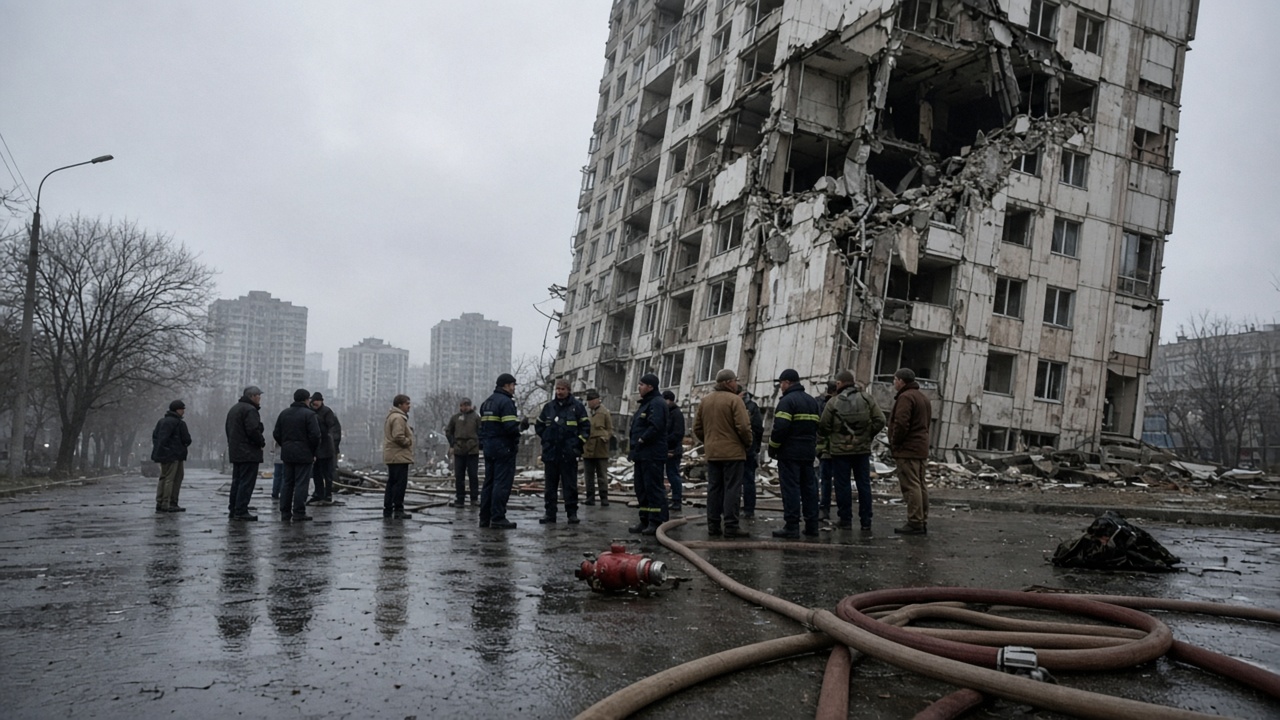
In Kyiv, Mayor Vitali Klitschko and regional authorities said a 25-story residential tower in the Darnytskyi district was damaged in the wave. One person was killed and two others were wounded, according to city and regional statements cited by Ukrainian media. Debris also fell in the Holosiivskyi district, damaging windows on a non-residential building and several parked cars without causing injuries.
Infrastructure under repeat pressure
Russian strikes hit the South Bridge in Kyiv again overnight, Ukrainian transport officials said — the third attack on that crossing in two days after similar hits on October 1. The pattern keeps commuter routes and repair crews on a short clock even when intercept rates stay high.
Western officials have warned for months that Moscow is adjusting launch geometry and decoy ratios to exhaust mobile fire units and fixed radar coverage. Friday’s mix of jet Shaheds and decoys fits that playbook: faster drones compress decision time, while cheap decoys force defenders to spend missiles on false tracks.
Ukraine’s military did not publish a full regional breakdown of impacts beyond Kyiv, but local governors in several oblasts posted overnight alerts urging residents to stay in shelters until the all-clear. Social media footage verified by independent monitors showed tracer fire and searchlights over multiple cities, consistent with the Air Force account of drones still airborne after the first intercept wave.
What commanders say is next
Air Force spokespeople did not publish a full breakdown of which intercepts used fighter aircraft, mobile groups, or electronic warfare, but they reiterated that strike drones remain the dominant nightly weapon. Energy and rail officials in other regions reported no nationwide blackout tied to this wave, though local emergency services remained on alert as debris searches continued.
President Volodymyr Zelenskyy’s office has not yet released a separate statement on the Kyiv fatalities, but his nightly address on Thursday had warned that Russia would keep testing civilian nerves as diplomacy stalls. NATO ambassadors in Brussels are scheduled to review air-defense pledges next week, and Ukraine’s delegation is expected to ask for expedited deliveries of interceptors suited to jet-powered drones.
Ukraine’s government is expected to press partners again for additional air-defense missiles and early-warning radars, arguing that high intercept percentages still leave population centers exposed to mass drone saturation. For residents in Kyiv, the immediate question is whether bridge and high-rise repairs can keep pace with repeat strikes as the autumn campaign grinds on.