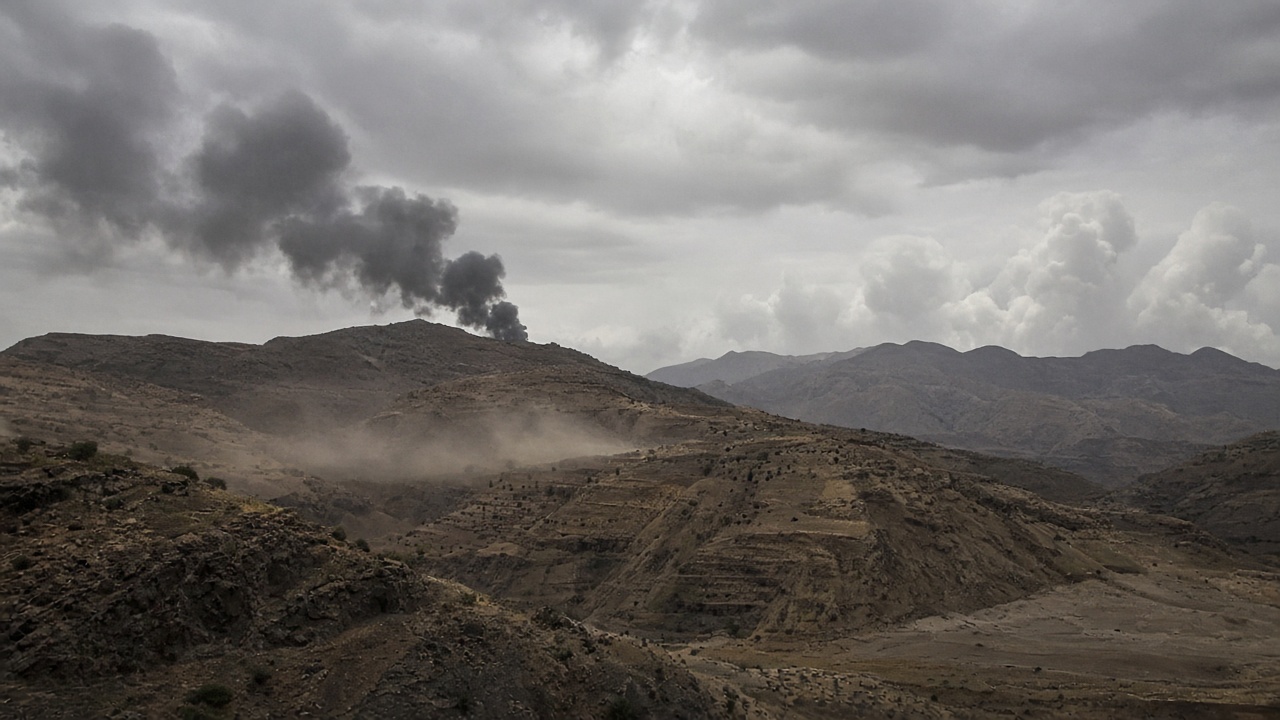
Forces aligned with Yemen’s Aden-based government said they carried out 474 attacks in a single 24-hour window, claiming those operations killed or wounded 1,540 Houthi fighters as fighting across the country’s north and west intensified early Saturday. The figures, issued without independent battlefield verification, describe one of the largest single-day tallies since Yemen’s civil war reignited and coincide with renewed Houthi missile and drone activity toward southern Saudi Arabia.
What the Aden side reported
Officials speaking for the government forces did not, in initial public summaries reviewed by international outlets, publish a district-by-district breakdown of the 474 operations. Instead they framed the surge as a coordinated push against Houthi positions after weeks of reciprocal strikes. Casualty counts in Yemen’s multifront war are routinely disputed; aid agencies have warned that rapid military escalations often precede sharper restrictions on humanitarian corridors and higher civilian displacement, even when combatant losses dominate official statements.
The announcement landed on the same day that Houthi media said Saudi-led aircraft had conducted dozens of their own strikes on areas under Houthi control, part of a tit-for-tat cycle the group says has now reached roughly 1,350 Saudi attacks since the latest phase of fighting began. Neither side’s aggregate strike counts have been corroborated by third-party monitors on the ground, leaving diplomats and shipping insurers to rely on satellite imagery, intercept logs and incident reports from neighboring states.
Saudi intercepts and debris on the border
While ground combat churned inside Yemen, Saudi Arabia’s military said it intercepted and destroyed three ballistic missiles that the Houthis launched toward Khamis Mushait in the kingdom’s Asir region. Coalition spokesperson Major General Turki Al-Malki announced the interceptions, adding to a week of reported shoot-downs over southern provinces that Riyadh has increasingly tied to wider regional tensions linked to the Iran war.
Saudi civil-defense authorities separately said falling debris from an intercepted missile injured one resident in Ahad Rafidah, also in Asir, and damaged a prayer room and several vehicles. That incident followed an earlier Houthi projectile strike on a school in Najran that Saudi officials said caused material damage but did not immediately report student casualties. The cross-border pattern underscores how Yemen’s internal battle lines continue to export risk into Gulf population centers even when intercept systems work as designed.
Maritime and diplomatic backdrop
The land-and-air escalation unfolded alongside fresh anxiety in the Strait of Hormuz, where the United Kingdom Maritime Trade Operations agency reported that unidentified projectiles struck two oil tankers in separate incidents on Saturday. UKMTO did not attribute the attacks in its initial notices, but insurers and charterers have already widened war-risk premiums on Gulf passages as Iran’s Revolutionary Guard Corps warns it is prepared to respond to U.S. force movements with strikes more severe than its October 2024 missile barrage toward Israel.
Washington has been dispatching additional naval assets toward the Middle East, including the carrier strike group around the USS Theodore Roosevelt, while President Donald Trump’s senior national-security aides held an unpublicized session at Camp David on Friday to weigh next steps in the Iran war and the Saudi-Houthi front, according to U.S. officials cited by Axios. Riyadh has pressed for deeper American involvement against Houthi launch sites, but Trump has publicly kept his options opaque, telling reporters that developments were “working out very well” even as Tehran’s leadership threatens harsher retaliation.
What comes next
United Nations envoys have repeatedly called for a return to the 2022 truce framework that had quieted front lines around Hodeidah and Marib, yet the latest strike totals suggest both main Yemeni coalitions are betting on battlefield pressure rather than renewed talks. For households already facing food insecurity and cholera outbreaks, another acceleration in air campaigns raises the prospect of damaged infrastructure and blocked aid routes without a corresponding diplomatic off-ramp.
Analysts tracking the conflict said the Aden government’s 24-hour operations claim, if even directionally accurate, signals an attempt to regain initiative before any U.S. decision on expanded strikes or before winter shipping schedules lock in higher insurance costs through Hormuz. Verification will depend on open-source geolocation, hospital admissions in Houthi-held cities and any future briefings from the Saudi-led coalition, which has not yet linked its intercept count to specific targets inside Yemen.