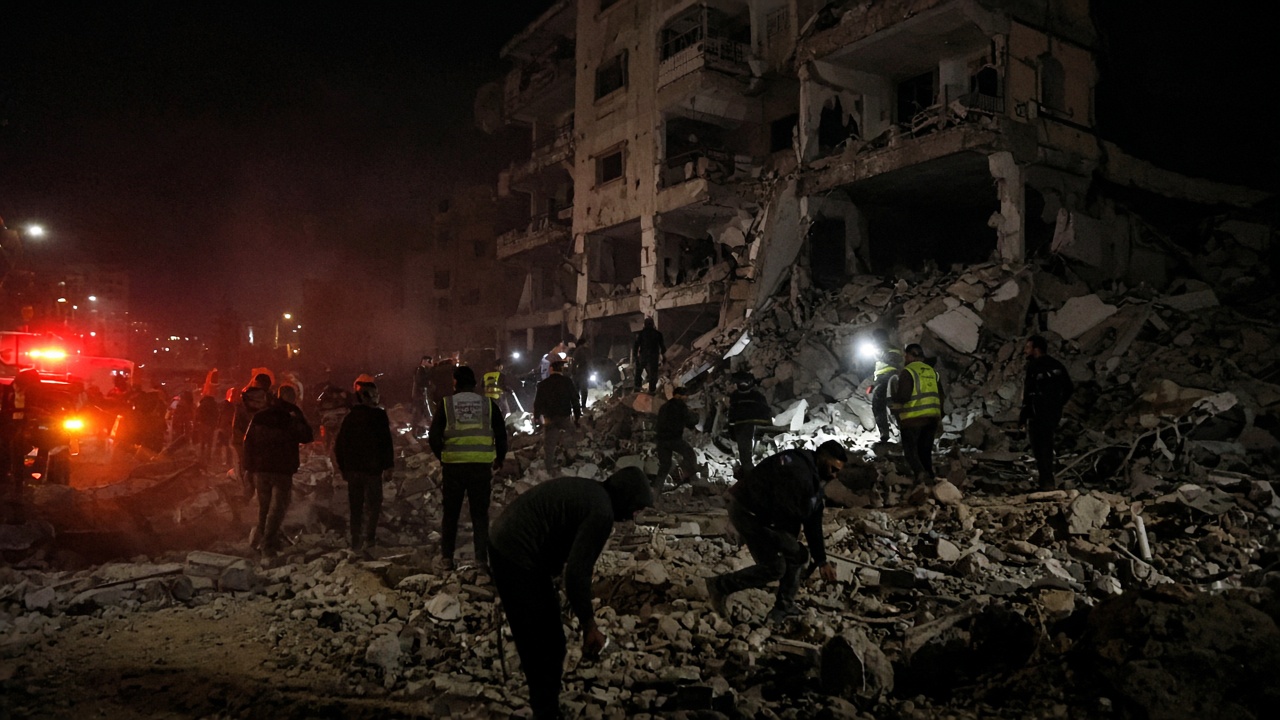
An Israeli air attack struck a residential tower in Gaza City’s Remal neighbourhood before dawn on Saturday, killing at least five people and severely wounding at least six others, according to medical staff at al-Shifa Hospital. Al Jazeera’s correspondent Hani al-Shaer, reporting from Khan Younis, said no warning preceded the strike on the al-Asala building, one of the most crowded districts in a city already packed with displaced families.
What witnesses and hospital staff reported
Al-Shaer said residents heard fighter jets grow louder, then three consecutive hits on the apartment block while people were asleep. The blast punched through the targeted unit and tore through lower floors of the multi-storey structure, he said, leaving fires that burned for roughly an hour before Palestinian Civil Defence crews extinguished them.
Staff at al-Shifa Hospital identified the dead as including four women, among them an elderly Christian woman and her daughter. Six wounded people were brought in for treatment. Civil defence teams were still searching the rubble for missing people as Israeli drones circled overhead and jets could be heard flying low across the Strip, al-Shaer said.
Why Remal matters in the current fighting
Remal sits in western Gaza City and has absorbed thousands of displaced people living in makeshift shelters alongside long-term residents. Humanitarian groups have repeatedly warned that strikes in such neighbourhoods raise the risk of mass civilian casualties because warning times are short and escape routes are limited.
Saturday’s attack adds to a pattern of overnight raids that Gaza health officials say have strained al-Shifa and other hospitals still operating under severe supply shortages. Aid agencies have documented repeated damage to residential towers in Gaza City since fighting intensified earlier in the year, with many families sleeping in stairwells because upper floors are considered marginally safer from shrapnel.
The Israeli military did not immediately release a public statement on the Remal strike when Al Jazeera published its first account. In previous incidents, the Israel Defense Forces have said they strike command posts or weapons stores after attempting to warn civilians, a claim that cannot be independently verified from inside the Strip.
What could happen next
Mediators working on ceasefire proposals have focused on hostage releases and humanitarian corridors, but front-line reporting from Gaza City suggests fighting remains intense in urban areas. Palestinian officials are likely to cite the lack of warning at al-Asala as evidence that residential blocks remain in the line of fire, while Israel has previously said it targets militant infrastructure embedded in civilian areas.
International observers will watch whether casualty figures rise as search teams work through the building and whether any independent verification of the strike’s stated military purpose emerges in the coming days. The United Nations has repeatedly called for pauses to allow evacuations from dense neighbourhoods; those appeals have not produced sustained quiet in Gaza City’s western districts.
For families still in Remal, the immediate question is shelter: with the al-Asala tower partially collapsed, displaced residents may need to move again into schools or tents already beyond capacity, compounding the humanitarian pressure that relief workers describe as acute heading into October.