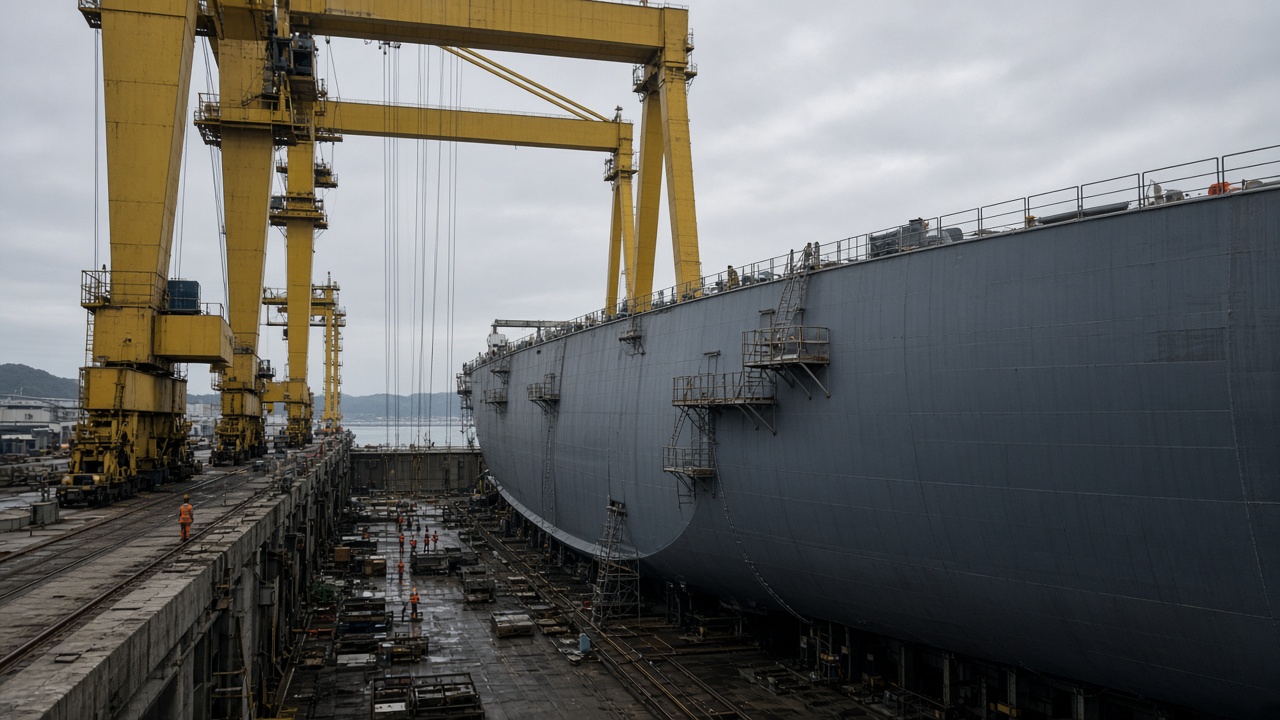
Mitsubishi Heavy Industries raised its shipyard backlog guidance on Friday after the Bank of Japan’s September Tankan showed large manufacturers lifting fiscal 2026 capital spending plans by 13.6 percent, the sharpest upward revision in the quarterly survey.
The revision matters for Nagasaki and Yokohama, where MHI clusters defense frigate work and commercial repair contracts. Management told investors the Tankan capex line—not just sentiment—justified adding roughly six months of visibility to guided backlog without assuming new export orders.
What the Tankan changed for heavy industry
The diffusion index for large manufacturers rose to 24 from 22 in June, the sixth straight quarterly gain and the strongest reading in eight years, according to BOJ tables released on 1 October. Large firms also forecast manufacturing investment growth of 13.6 percent for fiscal 2026, revising prior plans up 21.7 percentage points.
Nonmanufacturers slipped for the first time in five quarters, to 35 from 37, as fuel and logistics costs bit into services margins. MHI’s commercial ship repair unit sits between those trends: energy carriers need maintenance after Middle East routing changes, while domestic yards compete for skilled welders with semiconductor plant builders.
Backlog math investors are watching
Analysts at three domestic brokerages said MHI’s guidance bump tracks the Tankan’s machinery and transport equipment lines more closely than the headline sentiment score. The company did not disclose a yen figure for the backlog change in Friday’s statement, but said defense programs already under contract account for most of the increase.
Export assumptions in the Tankan assume a dollar averaging 154 yen in the second half of fiscal 2026. A yen near 158, where the currency traded after the BOJ’s September rate hike to 1.25 percent, would inflate the yen value of overseas repair tickets without adding hulls.
Rate path and yard staffing
Higher policy rates raise discount rates for long-cycle projects. MHI executives said they kept wage offers in line with union demands because Tankan employment conditions for large manufacturers remained tight, with more firms reporting shortages than surpluses.
Competitors Imabari Shipbuilding and Japan Marine United did not issue parallel guidance changes on Friday. Investors will compare their November filings to see whether MHI captured share or simply recognized orders that were already on the balance sheet.
What comes next
The December Tankan forecast slot shows large manufacturers expecting sentiment to ease three points to 21, a reminder that oil above $100 and soft China demand still cap optimism. MHI said it would update backlog figures again with half-year earnings unless a major contract forces an earlier disclosure.
Supply chain
Steel plate lead times from South Korean mills shortened two weeks versus spring, helping MHI schedule dry-dock slots for LNG carrier retrofits. Union officials said overtime caps will still limit weekend welding hours despite higher backlog guidance.