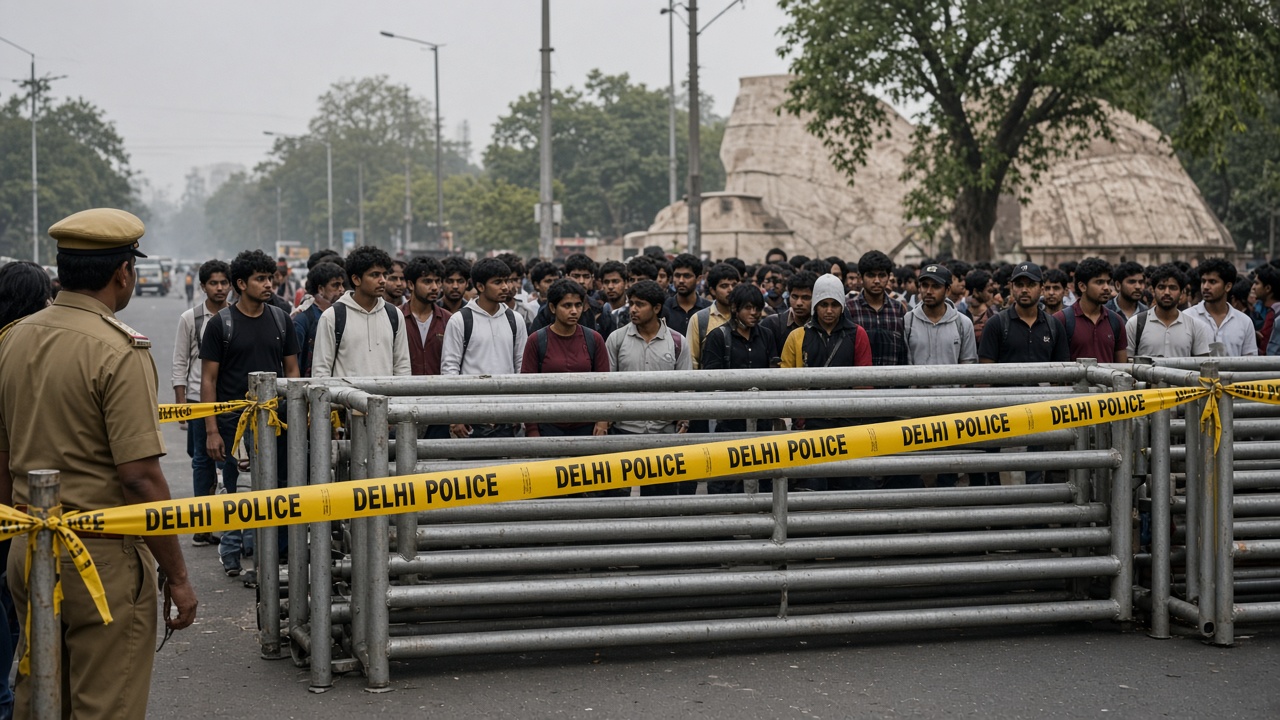
Neha Bora, national president of the All India Students’ Association, urged members to return to Jantar Mantar on Saturday even as Delhi Police kept the protest zone sealed, a day after officers removed close to 1,000 demonstrators from the area who had gathered to demand the resignation of Chief Election Commissioner Gyanesh Kumar over the special intensive revision of electoral rolls.
The standoff has turned central Delhi into a test of whether opposition parties and campus groups can sustain street pressure against the Election Commission’s SIR exercise, which critics say has deleted or challenged large numbers of voters ahead of state elections.
Friday’s police action
Delhi Police did not grant permission for the demonstration and imposed prohibitory orders under Section 163 of the Bharatiya Nagarik Suraksha Sanhita, restricting unauthorized assemblies around the Lutyens’ zone. NDTV reported that nearly 1,000 people—including political leaders, student organizers, and civil society activists—were taken into custody near Jantar Mantar on Friday, according to broadcast reports, with many released later in the day.
The Times of India quoted police saying officers did not manhandle protesters but removed people because the rally lacked authorization. The newspaper reported that buses ferried detainees from barricaded entry points at Tolstoy Marg and Janpath, while mobile internet was suspended and a dozen Metro stations in central Delhi temporarily closed to slow crowds from reaching the site. Police figures cited in local media ranged from about 550 to nearly 1,000 people processed on Friday.
Hindustan Times live coverage on Saturday said police began public-address announcements asking people at Jantar Mantar to disperse as security forces maintained layered barricades on Ashoka Road and Tolstoy Marg, allowing only residents and staff through.
What protesters want
Opposition parties and student groups announced the Jantar Mantar action on Gandhi Jayanti, framing the SIR process in Delhi and other states as an effort to shrink the opposition’s voter base. They have demanded Kumar’s exit and a halt to intensive roll revision until grievance mechanisms are strengthened.
Bora told supporters on Friday that demonstrators would come back after resting, according to Hindustan Times reporting, signaling that AISA intends to keep the site active through the weekend despite the prior day’s large-scale police roundup.
Commission and government response
The Election Commission has defended SIR as a statutory cleanup of duplicate and shifted entries, while the Bharatiya Janata Party says opponents are mobilizing without evidence of systemic bias. Congress and INDIA bloc leaders, including Mahua Moitra, have amplified calls for Kumar to step down; Moitra publicly urged larger turnout before Saturday’s police push to clear the square.
For the commission, the political risk is procedural: any perception that roll revision is being rushed without transparent appeals could feed litigation and depress turnout in upcoming polls. For Delhi Police, the risk is operational—balancing free assembly against traffic, Metro, and diplomatic security in a district that hosts Parliament and multiple ministries.
What happens next
Courts have not yet intervened in the Jantar Mantar restrictions, and it remains unclear whether opposition parties will seek judicial relief against the Section 163 orders. Police said multiple first information reports were registered for violations of prohibitory orders, according to press reports; lawyers for those held on Friday will likely challenge those FIRs if clients face lasting charges.
Saturday’s scene at Jantar Mantar will show whether Friday’s roundup deterred crowds or supplied fresh outrage for campus networks. Either way, the SIR fight has moved from press conferences to a sustained contest over who controls access to one of the capital’s few designated protest grounds.