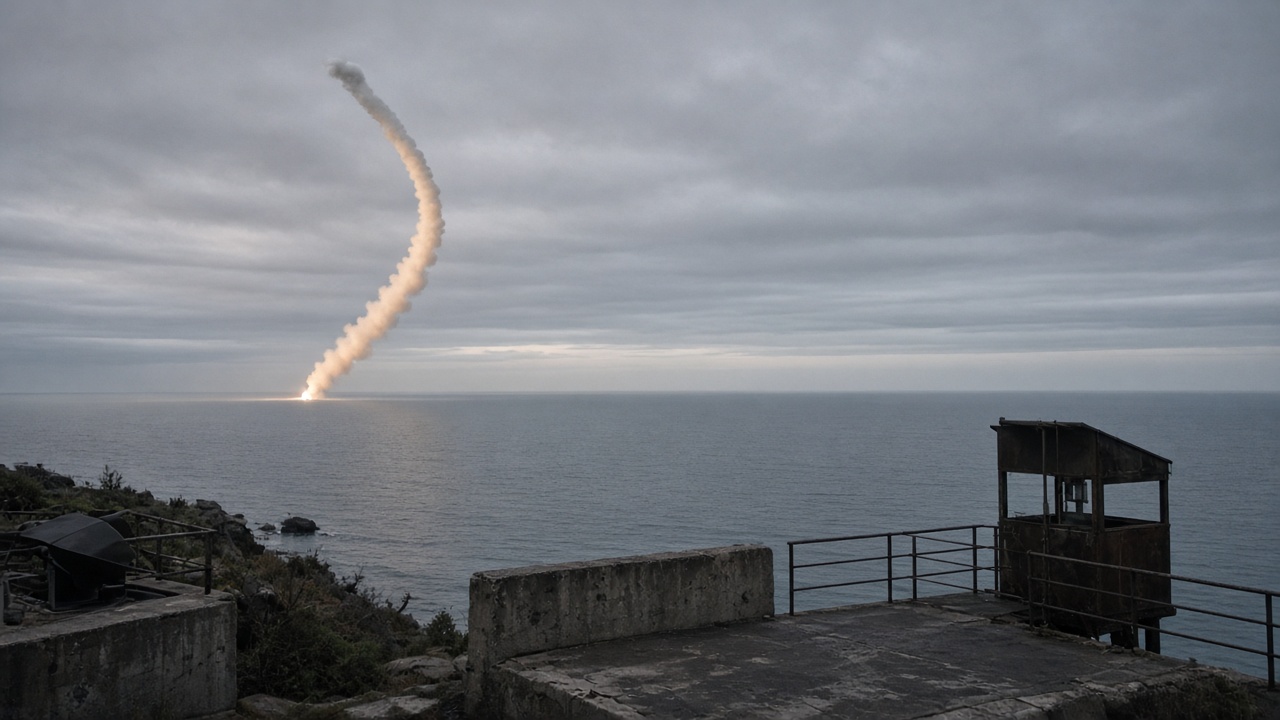
North Korea fired a projectile toward the East Sea on Saturday morning, South Korea’s Joint Chiefs of Staff said, hours after Kim Yo Jong rejected Seoul’s call for an apology over land-mine blasts that wounded three South Korean soldiers in the Demilitarized Zone last month.
What the military reported
The Joint Chiefs said the launch was detected from the Wonsan area on North Korea’s east coast, a corridor Pyongyang has used repeatedly for missile tests. Officials did not immediately release flight distance, apogee or the exact weapon type, saying analysis was continuing.
Japan’s Defense Ministry also tracked the event, later stating that the projectile appeared to have fallen outside Japan’s exclusive economic zone. No damage to aircraft or ships was reported in either country’s initial statements.
The DMZ mine dispute
Tensions rose after explosions inside the DMZ injured three South Korean troops on Sept. 21. Seoul and the U.S.-led United Nations Command said North Korean mines were the likely cause and demanded an explanation and safeguards along the border.
On Friday, state media carried a statement from Kim Yo Jong calling South Korea’s accusations “groundless” and ridiculing its push for an apology. She said Pyongyang would fortify the border—including mines and anti-tank barriers—and would not leave room for contact with the South, despite President Lee Jae Myung’s outreach efforts.
Pattern of tests
The launch came less than two weeks after North Korea fired two short-range ballistic missiles from Wonsan on Sept. 20, with South Korea estimating flights of roughly 450 and 600 kilometers. Pyongyang later described at least one of those tests as involving a new hypersonic glide vehicle, part of a broader push to diversify its strike portfolio.
Saturday’s firing fits a familiar cycle: a political rupture in inter-Korean statements, followed by a military demonstration that reminds neighbors and the United States of North Korea’s ability to escalate without warning.
Seoul’s policy bind
Lee’s government has sought limited dialogue while maintaining alliance exercises with Washington. Kim Yo Jong’s rhetoric narrows that space, forcing Seoul to balance domestic calls for accountability over the DMZ injuries with fears that heavy retaliation could trigger another testing spree.
South Korean defense officials are expected to brief lawmakers once trajectory data is firm. The National Security Council typically convenes after launches that could threaten population centers or alliance assets, even when projectiles land in open water.
What to watch
Analysts will look for whether Pyongyang issues same-day photos or leader attendance at the launch site, signals that could indicate a new system versus a repeat drill. Washington may restate calls for denuclearization talks, though North Korea has shown little interest while expanding its arsenal.
For residents along the east coast, civil defense apps and maritime advisories are the immediate interface with these events. For policymakers in Seoul, the harder question is whether any channel remains open before the next border incident.
The U.S. Indo-Pacific Command did not issue an immediate statement on the launch, but alliance officials routinely share telemetry with Seoul and Tokyo within hours of North Korean firings.